

Sponsored

TRD Pro or Die Trying

TRD Pro
Well-known member
First Name
Anthony
Joined
Sep 13, 2024
Threads
11
Messages
246
Reaction score
273
Location
Central Florida
Vehicle(s)
2025 4Runner TRD Pro; 2007 4Runner Limited
As written earlier, the available energy in an equal volume of 87 octane vs 93 octane is pretty much the same. So you cannot get more power out of higher octane fuel.
The 2.4 L Toyota engine is similar to the 2.4 L Lexus but the Lexus is tuned differently. Yes the static compression ratios are the same. The dynamic compression ratios are different. Higher in the Lexus. They accomplish this through valve or cam timing changes. By closing the intake valves earlier in the piston stroke the engine captures more air/fuel in the compression chamber which will produce more power.
Cam (valve) timing can be adjusted in newer engines.
Before adjustable valve timing the cam had to be changed.
With greater pressures in the compression chamber the engine risks detonation before the optimal point.
Higher octane fuel prevents pre detonation.
@Lamuncha You sound like you know what the hell you're talking about. Bottom line, what octane level of gas should I be using in my brand new 4Runner (TRD Pro)?
Sponsored


Gumpus

SR5
Active member
Joined
Apr 15, 2025
Threads
0
Messages
42
Reaction score
35
Location
US
Vehicle(s)
4Runner
As written earlier, the available energy in an equal volume of 87 octane vs 93 octane is pretty much the same. So you cannot get more power out of higher octane fuel.
Yes the 2 fuels have equal energy content. But if an engine is tuned for the higher octane fuel it will absolutely produce more power...because the engine can advance spark timing further, resulting in higher combustion pressures.

In the case of engines tuned for 87 it depends on the details of their ECU strategy as to whether they can benefit from higher octane and whether the benefits extend beyond wide open throttle.
 

Lamuncha

Limited
Well-known member
First Name
don
Joined
Sep 26, 2025
Threads
2
Messages
55
Reaction score
19
Location
new england
Vehicle(s)
2025 4 runner
Well I use regular in my 2025. The engineers at Toyota seem fine recommending that and I see no reason to go to a higher octane.
Another car I own with a 2.0 Turbo requires premium due to the higher performance design (like the Lexus). In that I use the premium. If I use regular the engine will sense pre-ignition and de-tune. I don't need any of that.
Nutshell brand philosophy blab:


  • Lexus: As a luxury brand, Lexus prioritizes maximum performance and refinement. Engineers tune the engines to extract every bit of power, and customers expect a premium experience that includes using higher-octane fuel to achieve peak output.
  • Toyota: Toyota prioritizes reliability and cost of ownership for its mass-market vehicles. While some high-performance Toyota models like the GR series and the Land Cruiser require premium fuel, most mainstream models are tuned to operate on regular 87 octane to keep running costs down for the average consumer.
 

FoRunna

TRD Off-Road Premium
Well-known member
First Name
Matt
Joined
Apr 1, 2025
Threads
3
Messages
70
Reaction score
77
Location
Atlanta, GA
Vehicle(s)
2012 Xterra, 2025 4Runner TRD ORP, 2019 Z06
Man, I really need to have Chat GPT summarize this thread. It's all over the place.

Here's the truth, guys. I'll try to keep it simple;

Higher octane fuels are necessary to prevent detonation (pre-ignition/spark knock) on engines that need it. Forced induction engines and high compression engines will often be those that need it, but ONLY if dictated by their tuning strategy.

Higher octane fuels allow you to run a bit more ignition timing before detonation occurs, which means more power (especially with more boost), but in the case of an OEM, 91/93 over 87 may not actually make more power unless their tuning strategy allows it.

In the case of the LC250, it probably has a different tune that necessitates 91. The 4Runner may have the same powertrain, but that doesn't mean the tuning strategy is the same.

When powertrain engineers design an engine, they're given a power goal that must meet emissions standards and fuel economy expectations. Once they meet that, they are done. There is always more power on the table in the tune, especially for forced induction engines like this. This engine, with 93 octane and a tune will make QUITE a bit more power. Between these two fuels on a stock tune, the difference is probably negligible. This is likely more a difference between fuel quality at two stations, in two tanks.

But could it make more on 91/93? Sure.
 

Gator 22

TRD Off-Road
Well-known member
Joined
Mar 24, 2025
Threads
0
Messages
47
Reaction score
44
Location
Florida
Vehicle(s)
2021 TRD Off Road
My bet is the land cruisers are tuned more for performance. While the 4runner will last longer running on lower octane, gas, and less performance.
 

coloradomarmot

TRD Pro
Well-known member
Joined
Jul 28, 2025
Threads
7
Messages
97
Reaction score
73
Location
Colorado
Vehicle(s)
2025 Pro
@Lamuncha You sound like you know what the hell you're talking about. Bottom line, what octane level of gas should I be using in my brand new 4Runner (TRD Pro)?
Depends on your altitude. Here in Colorado, I run 85 without an issue. If I were driving to a lower altitude on a tank before I ran it dry, I’d put in 87 just for that run. In CA, I’d run 87. Which…is what regular gas is at those altitudes. It’s exactly what Toyota recommends, and I trust their engineers.
 

brumey

SR5
Well-known member
Joined
Feb 1, 2025
Threads
45
Messages
665
Reaction score
342
Location
Tennessee USA
Vehicle(s)
F350
As written earlier, the available energy in an equal volume of 87 octane vs 93 octane is pretty much the same. So you cannot get more power out of higher octane fuel.
The 2.4 L Toyota engine is similar to the 2.4 L Lexus but the Lexus is tuned differently. Yes the static compression ratios are the same. The dynamic compression ratios are different. Higher in the Lexus. They accomplish this through valve or cam timing changes. By closing the intake valves earlier in the piston stroke the engine captures more air/fuel in the compression chamber which will produce more power.
Cam (valve) timing can be adjusted in newer engines.
Before adjustable valve timing the cam had to be changed.
With greater pressures in the compression chamber the engine risks detonation before the optimal point.
Higher octane fuel prevents pre detonation.
The scientific part of my brain agrees with the theory posted here. Very well written. I will be sticking with 87 which is an easy choice for me, I am not looking for small performance boosts or any performance boost, it has enough power stock for me. No impact on reliability so, I'll save money over 91/93.

For those that want the feel good factor of running 91/93, go for it, it's your money :)
 

127.0.0.1

SR5
Well-known member
Joined
Oct 9, 2025
Threads
2
Messages
237
Reaction score
164
Location
earf
Vehicle(s)
a bunch of Toyotas
my MPG's dropped using 91 octane. yeah it seems like it's got more stonks due to engine
management adjusting to the higher octane, but 21mpg now vs 24mpg on my daily commute, not liking that. I did 6 commutes with 91 before knowing for a fact I get less MPG.
[your mileage may vary, mine dropped]

back to 87 I go and shall remain, since it doesn't require anything higher
 

DangItsDen

TRD Off-Road Premium
Well-known member
First Name
Hayden
Joined
Mar 2, 2025
Threads
41
Messages
326
Reaction score
345
Location
Austin, TX
Vehicle(s)
2025 4Runner Off-Road Premium + 2015 4Runner Trail Edition
We only have 87, 89, 93 in Austin where I live. Curious what splitting the difference and going 89 would do... Not sure if 93 would be a good call here
 

Lamuncha

Limited
Well-known member
First Name
don
Joined
Sep 26, 2025
Threads
2
Messages
55
Reaction score
19
Location
new england
Vehicle(s)
2025 4 runner
what we did not get into but others may have covered is the economics of going to premium.
Where I am in New England the difference between the two blends is $0.90. It has been that way for a few years.
Interesting that as the regular has dropped a buck or so they have maintained the 90 cents.
Guess if I owned the refinery and had people by you know what I would do the same.
In any case the models that have been using this engine for a few years seem to be doing ok as is the resale value.
And by the way good for Toyota with their philosophy of gradually introducing this engine over time into the various models. Solid management.
Unlike some domestic manufacturers that flood the market and hope for the best. Short sited, money grubbing US management.
 

HVLA

TRD Off-Road Premium
Well-known member
Joined
Feb 28, 2025
Threads
9
Messages
406
Reaction score
281
Location
USA
Vehicle(s)
Lexus
40 to 50 cents a gallon is worth 20hp to me. 12k miles a year that is what? $25 a month more?
 

CO/ZA

TRD Off-Road Premium
Well-known member
Joined
Mar 7, 2025
Threads
1
Messages
98
Reaction score
90
Location
Denver
Vehicle(s)
25 4R ORP
Depends on your altitude. Here in Colorado, I run 85 without an issue. If I were driving to a lower altitude on a tank before I ran it dry, I’d put in 87 just for that run. In CA, I’d run 87. Which…is what regular gas is at those altitudes. It’s exactly what Toyota recommends, and I trust their engineers.
If you read the manual, you are using an octane rating below the Toyota recommended fuel grade.

85 octane is a cheat from the 1960s that has zero place in modern engines with turbos, vvti, ecu control, etc.


I'm also in Colorado, and I only use 91 octane.
Way smoother engine and throttle response!
 

brumey

SR5
Well-known member
Joined
Feb 1, 2025
Threads
45
Messages
665
Reaction score
342
Location
Tennessee USA
Vehicle(s)
F350
my MPG's dropped using 91 octane. yeah it seems like it's got more stonks due to engine
management adjusting to the higher octane, but 21mpg now vs 24mpg on my daily commute, not liking that. I did 6 commutes with 91 before knowing for a fact I get less MPG.
[your mileage may vary, mine dropped]

back to 87 I go and shall remain, since it doesn't require anything higher
After 9 years running premium in a Ford Escape 2.0 Twin Turbo, I switched to 87 and got better gas mileage, consistently and repeatable. 9 years @18k a year wasted money :(
 

Nodak

Platinum
Well-known member
First Name
JR
Joined
Jan 22, 2025
Threads
32
Messages
1,611
Reaction score
926
Location
ND
Vehicle(s)
2025 4R Platinum Heritage Blue , 2023 Tundra Platinum Blueprint no-HV
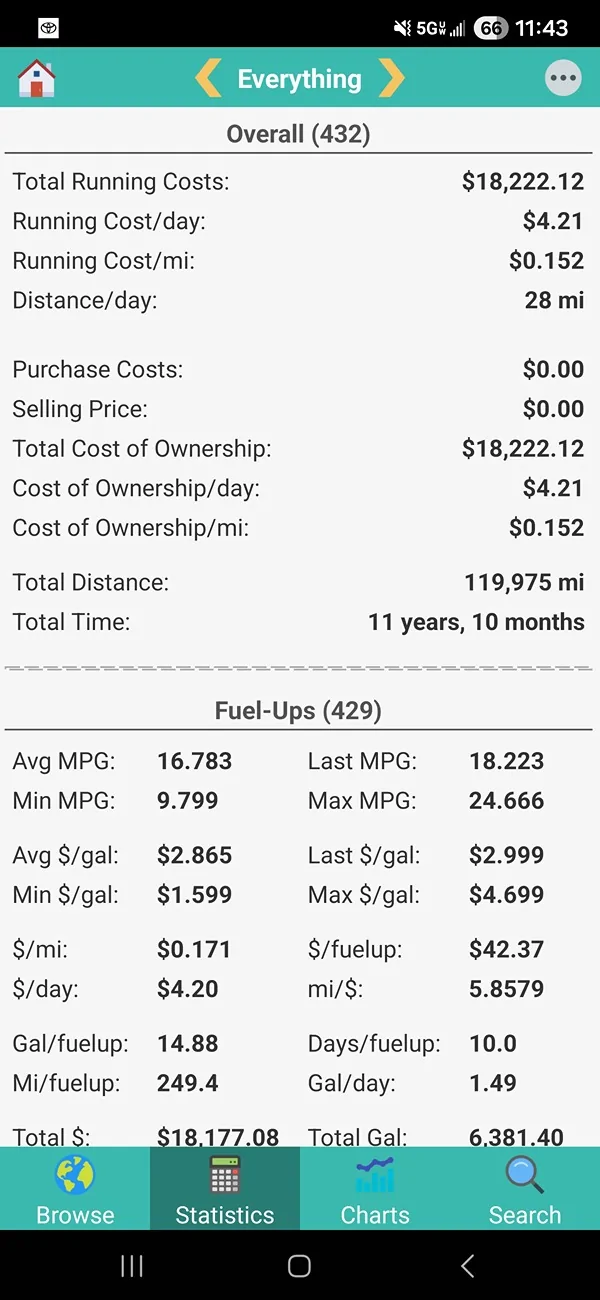
well in my 2014 4R Limited (granted it was a n/a engine), i ran 87 (with eth) for almost 12 yrs and 120k miles. here are my stats

my lifetime avg was 16 mpg (across 249 fill ups) and i avg 28 miles a day (home to work 4 days a week is 32 miles round trip)

remote starts in winter kill my mpg since i was doing 10-25 min remote starts (3rd party drone mobile remote start)


i will be tracking the same with the new 4R


2025 4runner 6th gen Switched from Regular to Premium gas. 4Runner runs better (more power & smoother) Screenshot_20251021_114351
 
Last edited:

Nodak

Platinum
Well-known member
First Name
JR
Joined
Jan 22, 2025
Threads
32
Messages
1,611
Reaction score
926
Location
ND
Vehicle(s)
2025 4R Platinum Heritage Blue , 2023 Tundra Platinum Blueprint no-HV
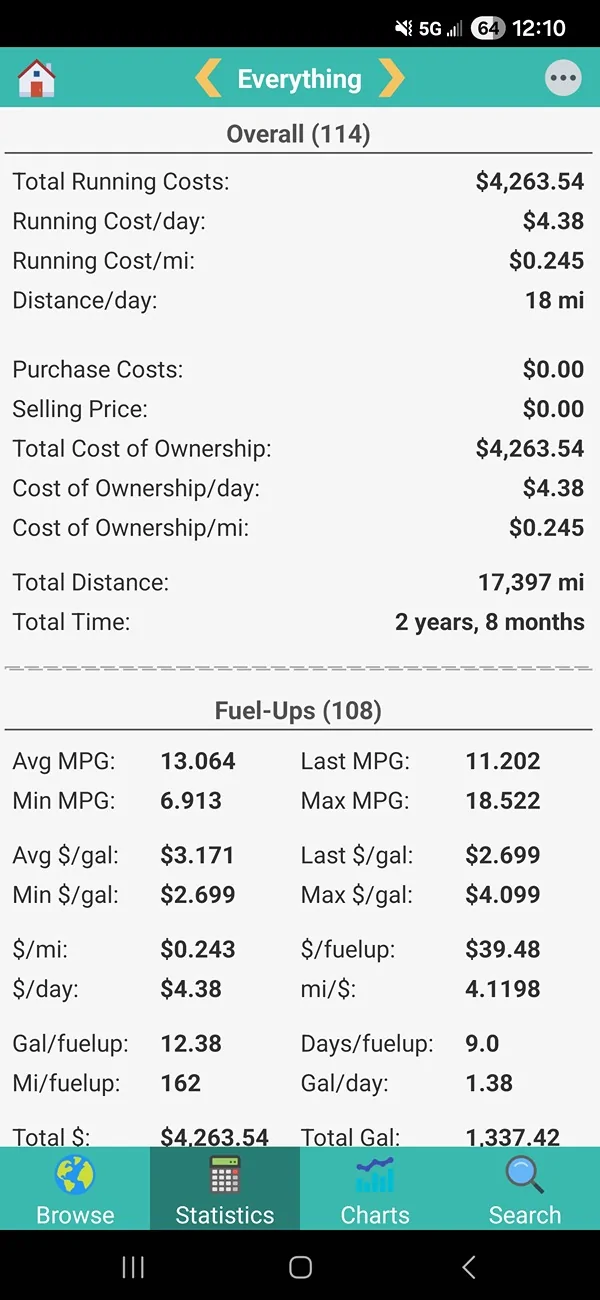
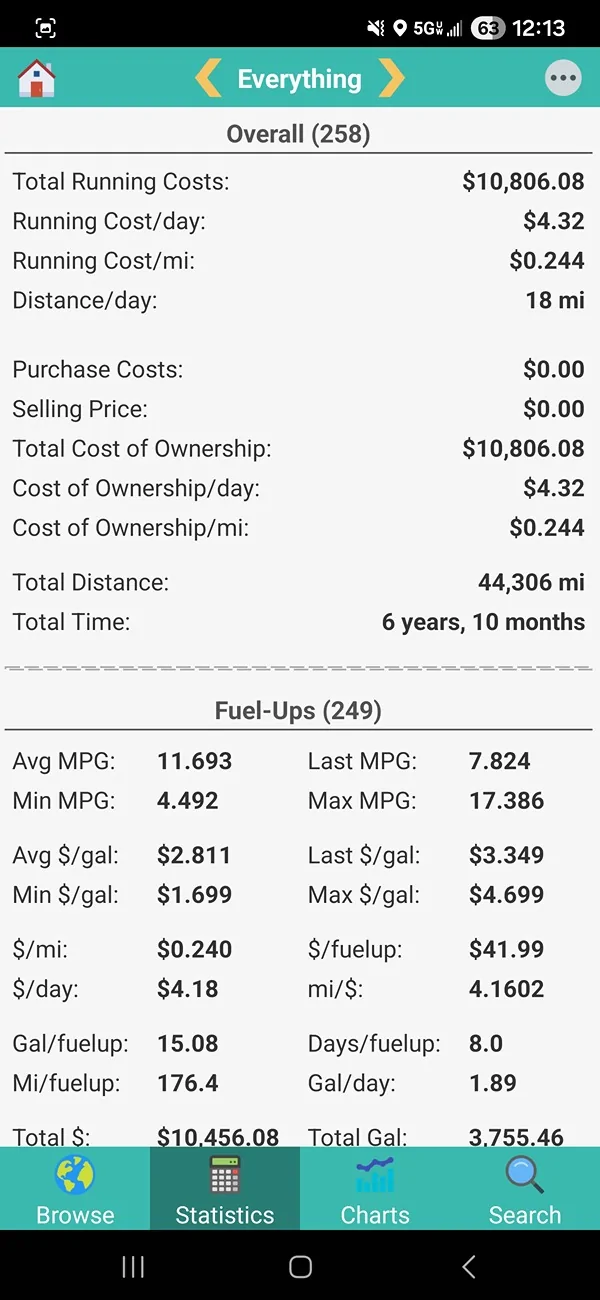
oh and by the way here are the stats on our 23 tundra platinum non HV with the twin turbo 3.4L engine running 87 with eth (also ran 87 with eth on our 2018 tundra platium)

granted this is mostly city driving 95%

our lifetime avg so far on the 23 tundra is 13 mpg, 1.5 mpg better than our 2018 with 249 fill ups over roughly 5 yrs (ignore the total time, since its still counting even though its a retired vehicle)


2025 4runner 6th gen Switched from Regular to Premium gas. 4Runner runs better (more power & smoother) Screenshot_20251021_121010


2025 4runner 6th gen Switched from Regular to Premium gas. 4Runner runs better (more power & smoother) Screenshot_20251021_121304
Sponsored


Top