

- Thread starter
- #1
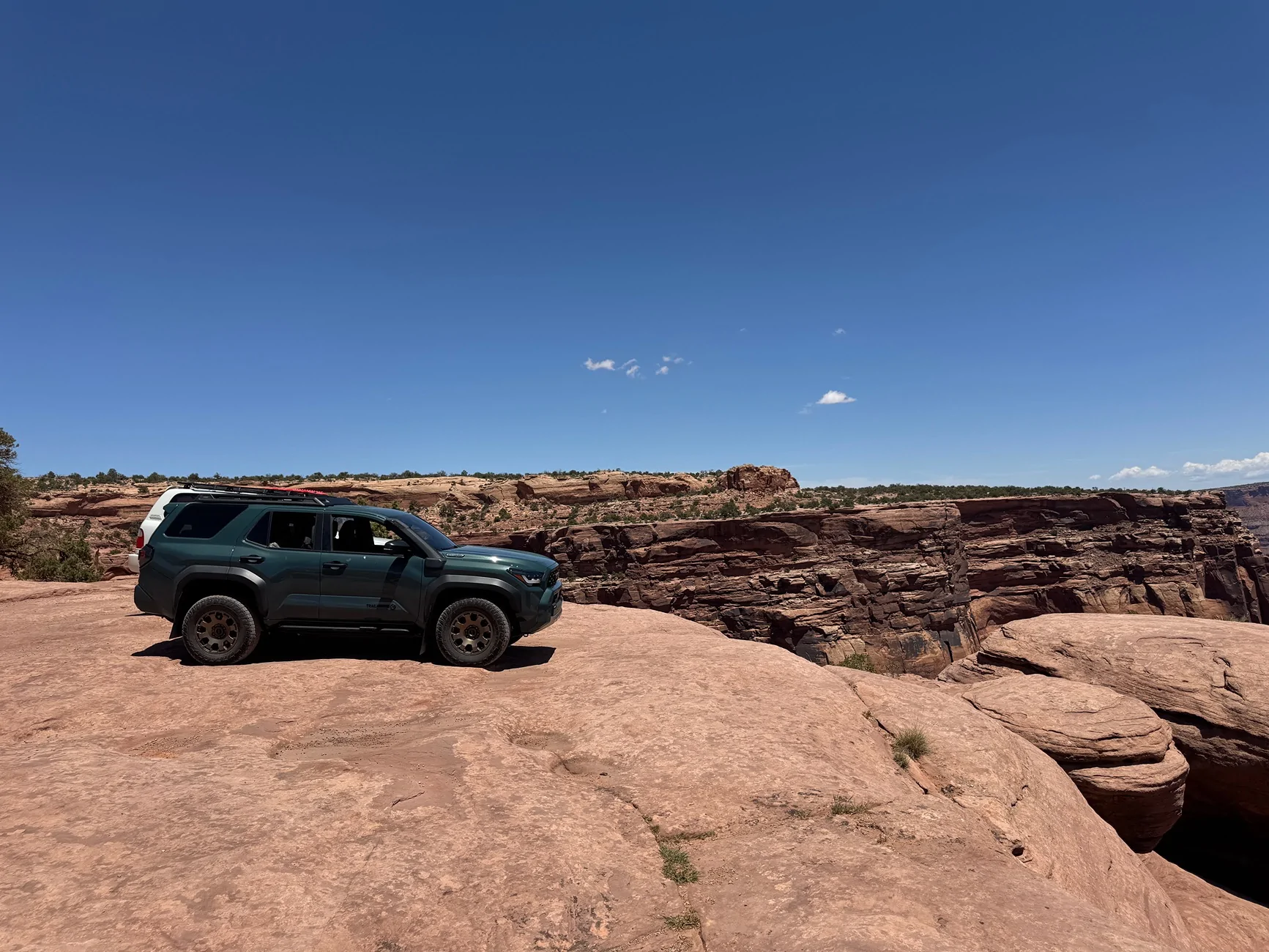
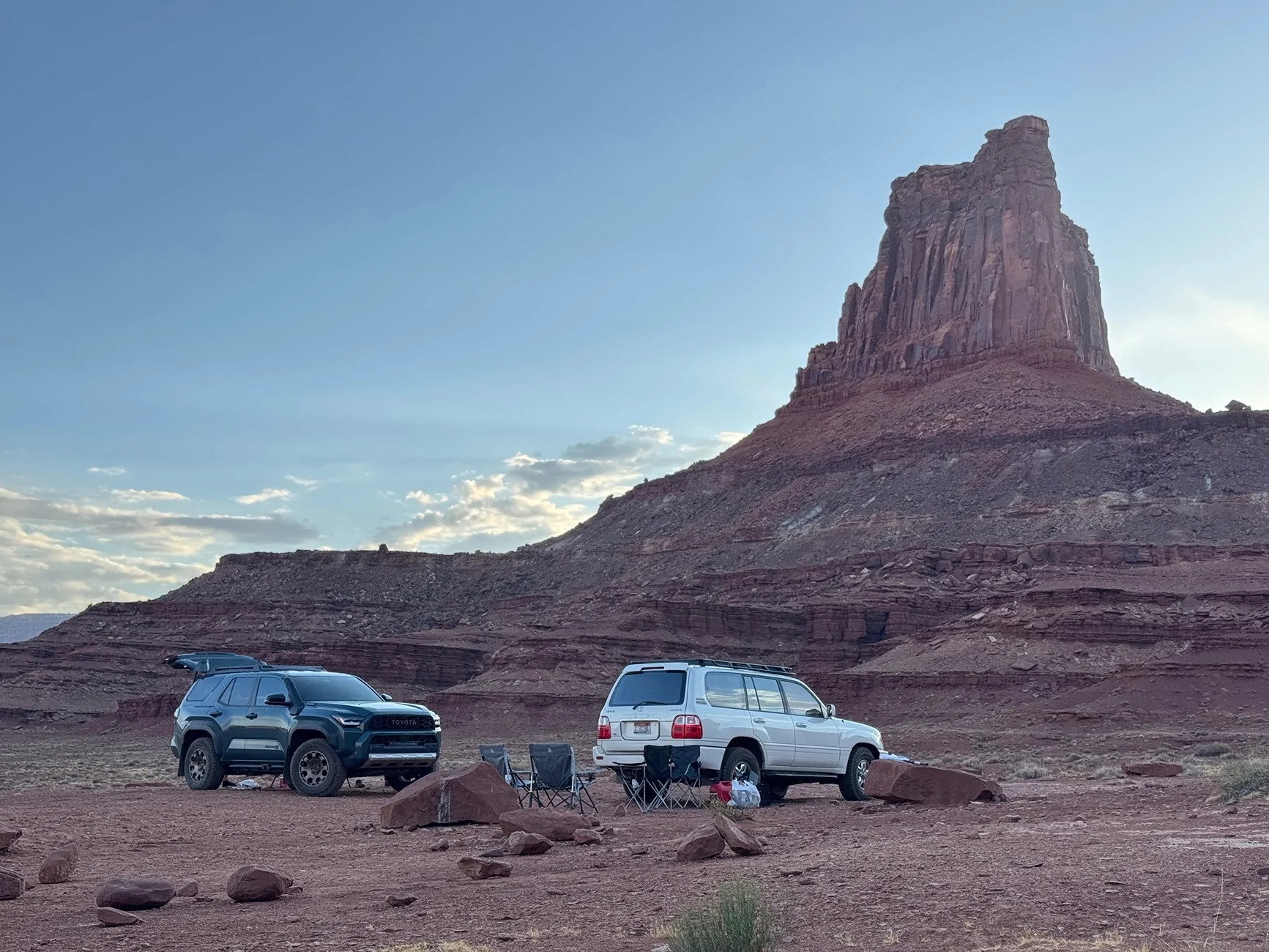
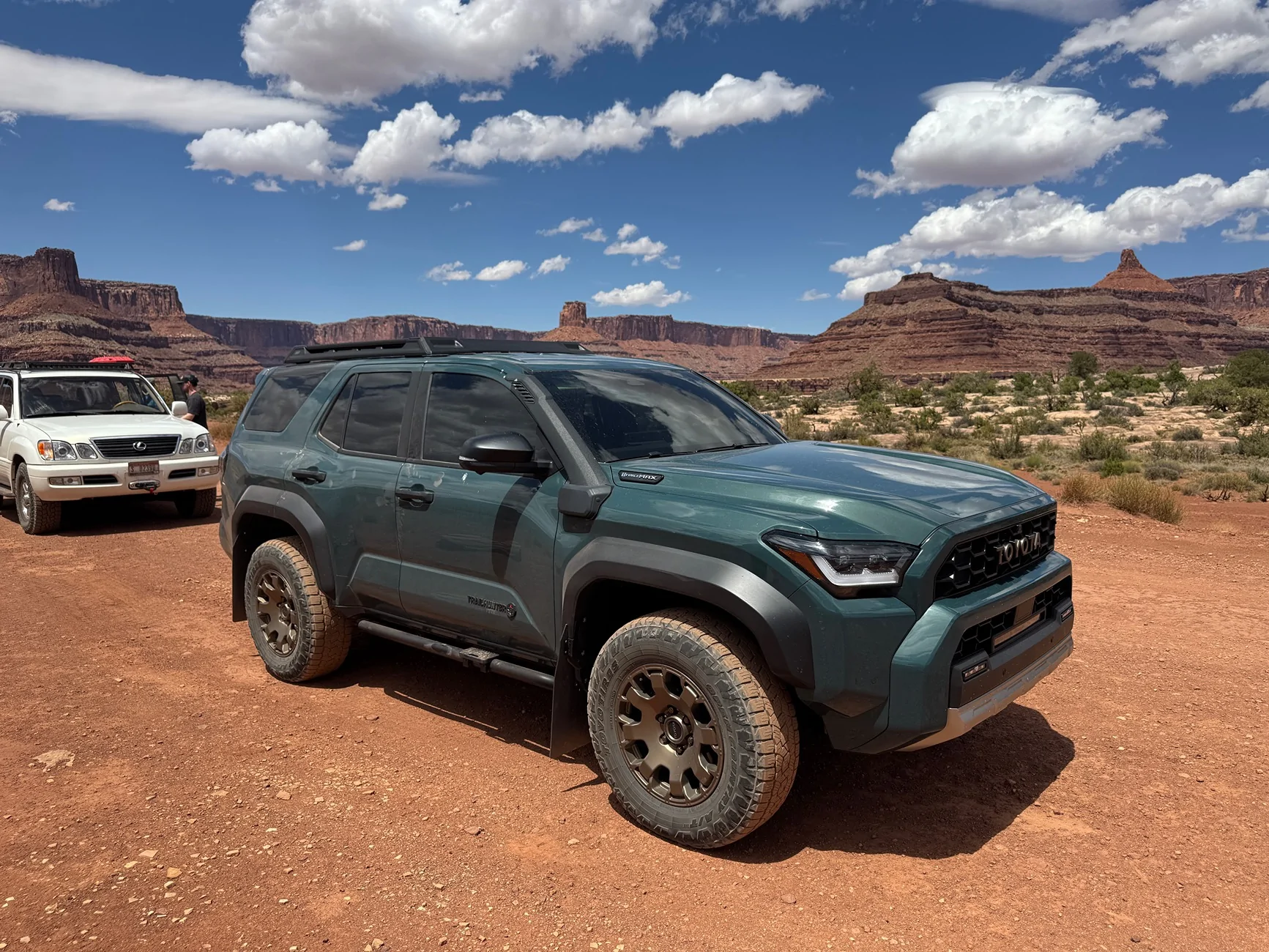
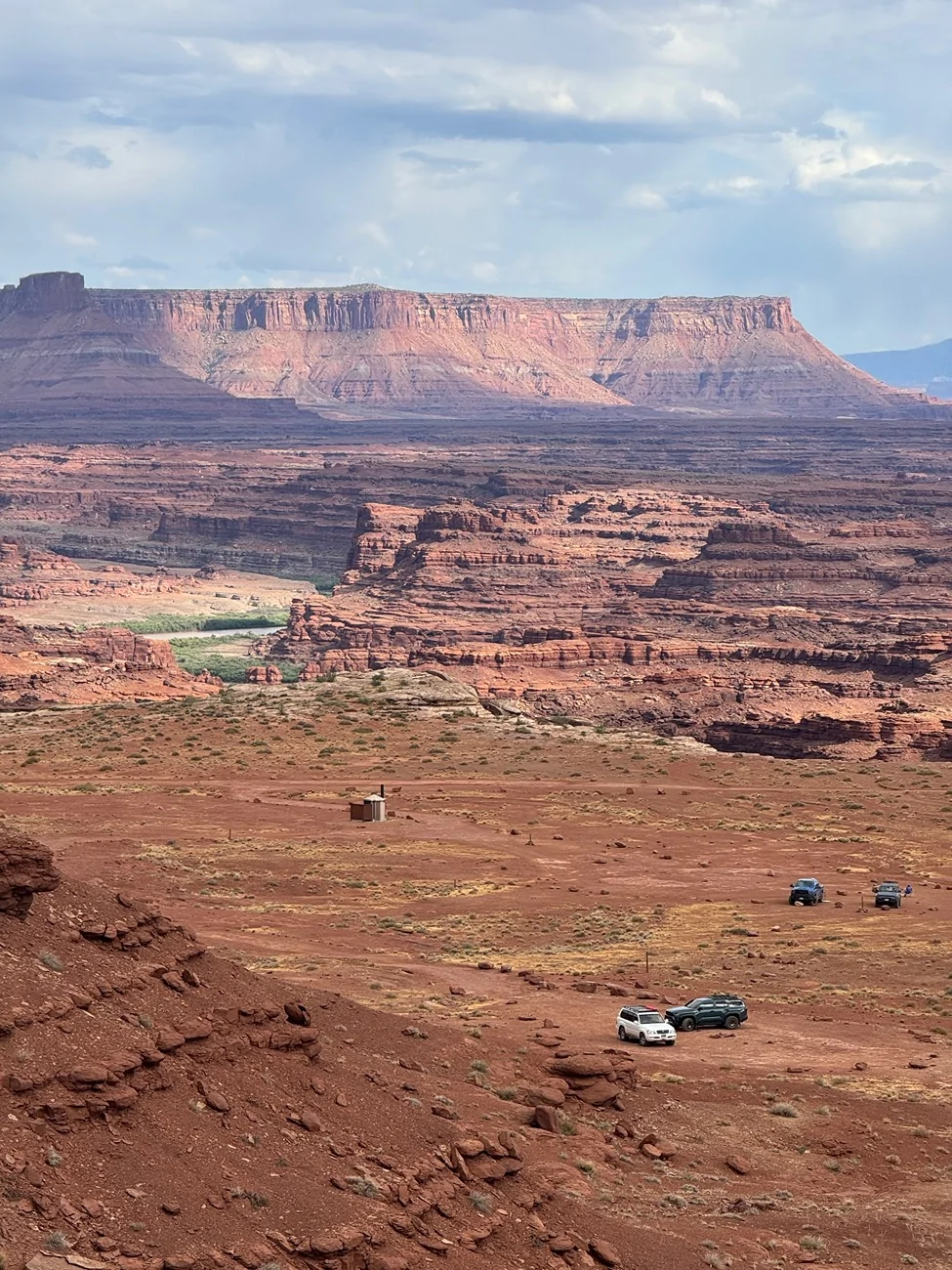
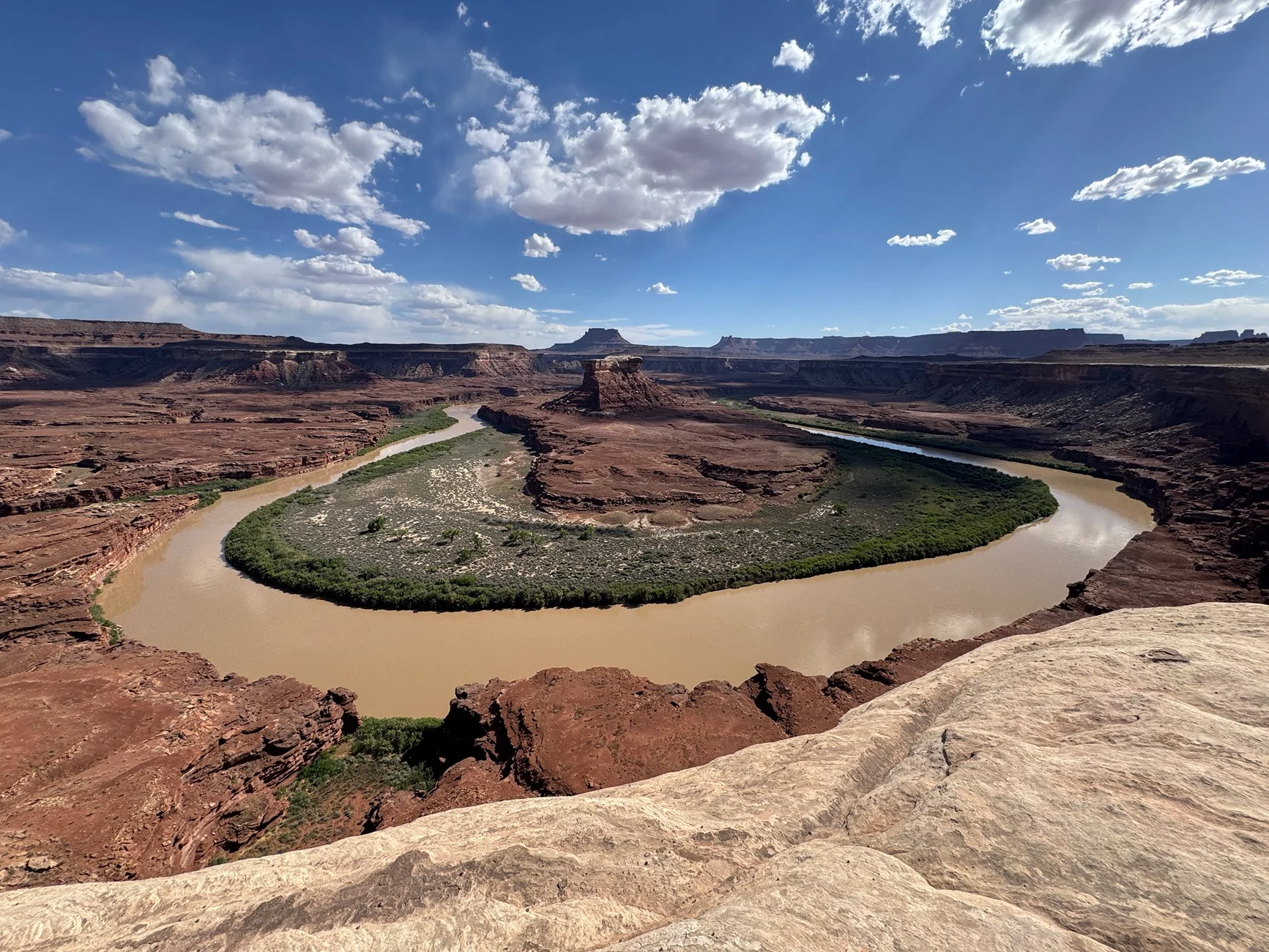
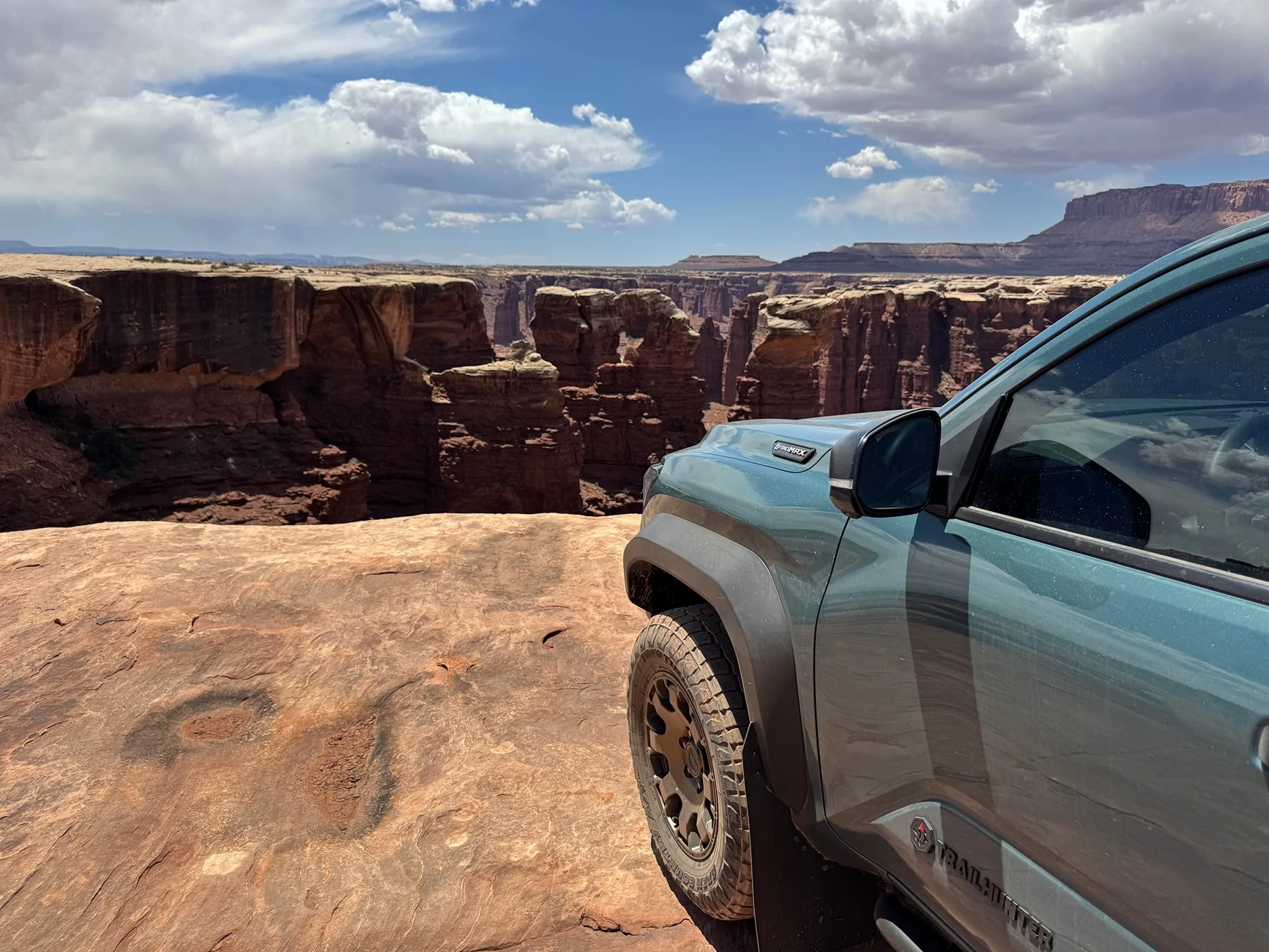
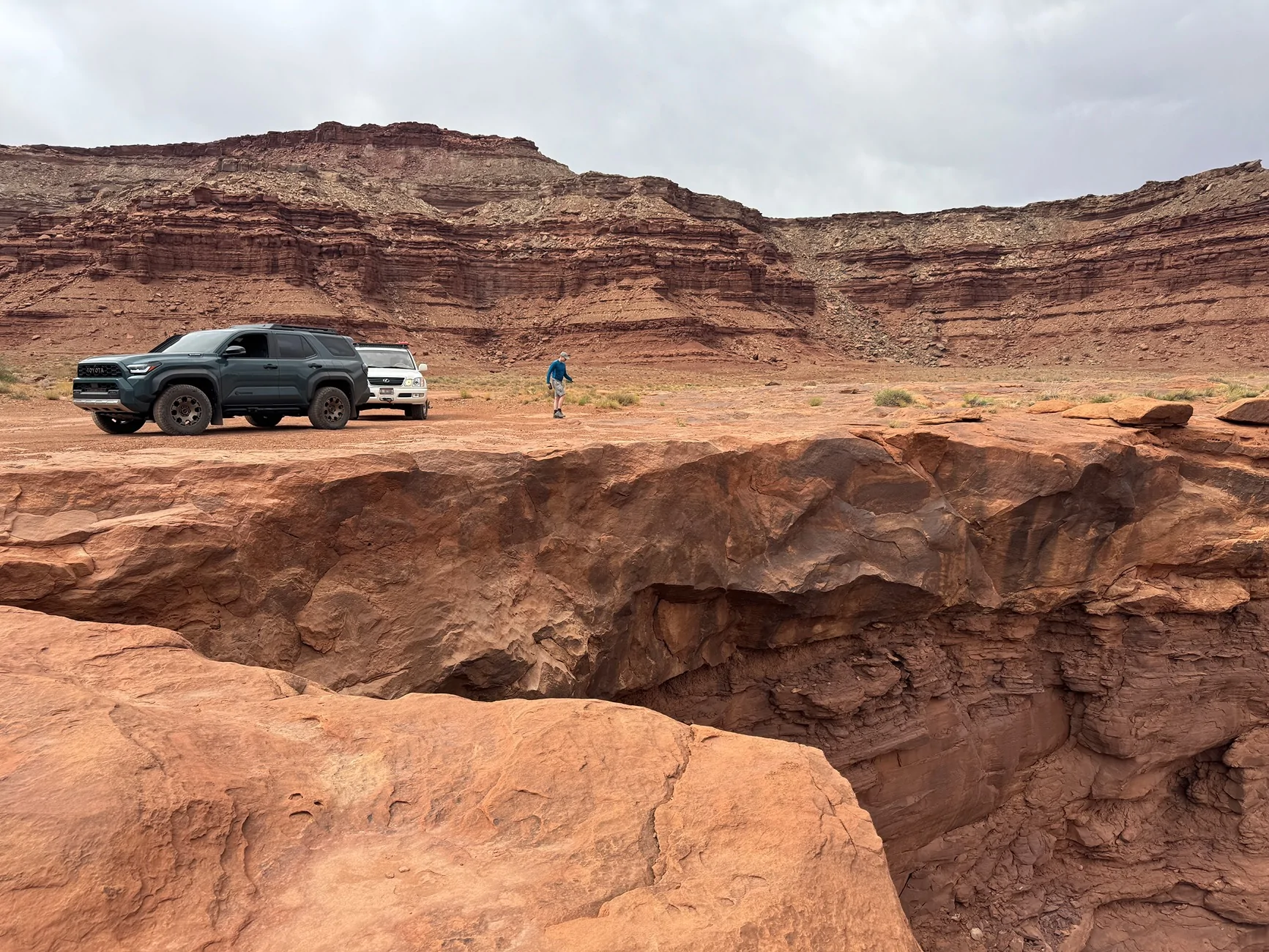
I just completed the White Rim Road in my stock Trailhunter with 15k miles on the dash. White Rim is a 100 mile off-road trail through Canyonlands National Park rated as a 5/10 on OnX. It features steep inclines and descents, tight switchbacks, fast sandy sections, and enough bumpy, rocky sections to give your passenger a TBI. While not as technically demanding as something like the Rubicon trail, it is still challenging from an endurance perspective. At the end of the second day my passenger was complaining her forearms were sore from gripping the handles in the 4Runner for so long, and the passenger in my buddy’s LX470 was complaining that his back was sore from trying to keep himself straight.
The Trailhunter did very well. Our conditions were dry, and it would’ve been a lot more interesting if it were muddy or icy, but nevertheless I did not lose traction a single time, while I saw my friend’s LX470 spin its tires more than once despite having brand new AT4W’s with tread depth in a completely different class than the Trailhunter’s stock Toyos, and running 20 PSI as opposed to my 30 PSI. I did not want to air down too much as I was concerned that sidewall exposure would increase my puncture risk, and I’ve already punctured one tire on this vehicle off road and seen many other people get punctures as well. Luckily I had no punctures on this trip.
One thing that did make me jealous of my friend’s 470 was the full time 4WD system, which allows him to use low range with the center differential unlocked. On the descent at the beginning of the trail, which has fairly tight switchbacks with a very steep drop off the sides, I was using 4LO to control my speed, but since the dirt was dry and packed, there was a lot of steering resistance as I could feel the driveline binding, and if I turned sharp and long enough I would hear a tire spin out as the tension in the driveline overcame the grip of the tire. I really do wonder why the Limited and Platinum trims got the Land Cruiser’s full time 4WD when it seems to me that a full time 4WD with center locking differential would be the superior 4WD setup for a trim supposed to be for off roading.
My camping setup was fully electric. While driving, I had the 120V charging a Bluetti AC70 768Wh battery which powered a 12V fridge for our perishables. Standard charging mode on the Bluetti would keep it charging at about 500W from the AC inverter, even while driving. I read someone claim that the inverter caps at 100W while the vehicle is being driven, but that doesn’t seem to be the case. 500W was not enough to kick on the inverter fans and it was plenty to keep the battery at 100% by the time we were done driving each day. The annoyance is remembering to press the AC120 button every time the vehicle is started.
Cooking was done on an electric griddle powered by the vehicle with approximately 1400W of draw at max temperature. Coffee was accomplished with an electric kettle with about 1200W of draw, also powered by the vehicle, but never at the same time as the griddle. I technically could’ve powered these from the battery as well with the power lifting mode which increases the power supply from 1000W to 2000W, but I was content to use the truck as it’s not very loud when running anyways. That being said, a drop cord and a folding table were necessary to keep the food away from the exhaust. This was enough to kick on the inverter fan that I’ve seen people complaining about, but since I’m not making pancakes and driving at the same time, I’m not sure what the big deal is.
Fuel consumption was excellent in my opinion. I was showing approximately half a tank remaining when I finished the trail, and my station to station calculated MPG was 15.4 across 137 miles. That’s from a gas station in Moab, completing the trail, and out to the next closest gas station. That’s also including the time spent idling while the 4Runner was powering the appliances or just providing AC to take a break from the desert heat. I brought a 2 gallon fuel container that I now feel kind of silly for purchasing, because if I can complete this trail without even getting close to running out of fuel, I’m not sure what I’ll ever need the additional 2 gallons for.
It was interesting, though, comparing the range of my friend’s 470 with a 25.4 gallon fuel tank. His normal driving range is about 350 miles, same as mine, but in order to extend his range, my little 2 gallon rotopax would do practically nothing for him. Since his calculated MPG was about 5.5, he needs to carry about 6 gallons of fuel to extend his range by a distance equivalent to what my 2 gallon container gives me. Fuel economy was one of the main reasons why I bought the Trailhunter over something like a LC200 or GX460, so I’m glad it delivers in that aspect off road.
My main complaint from this trip would be that the 4Runner (hybrid in particular) feels like it fills up very fast. I do have the ADGU low height drawers in mine, which take up some vertical space, which is already sacrificed by the hybrid battery, but it’s still surprising to me how quickly it feels like it gets cramped. I could’ve pretty handily fit everything I carried on this trip in my 3rd gen RAV4 which is a much smaller vehicle externally. There might be a seat delete in the future for this vehicle.
I'll add additional details here as they occur to me:


The Trailhunter did very well. Our conditions were dry, and it would’ve been a lot more interesting if it were muddy or icy, but nevertheless I did not lose traction a single time, while I saw my friend’s LX470 spin its tires more than once despite having brand new AT4W’s with tread depth in a completely different class than the Trailhunter’s stock Toyos, and running 20 PSI as opposed to my 30 PSI. I did not want to air down too much as I was concerned that sidewall exposure would increase my puncture risk, and I’ve already punctured one tire on this vehicle off road and seen many other people get punctures as well. Luckily I had no punctures on this trip.
One thing that did make me jealous of my friend’s 470 was the full time 4WD system, which allows him to use low range with the center differential unlocked. On the descent at the beginning of the trail, which has fairly tight switchbacks with a very steep drop off the sides, I was using 4LO to control my speed, but since the dirt was dry and packed, there was a lot of steering resistance as I could feel the driveline binding, and if I turned sharp and long enough I would hear a tire spin out as the tension in the driveline overcame the grip of the tire. I really do wonder why the Limited and Platinum trims got the Land Cruiser’s full time 4WD when it seems to me that a full time 4WD with center locking differential would be the superior 4WD setup for a trim supposed to be for off roading.
My camping setup was fully electric. While driving, I had the 120V charging a Bluetti AC70 768Wh battery which powered a 12V fridge for our perishables. Standard charging mode on the Bluetti would keep it charging at about 500W from the AC inverter, even while driving. I read someone claim that the inverter caps at 100W while the vehicle is being driven, but that doesn’t seem to be the case. 500W was not enough to kick on the inverter fans and it was plenty to keep the battery at 100% by the time we were done driving each day. The annoyance is remembering to press the AC120 button every time the vehicle is started.
Cooking was done on an electric griddle powered by the vehicle with approximately 1400W of draw at max temperature. Coffee was accomplished with an electric kettle with about 1200W of draw, also powered by the vehicle, but never at the same time as the griddle. I technically could’ve powered these from the battery as well with the power lifting mode which increases the power supply from 1000W to 2000W, but I was content to use the truck as it’s not very loud when running anyways. That being said, a drop cord and a folding table were necessary to keep the food away from the exhaust. This was enough to kick on the inverter fan that I’ve seen people complaining about, but since I’m not making pancakes and driving at the same time, I’m not sure what the big deal is.
Fuel consumption was excellent in my opinion. I was showing approximately half a tank remaining when I finished the trail, and my station to station calculated MPG was 15.4 across 137 miles. That’s from a gas station in Moab, completing the trail, and out to the next closest gas station. That’s also including the time spent idling while the 4Runner was powering the appliances or just providing AC to take a break from the desert heat. I brought a 2 gallon fuel container that I now feel kind of silly for purchasing, because if I can complete this trail without even getting close to running out of fuel, I’m not sure what I’ll ever need the additional 2 gallons for.
It was interesting, though, comparing the range of my friend’s 470 with a 25.4 gallon fuel tank. His normal driving range is about 350 miles, same as mine, but in order to extend his range, my little 2 gallon rotopax would do practically nothing for him. Since his calculated MPG was about 5.5, he needs to carry about 6 gallons of fuel to extend his range by a distance equivalent to what my 2 gallon container gives me. Fuel economy was one of the main reasons why I bought the Trailhunter over something like a LC200 or GX460, so I’m glad it delivers in that aspect off road.
My main complaint from this trip would be that the 4Runner (hybrid in particular) feels like it fills up very fast. I do have the ADGU low height drawers in mine, which take up some vertical space, which is already sacrificed by the hybrid battery, but it’s still surprising to me how quickly it feels like it gets cramped. I could’ve pretty handily fit everything I carried on this trip in my 3rd gen RAV4 which is a much smaller vehicle externally. There might be a seat delete in the future for this vehicle.
I'll add additional details here as they occur to me:
- The Multi Terrain Monitor (360 camera system) makes wheel placement very easy, but the side cameras tend to wash out in bright sunlight. They don't give a good sense of depth, so it's hard to tell how big a rock or obstacle is, but as long as you're watching the road and then switching to the camera system briefly for wheel placement it's a fantastic aid. It's also great for cresting a hill when you can't see over your hood and it isn't easy to see where the trail goes.
- The digital rearview mirror was very nice to have as the back was blocked by cargo the entire trip.
- It might just be in my head, but the SDM (stabilizer disconnect mechanism/stabilizer bar disconnect) feels like it helps with the side to side jostling while going over bumpy sections.
- We used the pop-out JBL speaker with my buddy's projector (powered by the Bluetti battery) to play movies after dark, since we couldn't have campfires. The removable JBL speaker has actually been much less of a gimmick than I originally thought it would be; I use it at least a few times a month.
Sponsored
Last edited: