

- Thread starter
- #1
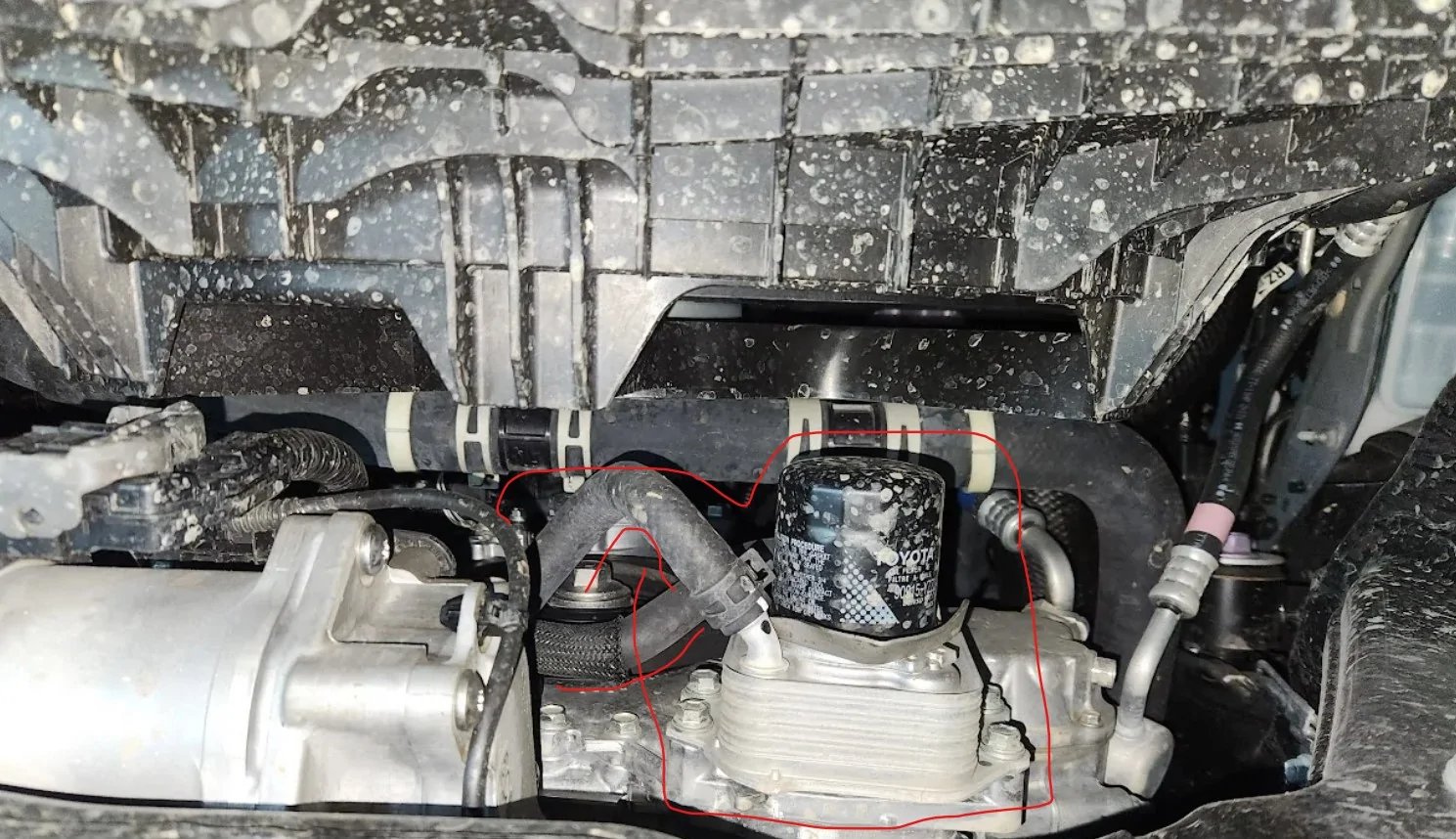
I attached a picture of the 2026 4Runner's oil filter housing. From what I can see, it's a completely separate housing mounted away from the engine block. It connects through two hoses—one for the oil supply and the other for the return.
This made me wonder: why did Toyota choose this location?
To me, this seems like a missed engineering opportunity. Many manufacturers, including BMW, Jeep, GM, and even Subaru, mount the oil filter on top of the engine. That design makes oil changes much cleaner, faster, and easier since there's less mess and better access.
The 2026 4Runner has a large engine bay, so it seems like Toyota had plenty of room to place the oil filter on top as well. Instead, they mounted it lower and separately, which appears to make servicing more complicated.
Is there an engineering reason for this design, such as cooling, oil pressure, packaging, or crash safety? Or do you think Toyota simply missed an opportunity to make routine maintenance easier?
I'd be interested to hear what others think, especially anyone with an engineering or Toyota service background.

This made me wonder: why did Toyota choose this location?
To me, this seems like a missed engineering opportunity. Many manufacturers, including BMW, Jeep, GM, and even Subaru, mount the oil filter on top of the engine. That design makes oil changes much cleaner, faster, and easier since there's less mess and better access.
The 2026 4Runner has a large engine bay, so it seems like Toyota had plenty of room to place the oil filter on top as well. Instead, they mounted it lower and separately, which appears to make servicing more complicated.
Is there an engineering reason for this design, such as cooling, oil pressure, packaging, or crash safety? Or do you think Toyota simply missed an opportunity to make routine maintenance easier?
I'd be interested to hear what others think, especially anyone with an engineering or Toyota service background.
Sponsored