
Sponsored

4Everest

TRD Off-Road Premium
Active member
Joined
Nov 29, 2025
Threads
2
Messages
37
Reaction score
26
Location
Michigan
Vehicle(s)
'04 Acura TSX, '25 4Runner
• It is possible that higher filtration efficiency can result in potential oil flow restriction...but aftermarket automotive oil filters are manufactured to meet or exceed the OE oil filters performance including oil flow & filtration efficiency. I'm pretty sure that respectable manufacturers are required to perform testing to ensure that their products aren't grenading vehicles as that would be determental to their customers & their company.
I just wanted to respond to this ONE point: you're right that a decent filter won't grenade your engine by starving it of oil, but that's because decent filters include a pressure-operated bypass path. So at a high enough pressure difference across the filter (due to filter media clogging or a filter that's too-restrictive in the first place, for example), your oil starts bypassing the filter altogether and you effectively don't have one.

I'm not disputing your point, but be careful about getting too far outside of specs on this.
Sponsored


 

The_Dark_Knight_Forever

TRD Sport Premium
Well-known member
First Name
J.
Joined
Mar 31, 2025
Threads
8
Messages
306
Reaction score
129
Location
Houston, TX
Vehicle(s)
2003 Toyota Tundra SR5 TRD Sport Stepside
Since when should YouTube videos be considered at accurate, fair, or unbiased?

I found this:

Not necessarily bad, and not necessarily nefarious. Oil filter design is a balancing act between:

  • Filtration efficiency (catching smaller particles)
  • Flow rate (ensuring enough oil volume reaches the engine quickly)
  • Pressure drop across the filter
  • Cold-start behavior
  • Filter lifespan
  • Engine design tolerances
Toyota has historically tended to prioritize consistent oil flow and low restriction, especially during:

  • cold starts,
  • high RPM operation,
  • long service intervals,
  • and engines with variable valve timing systems that are sensitive to oil pressure/flow.
A filter that captures extremely tiny particles very efficiently can also:

  • restrict flow more,
  • trigger bypass valves more often,
  • or reduce oil delivery under some conditions.
So Toyota’s philosophy is often:

“Adequate filtration with excellent flow and reliability.”

That’s a legitimate engineering choice.

A few important nuances:

“Less efficient” does not mean “poor”
Many OEM filters are designed around the reality that:

  • modern engines already have tight manufacturing tolerances,
  • modern oils contain strong detergent/dispersant packages,
  • and most harmful wear particles are in a size range the OEM filter does catch adequately.
Toyota’s engineers are optimizing for:

  • total engine durability,
  • not winning a laboratory micron-efficiency contest.
An ultra-high-efficiency aftermarket filter may look better on paper while not meaningfully improving engine life in real-world use.

Toyota engines are known for longevity
It would be hard to argue Toyota’s approach is catastrophically wrong given the reputation of vehicles like the Toyota Camry, Toyota Corolla, and Toyota Tacoma for routinely surviving hundreds of thousands of miles.

If Toyota filters were genuinely inadequate, you’d expect widespread premature engine failures across decades of engines. That evidence largely does not exist.

Why aftermarket reviewers criticize OEM filters
A lot of oil-filter reviews focus heavily on:

  • micron ratings,
  • beta ratios,
  • media density,
  • or “how much debris can this catch?”
Those metrics matter, but reviewers sometimes under-emphasize:

  • bypass valve calibration,
  • startup flow,
  • pressure stability,
  • and how the filter interacts with a specific engine design.
A filter optimized for a racing engine, diesel engine, or extended-drain interval may not be ideal for a Toyota commuter engine.

Could higher filtration be beneficial after break-in?
Possibly. There is a reasonable argument that:

  • during initial break-in, higher flow and capacity are desirable,
  • while later in engine life, finer filtration could marginally reduce long-term wear.
That said, the measurable real-world benefit for a normal passenger vehicle is debated and often small.

Where people get into trouble
Problems happen when people choose:

  • extremely restrictive filters,
  • cheap poorly-made filters,
  • or filters with incorrect bypass valve settings.
An “ultra efficient” filter that starves oil flow under cold conditions can potentially be worse than a moderate-efficiency OEM filter with excellent flow characteristics.

So the short answer is:

  • Toyota’s design choice is probably best understood as a conservative reliability-oriented engineering philosophy, not cost-cutting sabotage.
  • Whether it is optimaldepends on goals:
    • maximum lab filtration numbers,
    • maximum flow stability,
    • racing,
    • extended intervals,
    • cold climates,
    • or long-term daily-driver reliability.
Since when should ChatGPT or any other A.I. provided information be considered always accurate, fair & unbiased? A.I. is a fantastic time saver & resource to use but it's not always correct 100% of the time. Wording something differently can result in two different answers from A.I.. It gets data ultimately from human beings that have input & uploaded information at some point in time which can & often does include bias, opinions rather than facts & incorrect information. In the end people use what information they have access to & any past experience to form opinions & make decisions when needed.
 

The_Dark_Knight_Forever

TRD Sport Premium
Well-known member
First Name
J.
Joined
Mar 31, 2025
Threads
8
Messages
306
Reaction score
129
Location
Houston, TX
Vehicle(s)
2003 Toyota Tundra SR5 TRD Sport Stepside
AI reply guy slop aside, this is my choice of oil filter:

https://www.rockauto.com/en/moreinfo.php?pk=478677&cc=3458784&pt=5340&jsn=627

https://bobistheoilguy.com/forums/t...110-c-p-toyota-90915-yzzn1-equivalent.390740/

"This is the filter Toyota should have adopted as the OE filter. Now that I’ve seen the thread of the missing glue end on numerous Denso N1 filters made in Thailand, this Beck/Arnley (made in Japan) filter is the best constructed alternative option filter if I’m looking for similar OE filtering performance ."

RockAuto is also a good source for the Wix charcoal filter and engine air filters.

I bought the Hengst one for the engine, as off roading dusty mountain trails tends to foul the engine air filter a little more.
That looks like a very nice oil filter worth considering. I like that it's made in Japan just like our 4Runners too.
 
OP
OP
6thGen1419

6thGen1419

TRD Off-Road Premium
Well-known member
First Name
Peter
Joined
Sep 18, 2025
Threads
19
Messages
281
Reaction score
163
Location
New Mexico
Vehicle(s)
2025 4Runner TRD Off Road Premium iForce Max
In the end people use what information they have access to & any past experience to form opinions & make decisions when needed.
Yes indeed. After seeing the posts here, watching those videos, and researching, seems to me that the best decision is to use Toyota branded oil and oil filters for these Toyota engines.
 

The_Dark_Knight_Forever

TRD Sport Premium
Well-known member
First Name
J.
Joined
Mar 31, 2025
Threads
8
Messages
306
Reaction score
129
Location
Houston, TX
Vehicle(s)
2003 Toyota Tundra SR5 TRD Sport Stepside
Yes indeed. After seeing the posts here, watching those videos, and researching, seems to me that the best decision is to use Toyota branded oil and oil filters for these Toyota engines.
I respect your opinion & choices. You could be correct & it's your vehicle to maintain. I don't think one can go wrong using OE parts with Toyota/Lexus/Scion vehicles.

Personally I don't believe OE Toyota motor oil is better than Pennzoil Ultra Platinum (very affordable at Walmart) or Amsoil Signature Series (very pricey no matter where it's purchased from) as both oils have destroyed OE Toyota oil in every test I've ever seen (but that is a completely different thread).
As for OE Toyota Oil filters I have no doubt that they offer poor filtration compared to other compatible filters but what really has me still considering continuing with them is simply the fact that I have more trust that the bypass relief valve is correctly calibrated for our engines with the OE Toyota/Denso filter than maybe with aftermarket filters. It's a shame that Toyota/Lexus doesn't publish specifications for their filters.
Regarding engine air filters, I believe the OE Toyota/Denso filters have a slight overall edge over the compatible Wix filter. If an owner wants lower air intake restriction & better filtration efficiency then OE is the way to go. But if a higher particulate capacity & more horsepower is wanted then Wix is the way to go. I'm personally leaning toward the OE filters despite buying a case of Wix filters already but I haven't been happy with the manufacturing quality of most of the OE filters I've seen. The foam frames have been sloppy & reduce the filtration area. I returned about 4 of them to a dealership because I didn't like the sloppy quality which naturally makes me question the quality of the other OE filters.
 
Last edited:

CO/ZA

TRD Off-Road Premium
Well-known member
Joined
Mar 7, 2025
Threads
3
Messages
162
Reaction score
140
Location
Denver
Vehicle(s)
25 4R ORP
I respect your opinion & choices. You could be correct & it's your vehicle to maintain. I don't think one can go wrong using OE parts with Toyota/Lexus/Scion vehicles.

Personally I don't believe OE Toyota motor oil is better than Pennzoil Ultra Platinum (very affordable at Walmart) or Amsoil Signature Series (very pricey no matter where it's purchased from) as both oils have destroyed OE Toyota oil in every test I've ever seen (but that is a completely different thread).
As for OE Toyota Oil filters I have no doubt that they offer poor filtration compared to other compatible filters but what really has me still considering continuing with them is simply the fact that I have more trust that the bypass relief valve is correctly calibrated for our engines with the OE Toyota/Denso filter than maybe with aftermarket filters. It's a shame that Toyota/Lexus doesn't publish specifications for their filters.
Regarding engine air filters, I believe the OE Toyota/Denso filters have a slight overall edge over the compatible Wix filter. If an owner wants lower air intake restriction & better filtration efficiency then OE is the way to go. But if a higher particulate capacity & more horsepower is wanted then Wix is the way to go. I'm personally leaning toward the OE filters despite buying a case of Wix filters already but I haven't been happy with the manufacturing quality of most of the OE filters I've seen. The foam frames have been sloppy & reduce the filtration area. I returned about 4 of them to a dealership because I didn't like the sloppy quality which naturally makes me question the quality of the other OE filters.
I don't believe springs are calibrated per vehicle on this one, the N1 filter fit multiple engine and models in the Toyota family. If you look up that part number, it fits every thing from Yaris to Highlander to 4Runner - it's multi purpose.

All of the oil bypass springs are concerned with differential of pressure (dP) vs flow of oil. It's basically only going to happen under clogged filter conditions, which is an edge case in of itself. Maybe if you have 10w-40 on cold winters day it'll open as well, but 0w-20 means it's a non-issue.
 

The_Dark_Knight_Forever

TRD Sport Premium
Well-known member
First Name
J.
Joined
Mar 31, 2025
Threads
8
Messages
306
Reaction score
129
Location
Houston, TX
Vehicle(s)
2003 Toyota Tundra SR5 TRD Sport Stepside
I don't believe springs are calibrated per vehicle on this one, the N1 filter fit multiple engine and models in the Toyota family. If you look up that part number, it fits every thing from Yaris to Highlander to 4Runner - it's multi purpose.

All of the oil bypass springs are concerned with differential of pressure (dP) vs flow of oil. It's basically only going to happen under clogged filter conditions, which is an edge case in of itself. Maybe if you have 10w-40 on cold winters day it'll open as well, but 0w-20 means it's a non-issue.
That's what I've understood as far as the OE Toyota/Denso # 90915-YZZN1 oil filter being used on multiple Toyota vehicles. But it's largely the same engines or a slight variation of it that this oil filter is being used on. I agree that a clogged filter is very unlikely yet still possible under neglectful circumstances.

In your opinion, is it likely that the bypass valve spring in an aftermarket oil filter (such as the CarQuest Premium # 85394) could be calibrated differently or out of specification range of the OE Toyota/Denso 90915-YZZN1 oil filter?
 

CO/ZA

TRD Off-Road Premium
Well-known member
Joined
Mar 7, 2025
Threads
3
Messages
162
Reaction score
140
Location
Denver
Vehicle(s)
25 4R ORP
That's what I've understood as far as the OE Toyota/Denso # 90915-YZZN1 oil filter being used on multiple Toyota vehicles. But it's largely the same engines or a slight variation of it that this oil filter is being used on. I agree that a clogged filter is very unlikely yet still possible under neglectful circumstances.

In your opinion, is it likely that the bypass valve spring in an aftermarket oil filter (such as the CarQuest Premium # 85394) could be calibrated differently or out of specification range of the OE Toyota/Denso 90915-YZZN1 oil filter?
They are all around 10-20psi of dP to be honest, the aftermarket isn't in the business of grenading engines.

https://bobistheoilguy.com/forums/threads/the-myth-of-flow-over-efficiency.398959/

This thread deep dives the topic.

Reading through all this led me to the conclusion that the Toyota is cheaper media, but it's fine because the engines do run clean.

However, the quality control problems seen on Denso N1 filters has me wary enough to go with the VIC C-110.

VIC is the go-to choice for replacement filters in the JDM market in Japan itself.
 

LuLu6G

TRD Sport
Member
First Name
Oluy
Joined
Dec 20, 2025
Threads
0
Messages
14
Reaction score
2
Location
DMV
Vehicle(s)
4R
Better off using cheap regular filter, then change them regularly. Rather than those thick filters. Been there. Drastically restricts airflow.
 

Joestac

Well-known member
Joined
Nov 21, 2025
Threads
18
Messages
525
Reaction score
380
Location
Austin, TX
Vehicle(s)
2025 4Runner Trailhunter
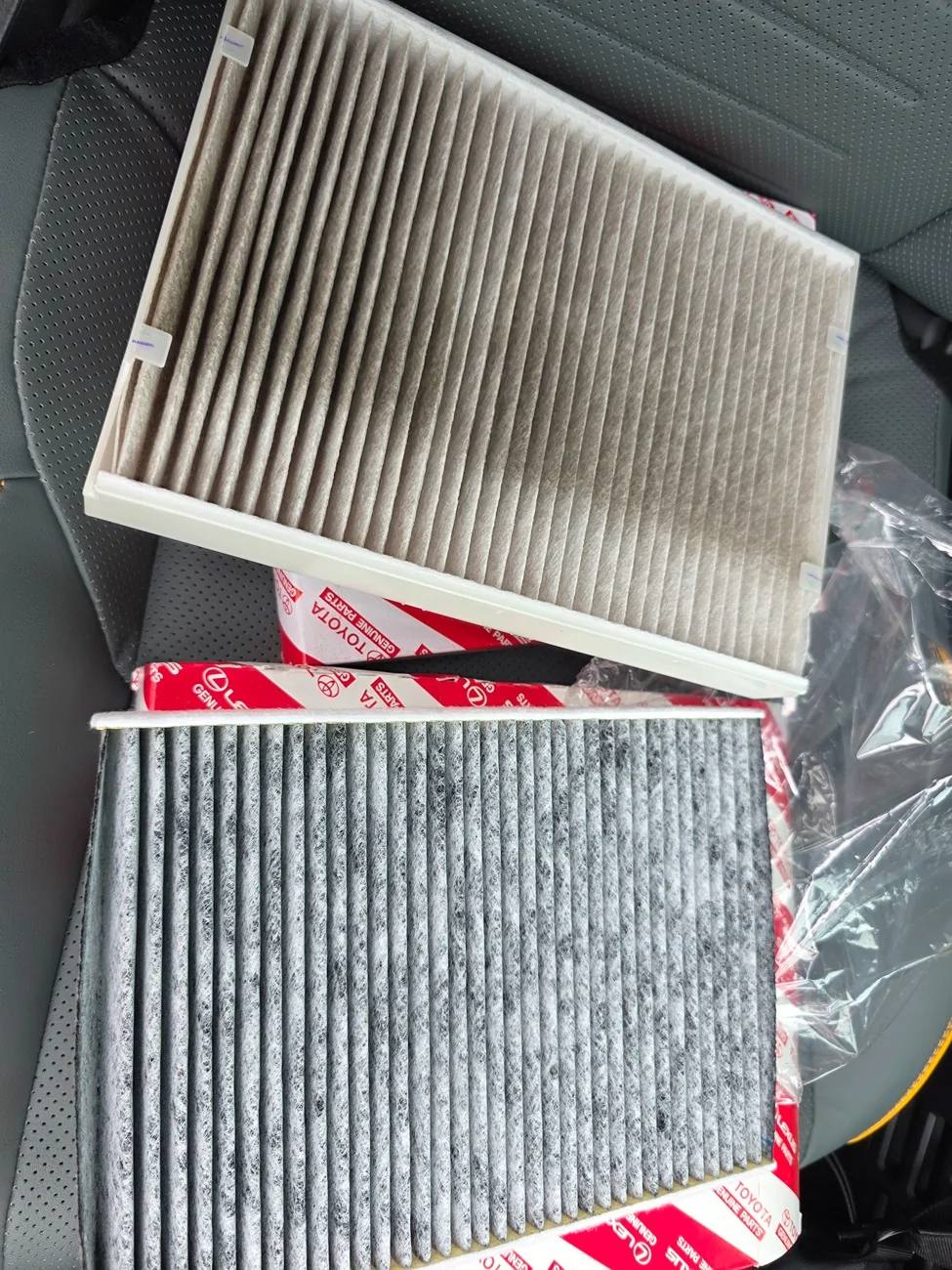
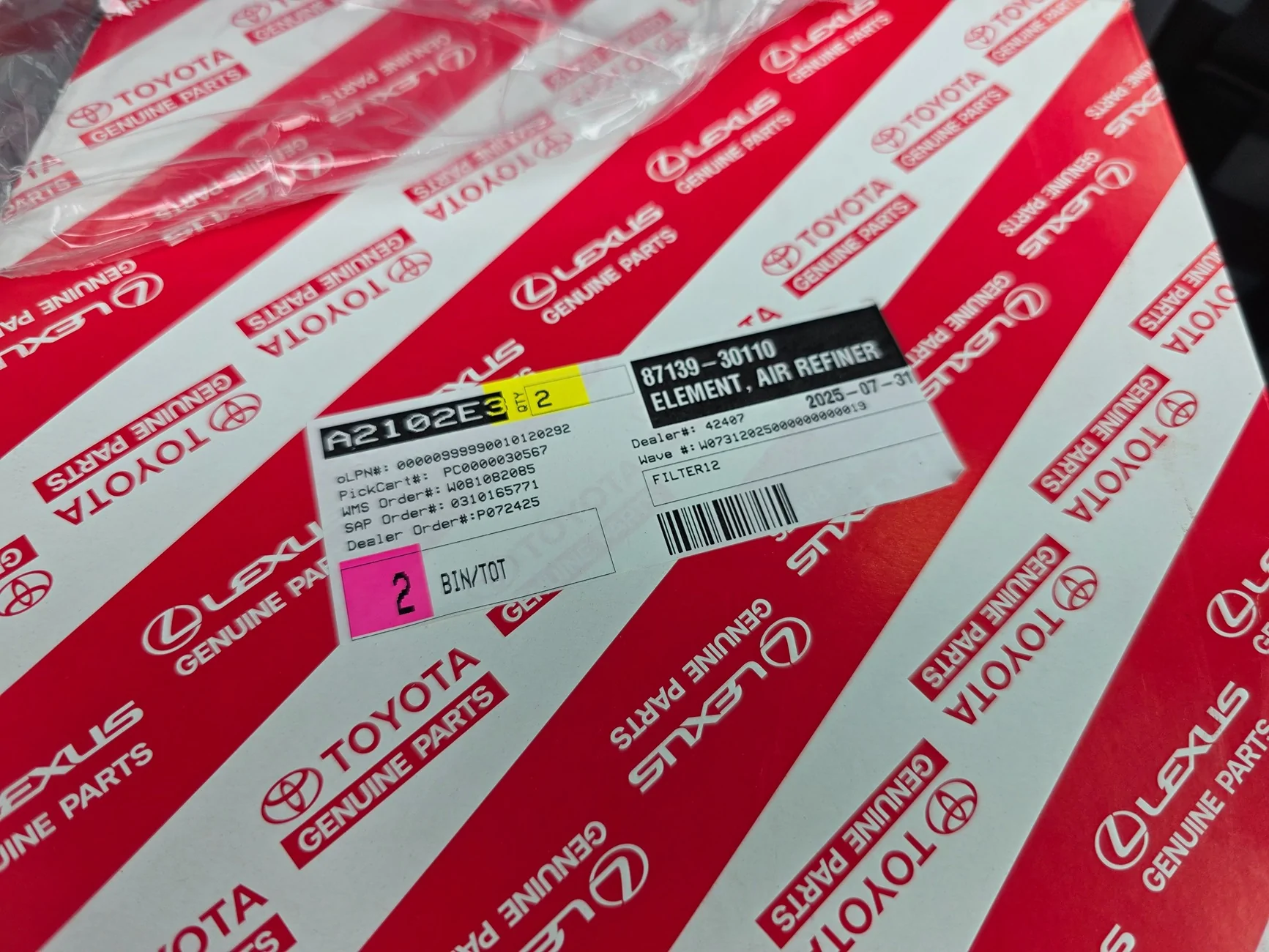
Toyota has a carbon filter cabin filter. It's not the stock filter, which is in my picture. I have it on order. Part number: 87139-30110
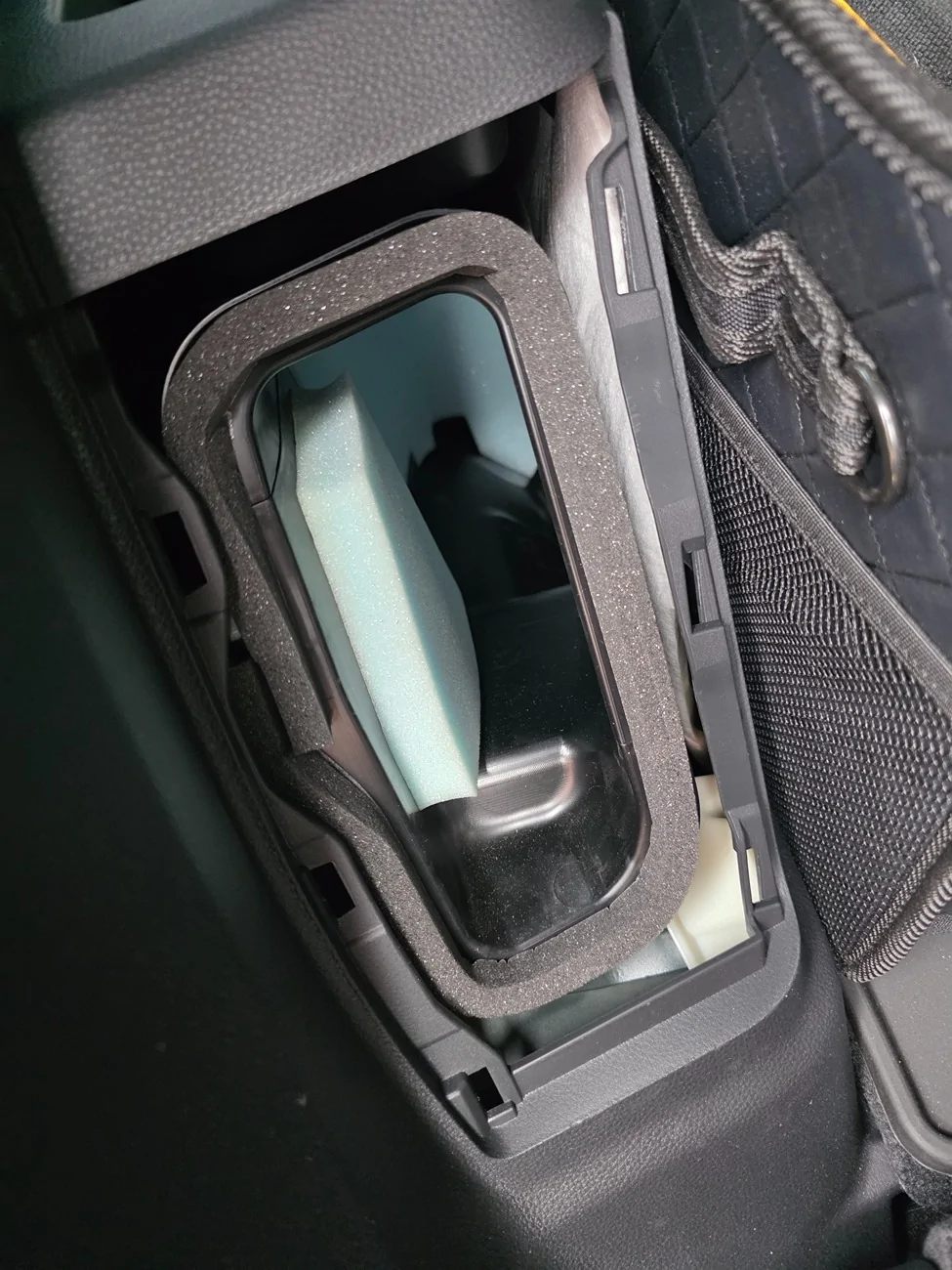
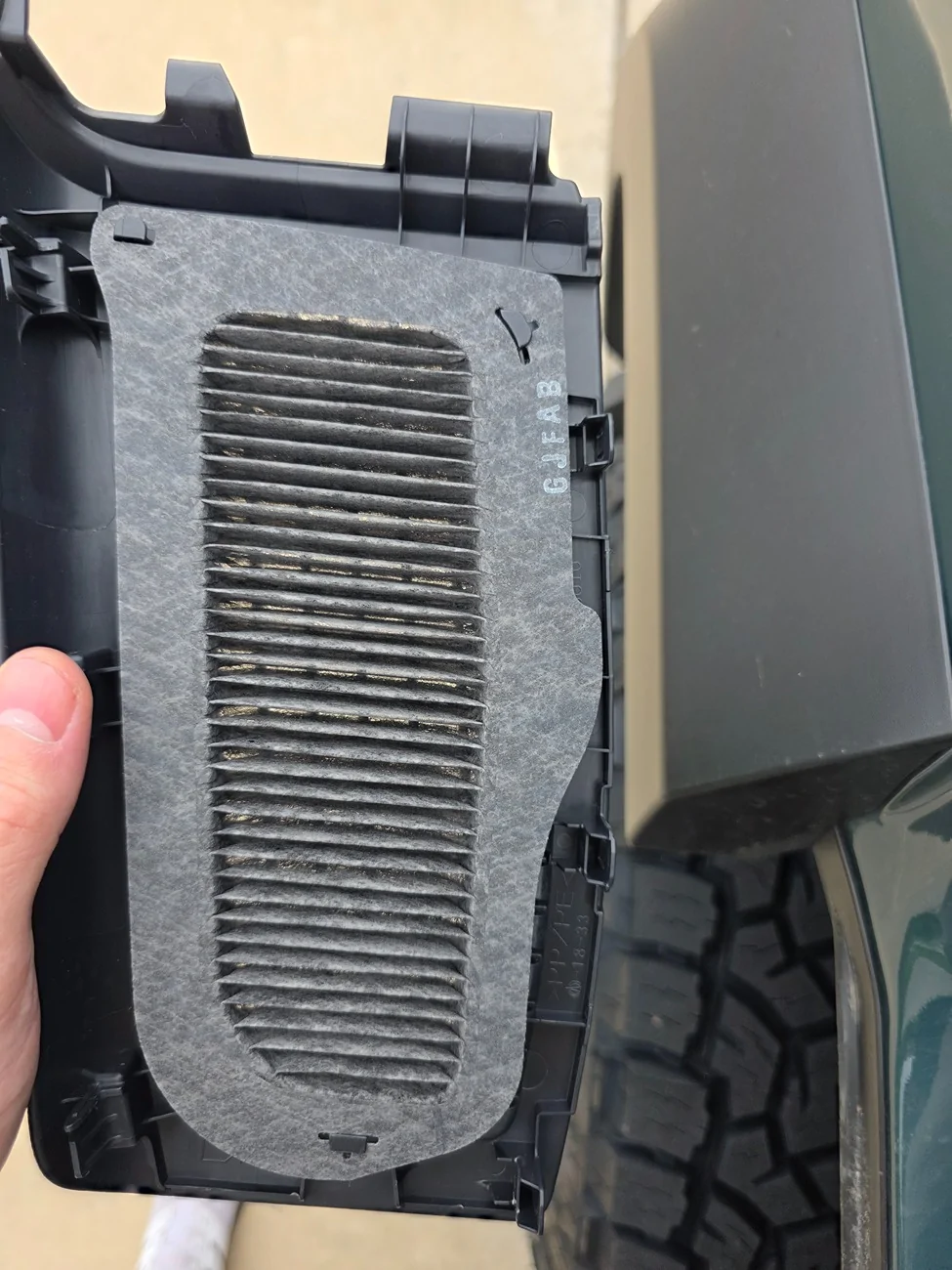
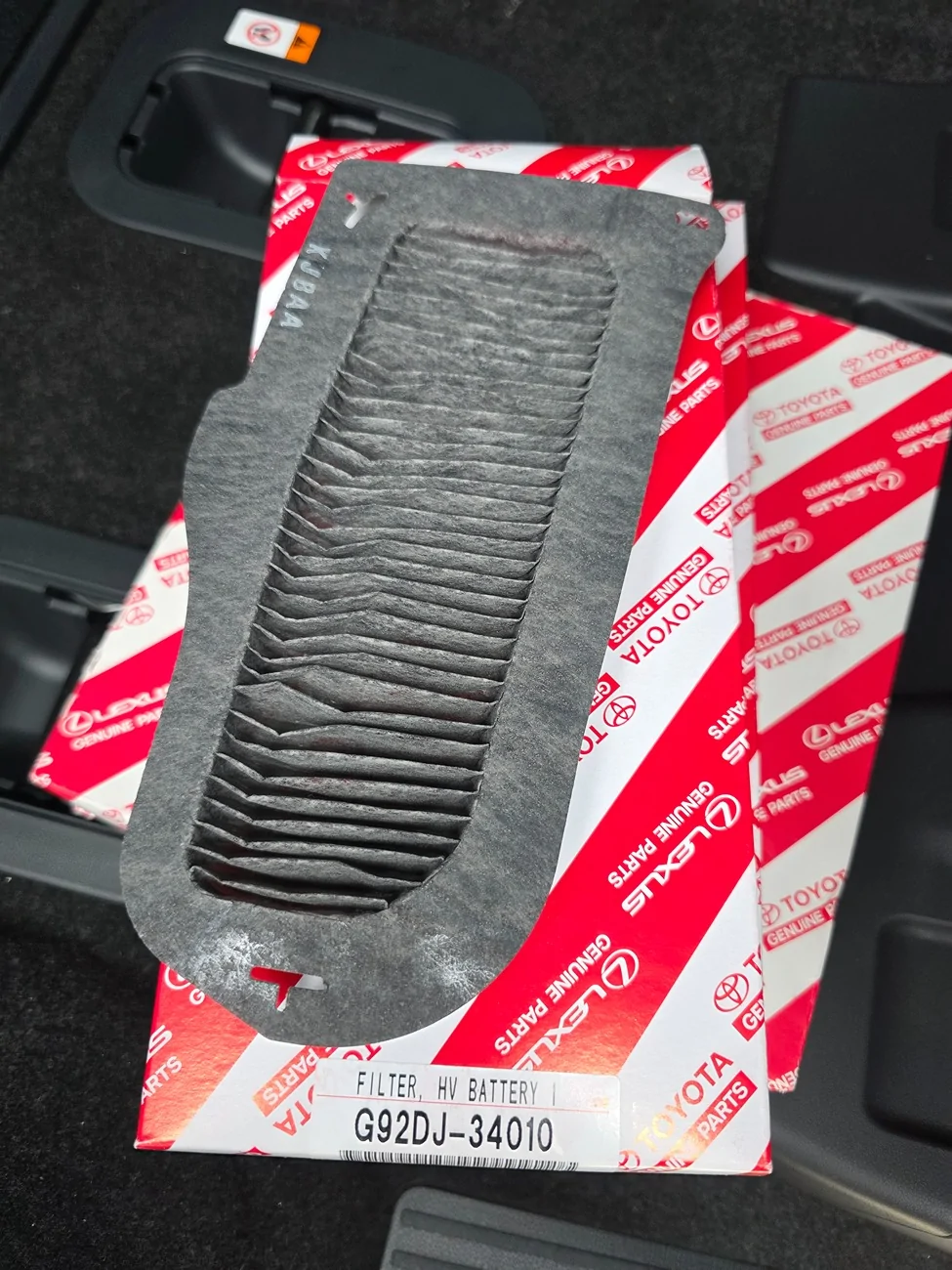
FYI, when I picked mine up at the dealer the carbon is what they just gave me. Just swapped mine at 9000 miles. Also did my hybrid battery filters. Because why not.

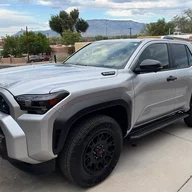
2025 2026 4runner 6th gen Cabin air filter & engine air filter condition after 9 month, 7600 miles (Hybrid ORP) 20260523_133958


2025 2026 4runner 6th gen Cabin air filter & engine air filter condition after 9 month, 7600 miles (Hybrid ORP) 20260523_134013


2025 2026 4runner 6th gen Cabin air filter & engine air filter condition after 9 month, 7600 miles (Hybrid ORP) 20260523_134719


2025 2026 4runner 6th gen Cabin air filter & engine air filter condition after 9 month, 7600 miles (Hybrid ORP) 20260523_134721


2025 2026 4runner 6th gen Cabin air filter & engine air filter condition after 9 month, 7600 miles (Hybrid ORP) 20260523_134418
Sponsored


Top