

Sponsored

quadna71

TRD Off-Road Premium
Well-known member
First Name
Chris
Joined
Sep 11, 2025
Threads
9
Messages
123
Reaction score
107
Location
Delaware
Vehicle(s)
2025 4runner
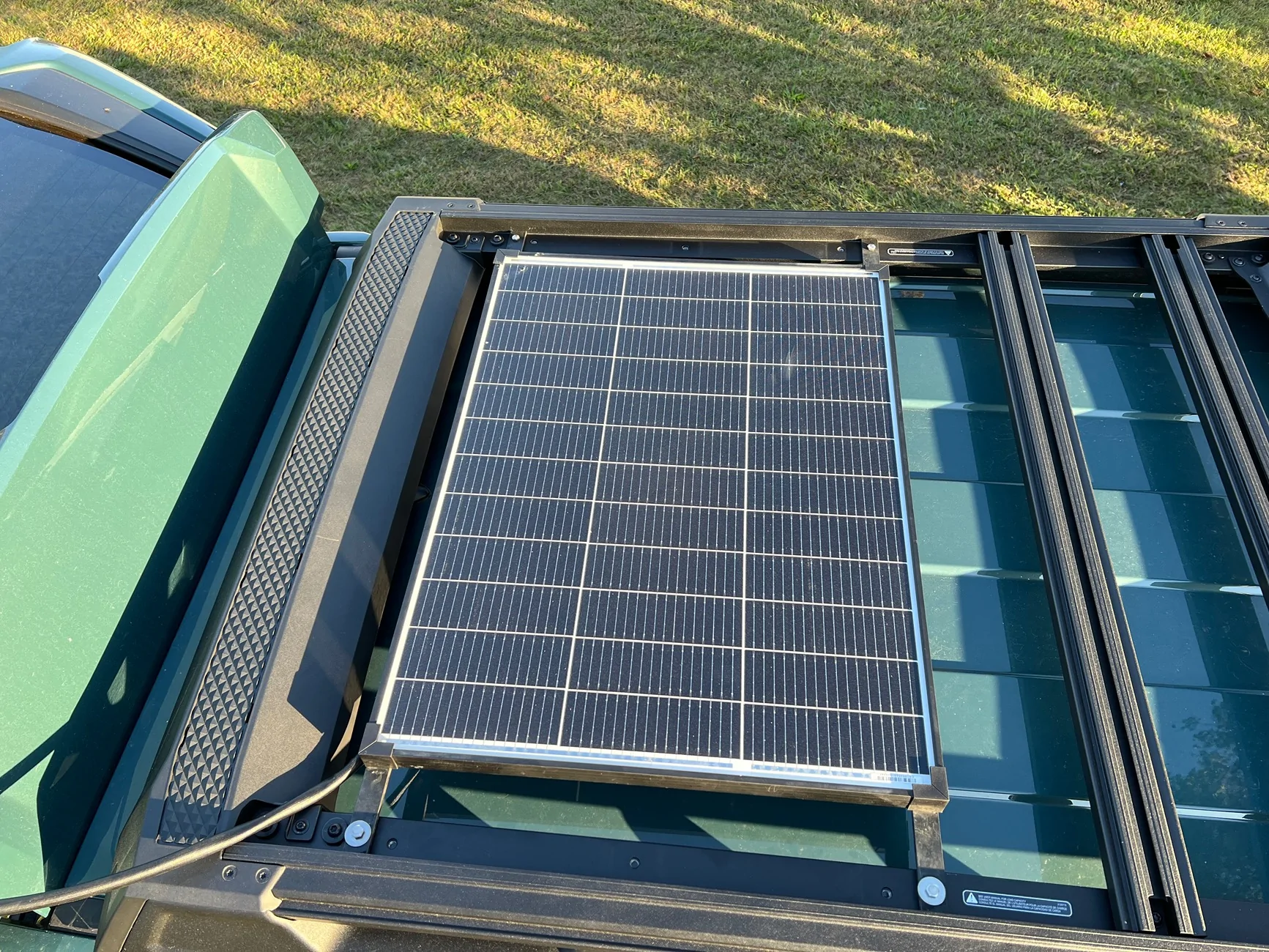
I put a solar panel on the roof rack. It'll power my cooler on long weekends.

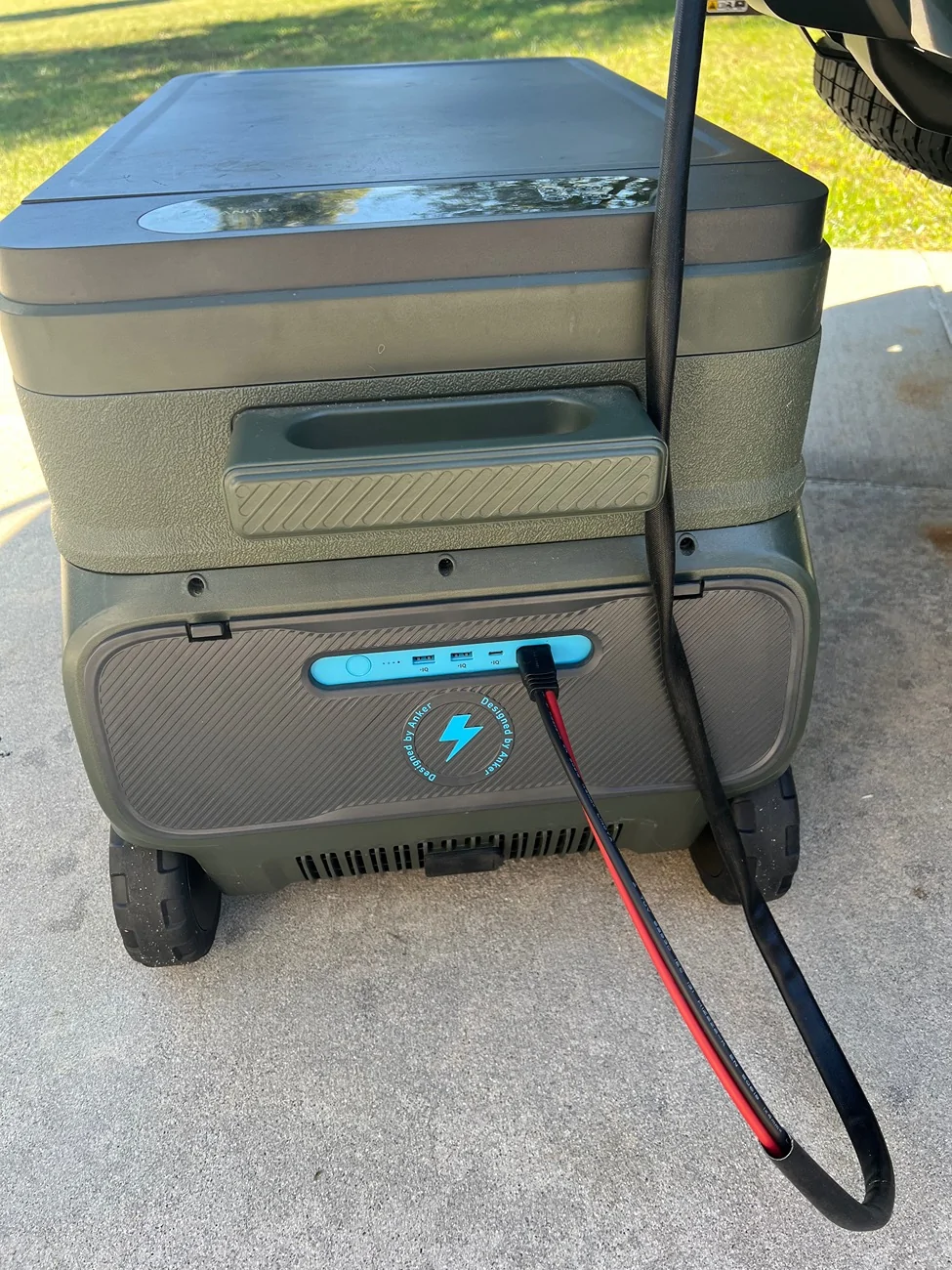
It's only a 100w panel, but has 16 bus bars to hopefully overcome some slight shading from time to time. I used 12"x1"x1/4" aluminum bars for supports - each bar has two stainless bolts w/lock nuts holding it to the panel and then another similar hardware mount where it ties to the roof rack. I have 1" diameter rubber bushings between the aluminum bars and the panel as well as the aluminum bars and the roof rack. I know it should be grounded, but I opted for this right not to make sure there aren't any vibration issues. The panel has a 10' pigtail that has solar connectors on the top end and an XT60 plug at the bottom end. My Anker 40L v1 cooler has an XT60 input on the battery designed specifically for solar charging and I wanted to take advantage of that. I do have a 2048wh Anker solar generator that also could be charged by the panel, but this setup will be used 99/100 times for the cooler on beach weekends or trips to the cabin. I had to pull two of the roof rack cross bars for the panel to fit but honestly we don't expect to store items up there.

I used Alumablack to tint the aluminum bars black, but this morning they had lightened considerably. Not sure if that is due to the dew on them this morning or if they require a second treatment...but I was a little bummed.

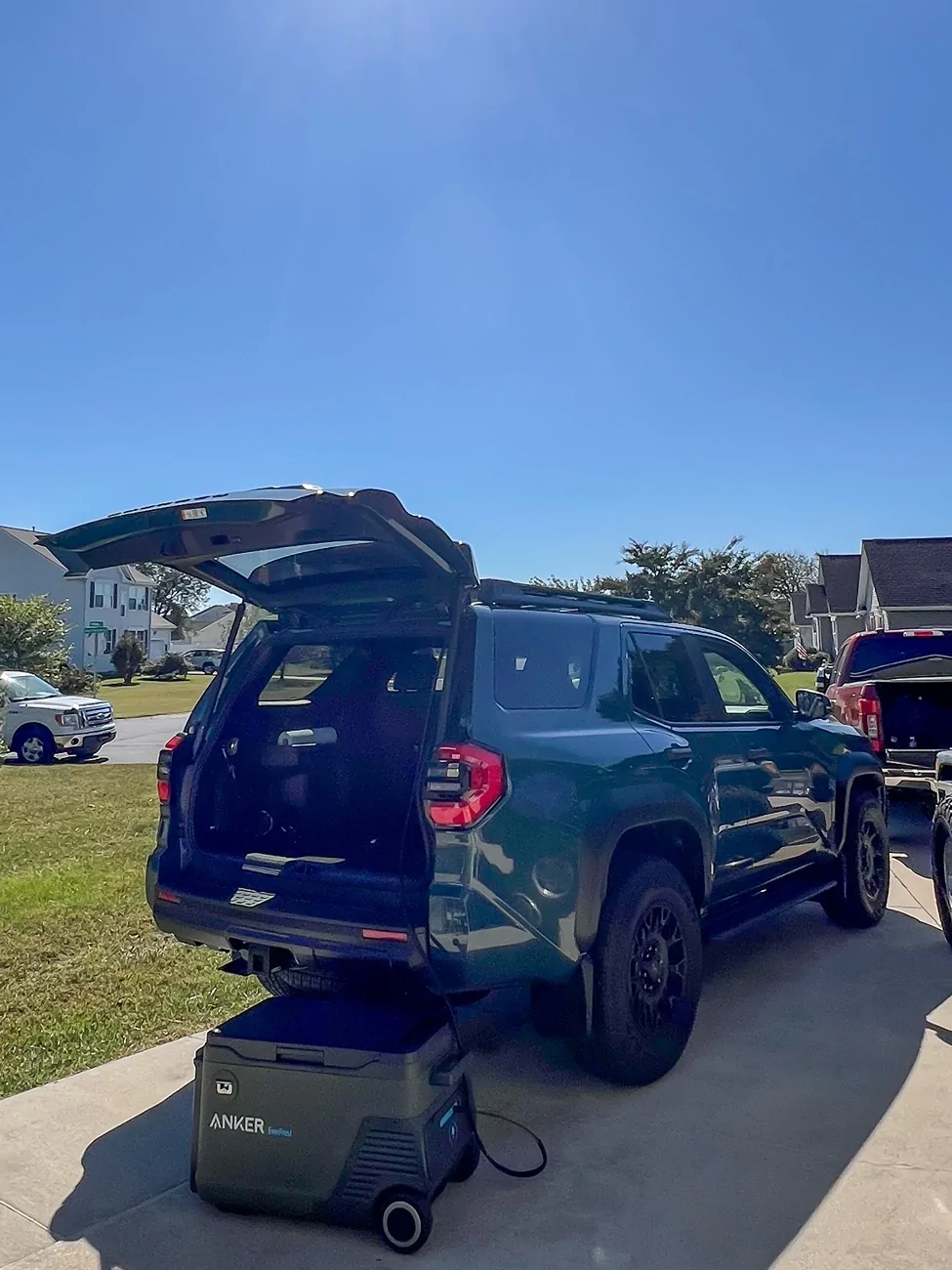
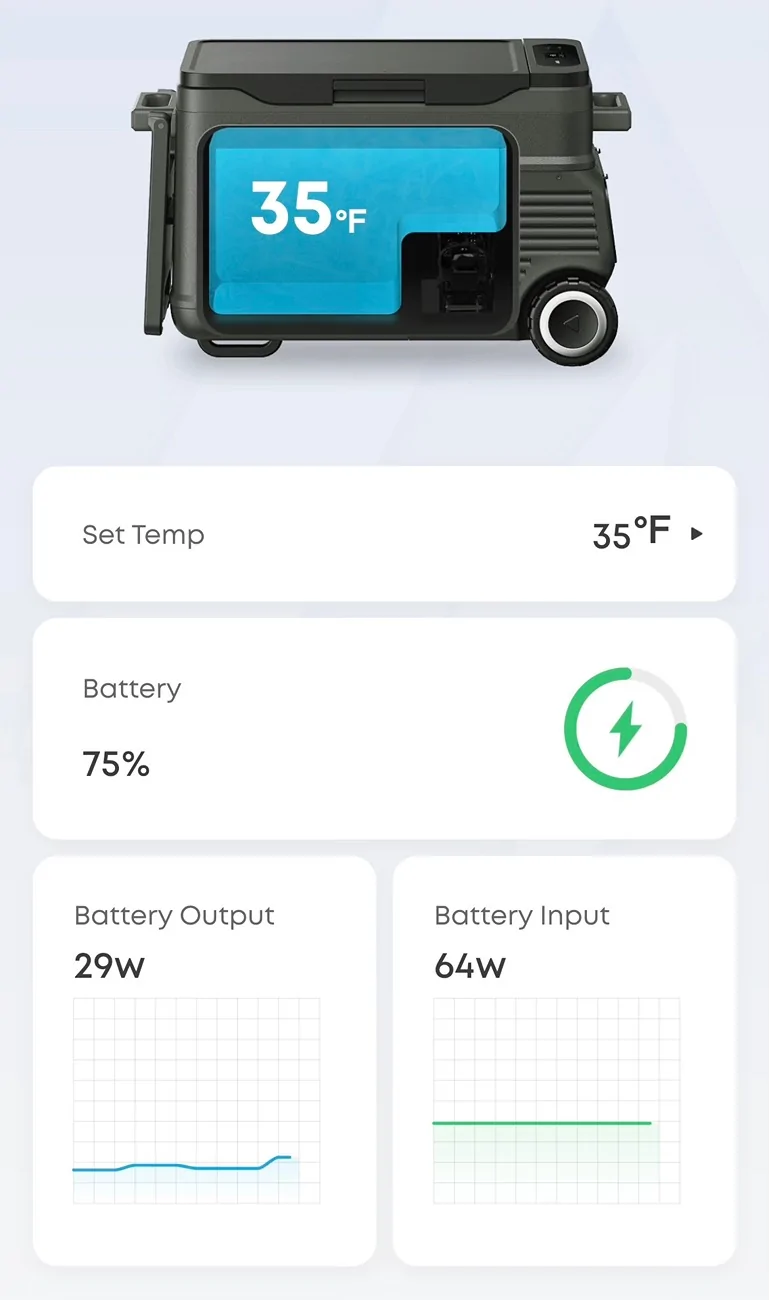
Tested it out by tossing a room-temperature 30 of Miller Lite in the cooler and set the temp 35 degrees. I figure that'll put a strong demand on the battery. Parked the 4Runner in the sun and plugged the pigtail in - success! The panel is inputting more than double of the draw on the battery from the cooler. I call that a win. Should make it easier on the cooler to live in the back of the 4Runner on long weekends and when on road trips.
2025 2026 4runner 6th gen Solar panel installed on roof rack to power a cooler IMG_1285


2025 2026 4runner 6th gen Solar panel installed on roof rack to power a cooler IMG_1298


2025 2026 4runner 6th gen Solar panel installed on roof rack to power a cooler IMG_1299


2025 2026 4runner 6th gen Solar panel installed on roof rack to power a cooler IMG_1297
Sponsored

 
Last edited:

ropdykex11

TRD Off-Road
Well-known member
First Name
Rich
Joined
Jun 26, 2025
Threads
7
Messages
98
Reaction score
44
Location
Portland, OR
Vehicle(s)
2025 4Runner TRD Off-Road
Fantastic, I would love a setup like this.

Can you link exactly which solar panel you used??
 

Keroppi

TRD Off-Road Premium
Well-known member
First Name
Mark
Joined
Jan 25, 2025
Threads
48
Messages
225
Reaction score
503
Location
Hawaii
Vehicle(s)
Incoming 2025 4Runner TRD ORP
Very cool, thanks for sharing @quadna71 . First solar power setup I've seen on 6th gen.

I'd like to know which solar panel also please. Thx.
 
OP
OP
quadna71

quadna71

TRD Off-Road Premium
Well-known member
First Name
Chris
Joined
Sep 11, 2025
Threads
9
Messages
123
Reaction score
107
Location
Delaware
Vehicle(s)
2025 4runner
We didn’t want the complication of a hybrid system in a vehicle we intend to have for a very long time. Doesn’t hurt that the Max was $3000 more and the solar was $150 all in.
 

HVLA

TRD Off-Road Premium
Well-known member
Joined
Feb 28, 2025
Threads
9
Messages
647
Reaction score
439
Location
USA
Vehicle(s)
Lexus
Why not use one of the alternator chargers and charge at 5-800 watts? I have the pecron in my GX460 and it charges my battery at almost 600 watts.
 
OP
OP
quadna71

quadna71

TRD Off-Road Premium
Well-known member
First Name
Chris
Joined
Sep 11, 2025
Threads
9
Messages
123
Reaction score
107
Location
Delaware
Vehicle(s)
2025 4runner
We tend to spend many of our summer weekends out on the beach surf fishing. This means the 4Runner will be parked from shortly after sunrise to just after sunset without being started or running at all. This often will happen for two days in a row and occasionally we camp at the park and then in those instances we will be on the beach many days in a row. When these instances happen, I want a solution that can keep the cooler fully charge while having minimal impact on the vehicle. I don't want to start the vehicle, I don't want to trickle off the hybrid battery, and I don't want to have to keep recharging the cooler each night. The cooler's built in battery can easily handle 24 hours of cooling, but when we are in/out of the cooler all day on a hot beach that 24 hour length of battery life gets impacted. Having a solar panel that inputs more than double of what cooler draws is hugely beneficial...and I literally no longer have to even think about it. Toss the cooler in the back, plug it in, and I'm set until we are back home.
 
OP
OP
quadna71

quadna71

TRD Off-Road Premium
Well-known member
First Name
Chris
Joined
Sep 11, 2025
Threads
9
Messages
123
Reaction score
107
Location
Delaware
Vehicle(s)
2025 4runner
Update: We put the cooler in the back and plugged it into the solar panel about a 3 weeks ago. Kept it in there through a weekend of camping where it got lots of open/close for drinks and two weeks of my wife on jury duty and she kept her lunch and cold water in there too. Finally pulled it out yesterday after we visited the beach the day before and it was still sitting at 100%, so seems like the panel is sized right for the cooler. I'm calling it a win.
 

Nodak

Platinum
Well-known member
First Name
JR
Joined
Jan 22, 2025
Threads
46
Messages
2,307
Reaction score
1,308
Location
ND
Vehicle(s)
2025 4R Platinum Heritage Blue , 2023 Tundra Platinum Blueprint no-HV

so i am guessing you dont have a device between the panels and cooler to dump the excess power generated by the panels or a dump load device ???

i am also guessing you are using the panels to dump the excess power as heat thru the panels themselves (same as having nothing attached to the power leads from the panels.


nevermind i found this ...

What happens when you 'unload' a solar panel, and it's still sitting in the sun?

If there is no load on the panel, there will be 0 Watts of power flowing, and thus no energy is harvested.

The voltage between the two sides of the panel (the + and - wires) will rise to 'VOC' or 'Voltage Open Circuit', and then nothing happens. The panel sustains no damage from this.

But where does the energy that would otherwise have been harvested go?

It gets converted to heat.

In theory, the panel temperature will rise-- after all, now instead of some of the energy from the photons impacting the panel's cells being carried away from the panel as electrical energy, it's all just converted to heat and/or reflected light, just like it would be hitting any other surface. The actual temperature rise would likely be negligible, though.
But, technically, the energy that would have been carried away to a load is just simply dissipated into the environment as heat, almost as if the solar panel wasn't there.

Is this wasteful?

Sort of!

This is why people implement 'dump loads' (a load that turns on to do something useful-- say heat water and store it) to kick on when their other uses are not using all of the potential energy harvested.

In some cases, the utility grid is the 'dump load', as grid-tied systems can (typically) export from the home / business that has the panels on their roof, to other customers out on the grid, or grid-side storage, etc.. Small or off-grid systems, however, do not have this ability, so things like water heaters are used to make some use of excess energy.

What if the load only can use a portion of the energy from the panel?

Well, the voltage will likely not rise all the way (not quite) to the VOC, but it will rise from it's ideal operating voltage (VMP). Provided the load is designed to deal with this, neither the panel or the load will be damaged, and just some of the energy that would have been harvested is lost as heat, as opposed to a scenario of no load, where all of the energy is lost as heat.


I hope this was informative and gives you a better understanding of what's going on when a PV panel is exposed to light, but not attached to a load (or attached to a load smaller than its potential output given the conditions).
Sponsored


Top