

Sponsored
OP
OP

jrdees916

TRD Off-Road
Active member
First Name
John
Joined
Oct 23, 2025
Threads
1
Messages
40
Reaction score
55
Location
Urbandale
Vehicle(s)
4runner hybrid TRD Pro
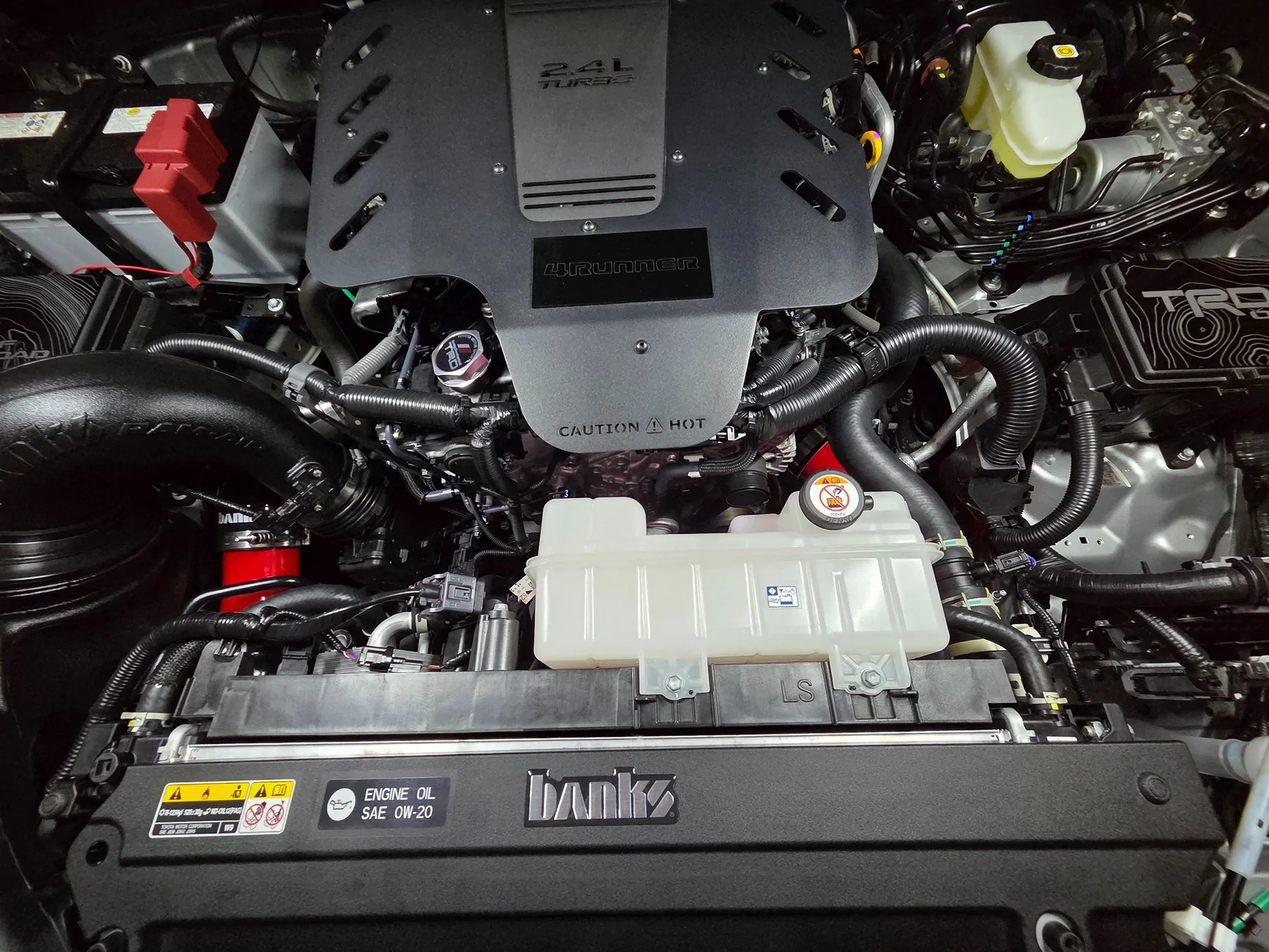
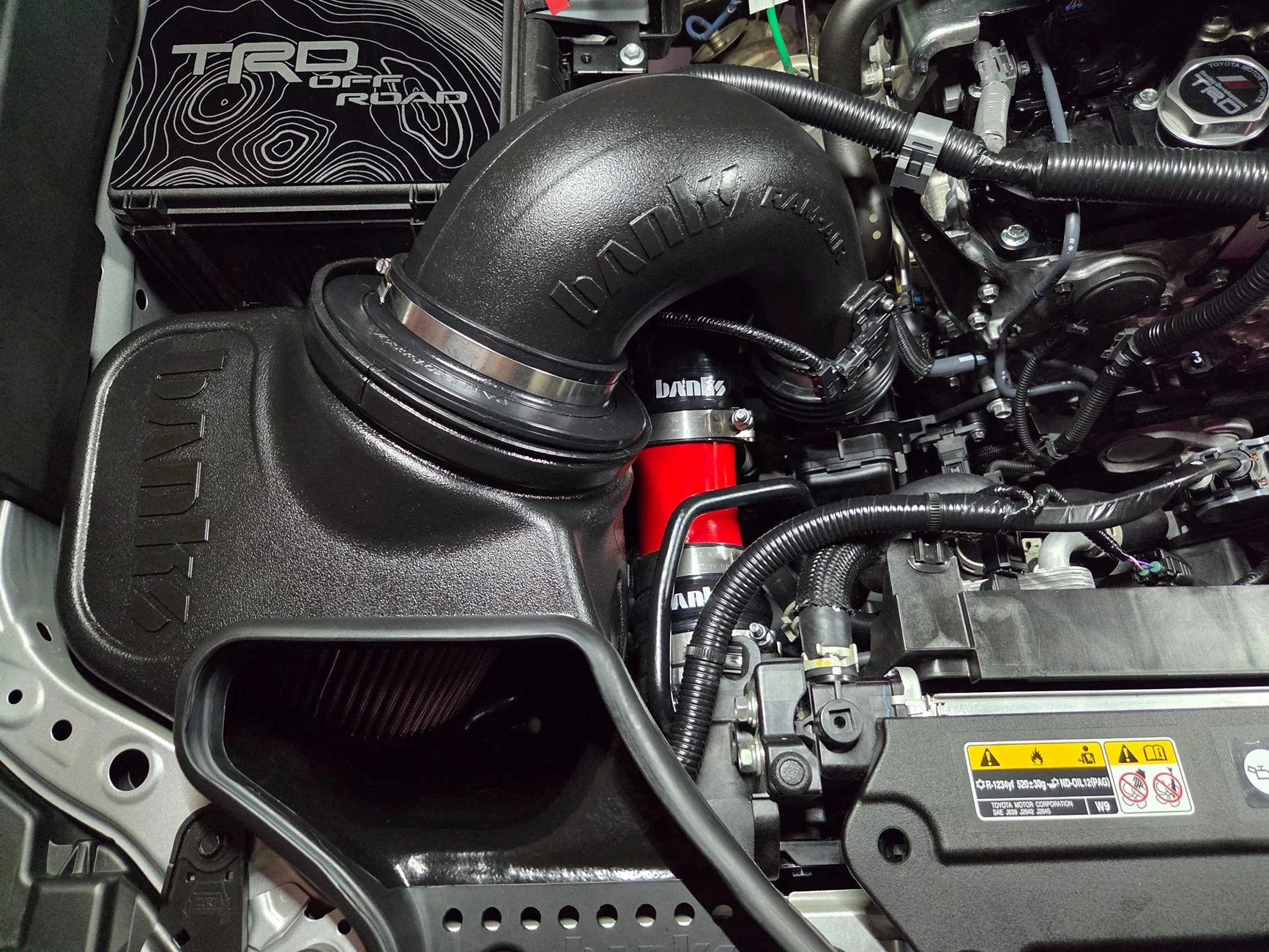
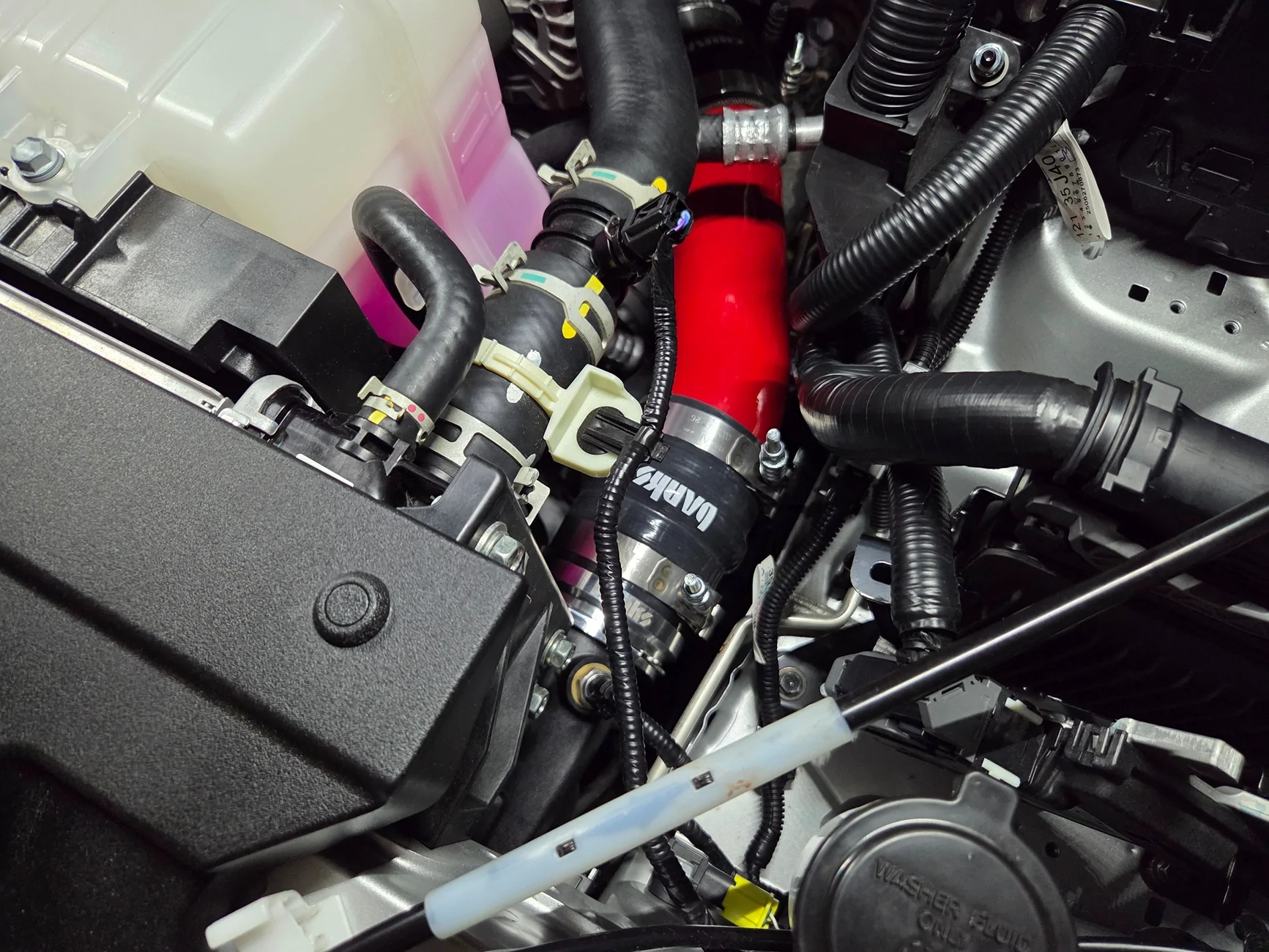
I am excited to get the intercooler installed next weekend. I have the preorder for the inlet. I have to do the intercooler first to keep the EGT’s down
Sponsored


 

Scrappopatamus

TRD Pro
Well-known member
First Name
Barry
Joined
Aug 25, 2025
Threads
4
Messages
283
Reaction score
195
Location
Midway KY
Vehicle(s)
'25 TRD Pro '25 TRD ORPMAX '25 LC250 Prem
Looking to see what it sounds like with the aftermarket exhaust. The updated turbo and a turbo inlet will be next for mine.

You are going to love it with the intercooler, charge pipes and downpipe! I was pleasantly surprised to see my average MPGs go up as well. The factory downpipe is too restrictive and causes too much back pressure.

As long as you are not constantly dogging it, off-roading and/or hauling, I believe these updates will be incredibly beneficial to the overall longevity of the truck. Nonetheless, maintenance is crucial with these bolt ons. Change your fluids and spark plugs more often than prescribed.
Curious why these mods would require more frequent plug and fluid changes?
 

Armbender

TRD Off-Road Premium
Well-known member
First Name
Will
Joined
Feb 20, 2026
Threads
5
Messages
63
Reaction score
32
Location
halifax
Vehicle(s)
2025 4Runner ORP

Sorry I am not great at this video thing.


In the morning I will hope to get a cold start video but please remember I don’t have the OEM exhaust, I am running the AWE exhaust. It is loud during startup but after about 30 sec it idles down and returns to a quieter state. For the install there was a lot of curse words use lol. You will need another set of hands to help with the clamp on the turbo and downpipe. I used the after section of the exhaust to assist with holding the new downpipe in place. There is a tiny dowel pin hole on the downpipe that fits with the turbo so it is oriented correctly. For the second O2 sensor go through the passenger wheel well and you will have the best access.
Amazing! Thanks for the update! We have an almost the exact performance build. Turbo is next to upgrade

Where did you get the engine cover???
 
OP
OP

jrdees916

TRD Off-Road
Active member
First Name
John
Joined
Oct 23, 2025
Threads
1
Messages
40
Reaction score
55
Location
Urbandale
Vehicle(s)
4runner hybrid TRD Pro
Got it from victory 4x4, I do like it compared to all the hose and wires when you initially open the hood.
 

Armbender

TRD Off-Road Premium
Well-known member
First Name
Will
Joined
Feb 20, 2026
Threads
5
Messages
63
Reaction score
32
Location
halifax
Vehicle(s)
2025 4Runner ORP
You mentioned reinstalling the heat shield in your second video, I thought having the DP wrapped you wouldn’t need the OEM heat shield? Or did I confuse something there?
 
OP
OP

jrdees916

TRD Off-Road
Active member
First Name
John
Joined
Oct 23, 2025
Threads
1
Messages
40
Reaction score
55
Location
Urbandale
Vehicle(s)
4runner hybrid TRD Pro
The heat shield that is still used is the one that is placed over the turbo. The heat shield for the downpipe is no longer utilized. That’s why it’s best to ceramic coat or have them install the heat shield
 
Last edited:

SC4Runner

TRD Off-Road Premium
Well-known member
First Name
Fred
Joined
Mar 28, 2025
Threads
6
Messages
232
Reaction score
204
Location
South Carolina
Vehicle(s)
Toyota 4Runner, GMC Truck, Mercury Grand Marquis
Curious why these mods would require more frequent plug and fluid changes?
If you’re demanding more from the engine, you need to take care of its essentials. We’re talking about pushing to a range of 390-420hp, nearly a 40% increase over stock. It transitions from a commuter to a performance/severe-duty maintenance schedule. However, some of these things need to be done regardless of performance upgrade. I asked AI to help with putting together a maintenance plan specifically for our 6th generation 4Runners. I’m planning to start out adhering strictly to this schedule but may adjust it if everything appears to be functioning well.

As a caveat, I don’t claim to be an expert, far from it, and this is only the second vehicle I’ve owned that has a turbo. My first turbo engine vehicle was a 2004 Dodge Ram with a Cummins, but I didn’t do anything this aggressive with it other than driving it super hard! I changed the oil and fluids more often than was required and didn’t have many problems with it.

Critical Upgraded Component Targets

1. Engine Oil (The Most Critical Factor)
  • Interval: Drop to a strict 3,000-mile or 3-month interval.
  • The Reason: Tuned turbo engines suffer from increased fuel dilution, where raw gasoline seeps past the piston rings under high boost and thins out the oil.
  • <Quote>“Frequent oil changes are the single most important maintenance item for a turbocharged engine,” as noted by [Garrett Motion](https://garrettmotion.com).</Quote>
  • Upgrade Hint: Switch from factory ultra-thin oil to a high-performance, high-shear formula (like Motul or Amsoil) to maintain oil film strength at high temperatures.

2. Spark Plugs & Ignition Coils
  • Interval: Check plug gaps every 10,000 miles; replace completely every 20,000 miles.
  • The Reason: Forcing more boost to hit 400 hp creates an incredibly violent environment inside the combustion chamber. The spark plug electrodes will erode at double the factory rate, which can lead to high-RPM misfires and destructive engine knock.
  • Upgrade Hint: You will likely need to step down to a spark plug that is one heat range colder than stock to pull destructive heat away from the cylinder tips.

3. Drivetrain and Fluids
  • Transmission Fluid: Flush the 8-speed automatic transmission strictly every 30,000 miles. Pushing 400+ horsepower through a torque converter generates massive friction heat that degrades transmission fluid rapidly.
  • Differential Gear Oils: Change the front and rear differential fluids every 15,000 miles. Launching a heavy 4Runner with significantly more torque puts immense strain on the ring and pinion gears.

4. Boost & Intercooler Inspections*
  • Interval: Inspect during every oil change.
  • The Reason: Increased boost pressure puts immense stress on rubber hoses and plastic factory charge pipes.
  • Check all silicon couplers, T-bolt clamps, and bypass valves for boost leaks or hairline cracks that cause the turbo to over-spin and fail.

*Given that most of us who are upgrading for performance have or will be updating the intercooler and charge pipes anyway, this is more of an inspection item.

I would greatly appreciate additional thoughts and input.
 

Scrappopatamus

TRD Pro
Well-known member
First Name
Barry
Joined
Aug 25, 2025
Threads
4
Messages
283
Reaction score
195
Location
Midway KY
Vehicle(s)
'25 TRD Pro '25 TRD ORPMAX '25 LC250 Prem
If you’re demanding more from the engine, you need to take care of its essentials. We’re talking about pushing to a range of 390-420hp, nearly a 40% increase over stock. It transitions from a commuter to a performance/severe-duty maintenance schedule. However, some of these things need to be done regardless of performance upgrade. I asked AI to help with putting together a maintenance plan specifically for our 6th generation 4Runners. I’m planning to start out adhering strictly to this schedule but may adjust it if everything appears to be functioning well.

As a caveat, I don’t claim to be an expert, far from it, and this is only the second vehicle I’ve owned that has a turbo. My first turbo engine vehicle was a 2004 Dodge Ram with a Cummins, but I didn’t do anything this aggressive with it other than driving it super hard! I changed the oil and fluids more often than was required and didn’t have many problems with it.

Critical Upgraded Component Targets

1. Engine Oil (The Most Critical Factor)
  • Interval: Drop to a strict 3,000-mile or 3-month interval.
  • The Reason: Tuned turbo engines suffer from increased fuel dilution, where raw gasoline seeps past the piston rings under high boost and thins out the oil.
  • <Quote>“Frequent oil changes are the single most important maintenance item for a turbocharged engine,” as noted by [Garrett Motion](https://garrettmotion.com).</Quote>
  • Upgrade Hint: Switch from factory ultra-thin oil to a high-performance, high-shear formula (like Motul or Amsoil) to maintain oil film strength at high temperatures.

2. Spark Plugs & Ignition Coils
  • Interval: Check plug gaps every 10,000 miles; replace completely every 20,000 miles.
  • The Reason: Forcing more boost to hit 400 hp creates an incredibly violent environment inside the combustion chamber. The spark plug electrodes will erode at double the factory rate, which can lead to high-RPM misfires and destructive engine knock.
  • Upgrade Hint: You will likely need to step down to a spark plug that is one heat range colder than stock to pull destructive heat away from the cylinder tips.

3. Drivetrain and Fluids
  • Transmission Fluid: Flush the 8-speed automatic transmission strictly every 30,000 miles. Pushing 400+ horsepower through a torque converter generates massive friction heat that degrades transmission fluid rapidly.
  • Differential Gear Oils: Change the front and rear differential fluids every 15,000 miles. Launching a heavy 4Runner with significantly more torque puts immense strain on the ring and pinion gears.

4. Boost & Intercooler Inspections*
  • Interval: Inspect during every oil change.
  • The Reason: Increased boost pressure puts immense stress on rubber hoses and plastic factory charge pipes.
  • Check all silicon couplers, T-bolt clamps, and bypass valves for boost leaks or hairline cracks that cause the turbo to over-spin and fail.

*Given that most of us who are upgrading for performance have or will be updating the intercooler and charge pipes anyway, this is more of an inspection item.

I would greatly appreciate additional thoughts and input.
I'm not sure I would put my vehicle through these types of mods considering over fueling and intense heat eroding the spark plug innards? Your AI response sounds like a response if you were doing track days and trying to grenade your vehicle. Curious how many would operate their vehicle in this manner daily? I've owned numerous purpose built track day vehicles that were capable of cording a set of tires daily, sometimes sooner, cracking cryogenically treated slotted and drilled rotors daily and burn through a tank of fuel in a 20 minute enduro. These vehicles had the oil changed after a weekend's driving, plugs pulled to see how things were going internally within the engine, brake fluid flushed sometimes daily but always after a 3 day weekend and definitely an extensive nut and bolt before the next outing. I don't think someone will be modding their 4Runner requiring this sort of maintenance. Operating a hot tuned vehicle on the street is no easy task and doubt you would find the mods previously mentioned being installed on a vehicle running an off-road score or a slalom event in a parking lot somewhere. Maybe you hammer it away from a light or merging onto the freeway? IDK, maybe I should ask AI?
Sponsored


Top