
- First Name
- Dan
- Joined
- Nov 26, 2025
- Threads
- 11
- Messages
- 184
- Reaction score
- 142
- Location
- Manitoba Canada
- Vehicle(s)
- 2019 Toyota 4Runner TRD Off Road, 2026 Toyota 4Runner TRD Off Road Premium
- Thread starter
- #1
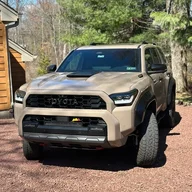
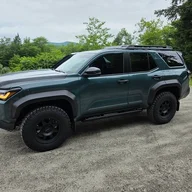
Having my rig now for about a month, and after doing all the mods to it i felt it was time to now express my true thoughts in hopes anyone else here planning similar can get a good idea from my experience.
Before i get too deep here i feel its important to give back story on my experience and reasoning to my build, as its a true “no nonsense” set up IMO.
I am an avid survivalist and outdoorsman that provides off road guiding / hunting / survival training and exploration service's. I also build and design prepper survival systems that regularly require me to find ways into usually unaccessible areas while also carrying my gear. I live in Northern Canada where long highway rides are a regular and -35C is considered a warm winter day. So between work and play I live on highways as well as off grid. Frankly, nobody is coming to save you or any emergency help is a 48 hour helicopter arrive time.
My first rig nearly 25 years ago prior to Toyota was Ford and as most of you likely suspect it was not a good experience. My second and third off road rigs ranged between Nissan and GMC till i finally had the money to buy a brand new 2019 4Runner, fully modded to my standards with over 200,000 km of off road service milage by the time i sold her. This Gen 6 is my 5th off road rig that for the first time i feel is “perfect”.
Coming from my Gen 5 4Runner that was heavily modded to handle most of everything i felt i wanted the Gen 6 to still be capable without loosing comfort. I am also getting a bit older now and feel its time to keep things looking somewhat reasonable. Every mod, part, interior item and storage system placement in my Gen 6 is there for a reason, my entire build is designed from my past experiences of what worked and what didn’t, and so i begin the explanation of my build and why its no nonsense to me.


Suspension
My 2019 4Runner I had the opportunity to run 3 different suspension systems ranging from Old Man Emu to a full $10,000 Kings Racing. The Kings system was hands down the best thing for my needs but after getting 60,000 km on them the idea of dropping another $10,000 to redo them hurt. I have also had bad experience with failures on my old rig where my truck was stuck on a lift for a week or 2 while we had to wait for aftermarket suspension parts to arrive for repairs.
After my experience’s it was clear the Gen 6 suspension had to be capable and had to be easily available for purchase in any catastrophic failure.
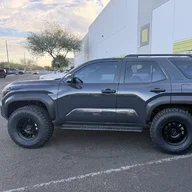
I intended on putting the TRD Pro FOX suspension on my rig as they seem on paper to actually be a serious contender. On day of pick up and having my first drive experience however with the factory suspension i was impressed. Its a substantially stiffer ride from Gen 5 and handles incredibly well on highway. Based on this unexpected experience and frankly shock due to the several negative reviews i had seen on the stock suspension, i decided to keep it and instead add a rough country spacer lift of 2.5” in the front while putting Firestone airbags in the rear.
I truly find the suspension is great, its clearly not a $10,000 kit that lets me ride 7” washboard at 90 km/h but its good, and it gets the job done perfect for me. The spacer lift gained me that extra clearance and removed the rake, so far the truck rides like a dream. Unless i start hitting rock gardens or MOAB crawls, i dont see a need to upgrade from here, but time will tell if the factory set up is truly as capable as i feel it will be.
Roof Rack
I hate the idea of drilling into the roof of my rig, I ran a Rhino Rack Pioneer system on my Gen 5 for 7 years with not 1 single failure. Iv mounted everythign from 12 sheets of 5/8 G1S Plywood to 40 2x4's to RotoPax etc... The roof rack has never had wind noise issues, never flexed or vibrated and never made road noise that drove me nuts. I ended up going with the exact same Pioneer system as previously only this model on the Gen 6 is Rhino Racks newer design (apparently 40% lighter with even less wind noise). The roof rack system i went with is great, it mounts on factory roof rails and requires no drilling. The mounting systems on the tracks are very easy to work with and the amount of accessories available ranging from MaxTrax mounts to Awning brackets are endless. I usually tun a 4 Max Trax holder with shovel along driver side, and a ARB Awning on the passenger side.


Tires
My previous rigs I went with 285 tires running 17” rims and never had issues other the constant rubbing on offset angles of approach or substantial 10” drops. I learned to live with the rubbing and almost mastered the turning points to stop at before the rubbing would start. Despite massive trimming of the bumper and constant adjustments (not to mention a 3” lift) to try and get it perfect, i was forced into accepting the rub was the cost of running the tire.
Moving to the Gen 6 it was important to me no rubbing occured. Despite several people on this forum as well as youtube saying there was no rub on a 285 tire, contradicting findings said otherwise with other posts. It was clear that putting 285 would rub without a lift , an offset rim set up or mudflap delete.
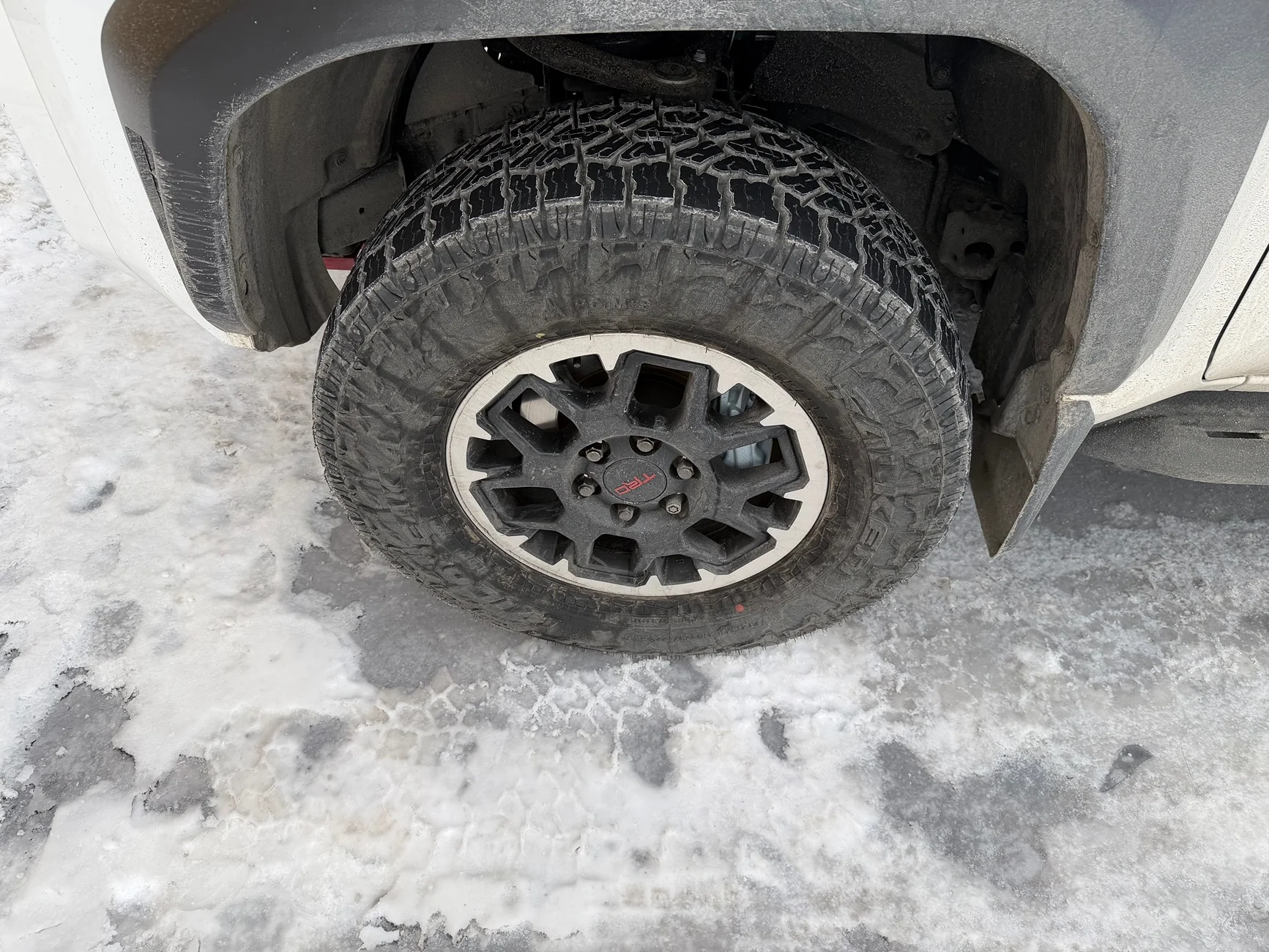
Based on this i chose to increase to a 275 rather then 285 from factory 265 as well as upgrade to a AT tire to gain me an extra 1.5” with tread depth. I currently run Falcon Wildpeaks AT4W 275’s on factory 18” rims.
Within the first week of owning the truck (less then 300 km on vehicle) i had the opportunity to test the tires in some snow while trying to access an off grid client space and immediately felt concern after airing down to 15psi. The 18” rim has definitely eliminated some play in side wall from the 17” i used to run where i do have concerns of pinching the rim but this will need to be assessed down the road. I wish a 17” was the primary rim or at least available for purchase from Toyota. More to follow on my experience here on 18’s down the road.

Radio
I have ran CB for a long time and over those years the one thing i can clearly say with CB is its dying.
As trail rides and group events became more common or hitting true remote areas it seemed only 1 other guy was running a CB and the conversations were limited. By the time i got my 2019 4Runner i can count only 2-4 times in 7 years i was able to talk to somone on the road. GMRS was definitely the go to with almost every rig having a handheld leaving me with a bulky CB on my dash and a small hand held GMRS in my cup holder.
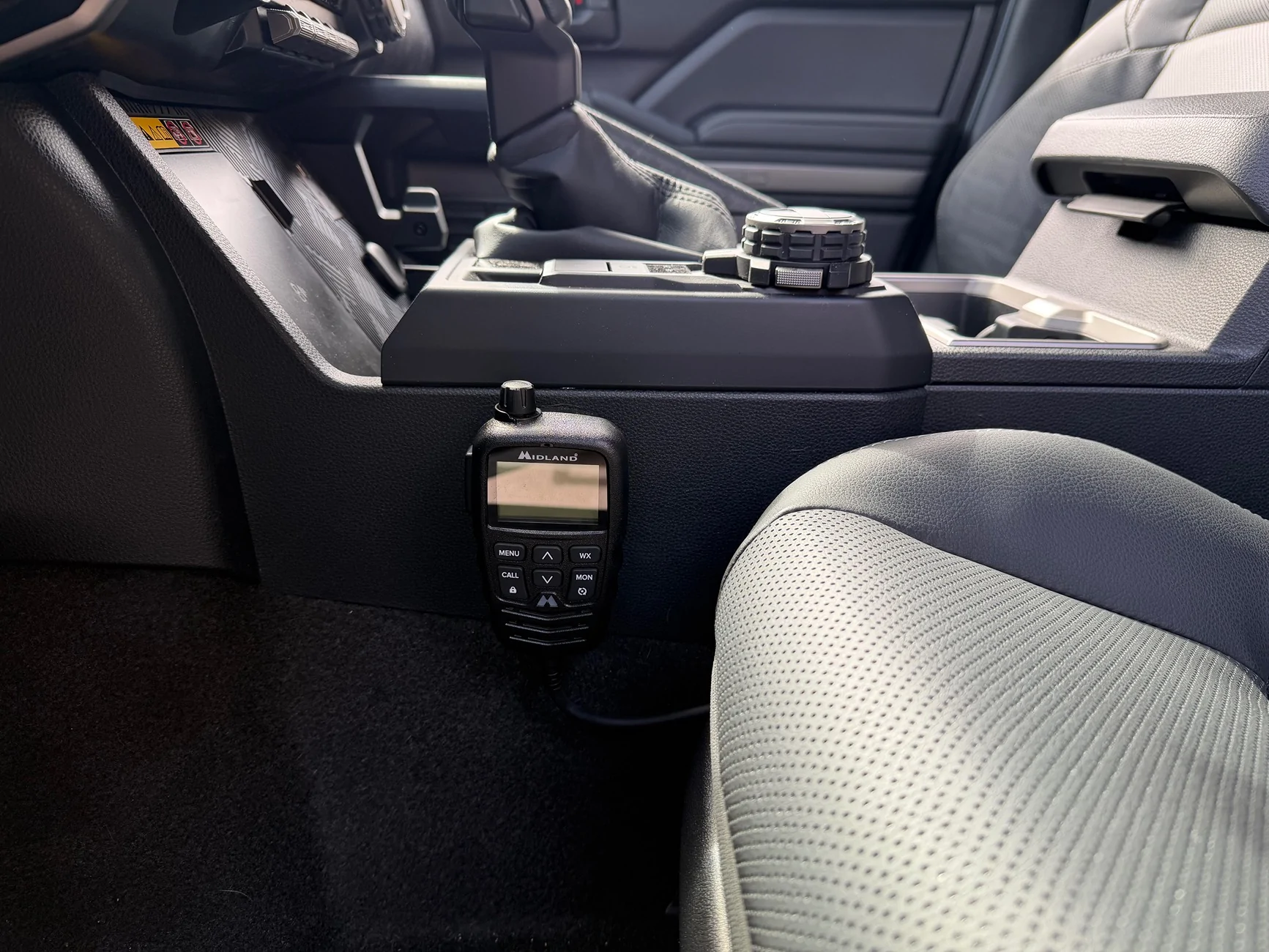
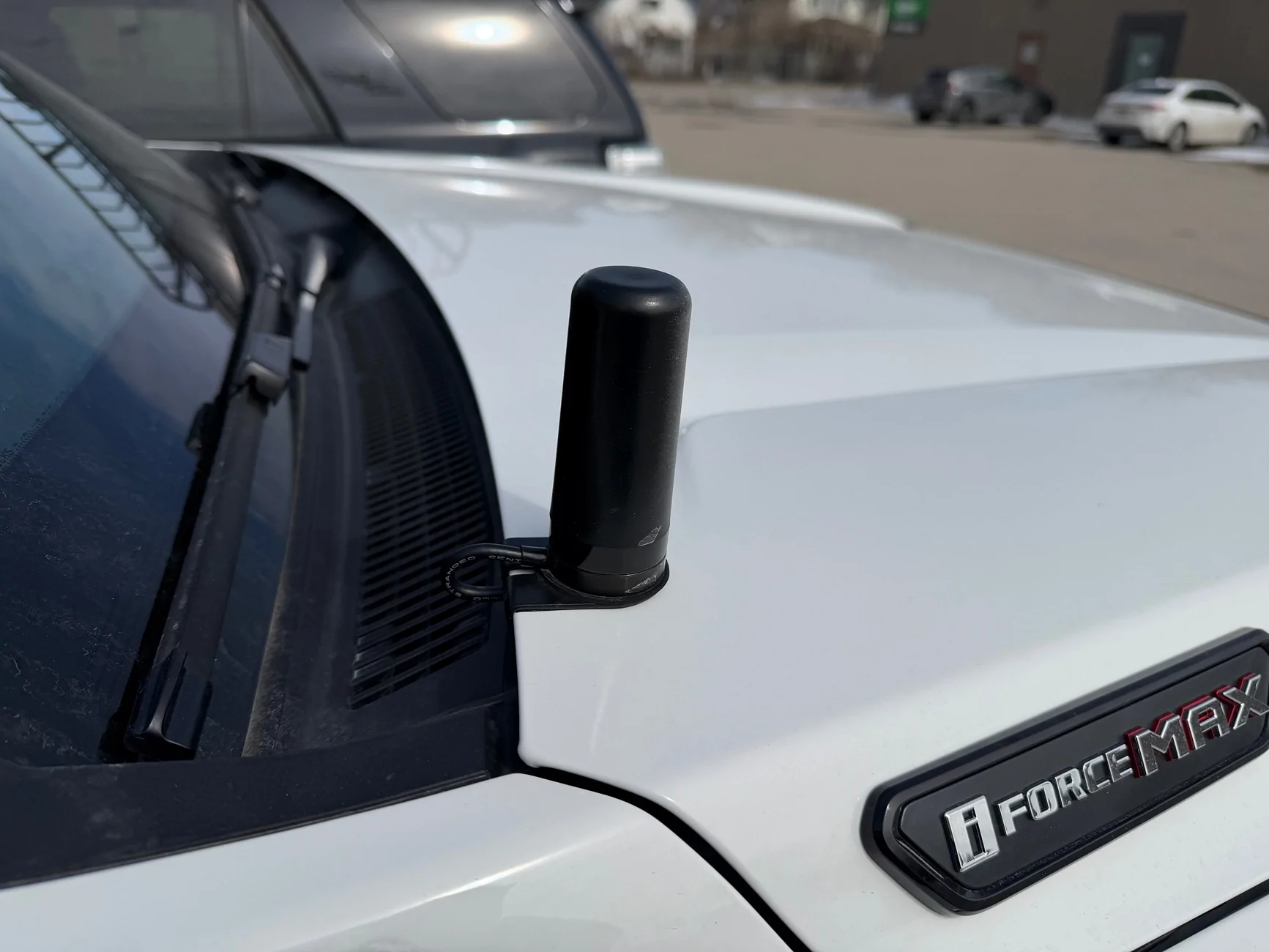
For the Gen 6 i decided to go with a full Midland MXT575 with a Tram 1246-b NMO hood mount. I keep a stubby 3db antenna on at all times but also a 6db in trunk storage if needed.
The chatter i can pick up between job sites and hobbyists is fun, i enjoy scanning channels and listening but on group rides with the MXT575 the range is unprecedented, with highway driving getting 30+ km’s of talking distance (CB was lucky if we could get 2 km). In dense urban my friend and i were able to talk almost 8km apart where previous CB would be lucky if we could make 1/2 - 1 mile.
GMRS is the way to go, chatter seems more frequent in city but group rides on highway is an impressively serious system that you just need to experience to truly understand.
BAJA Squadron Grill Lights
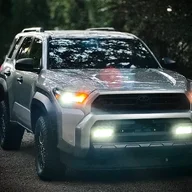
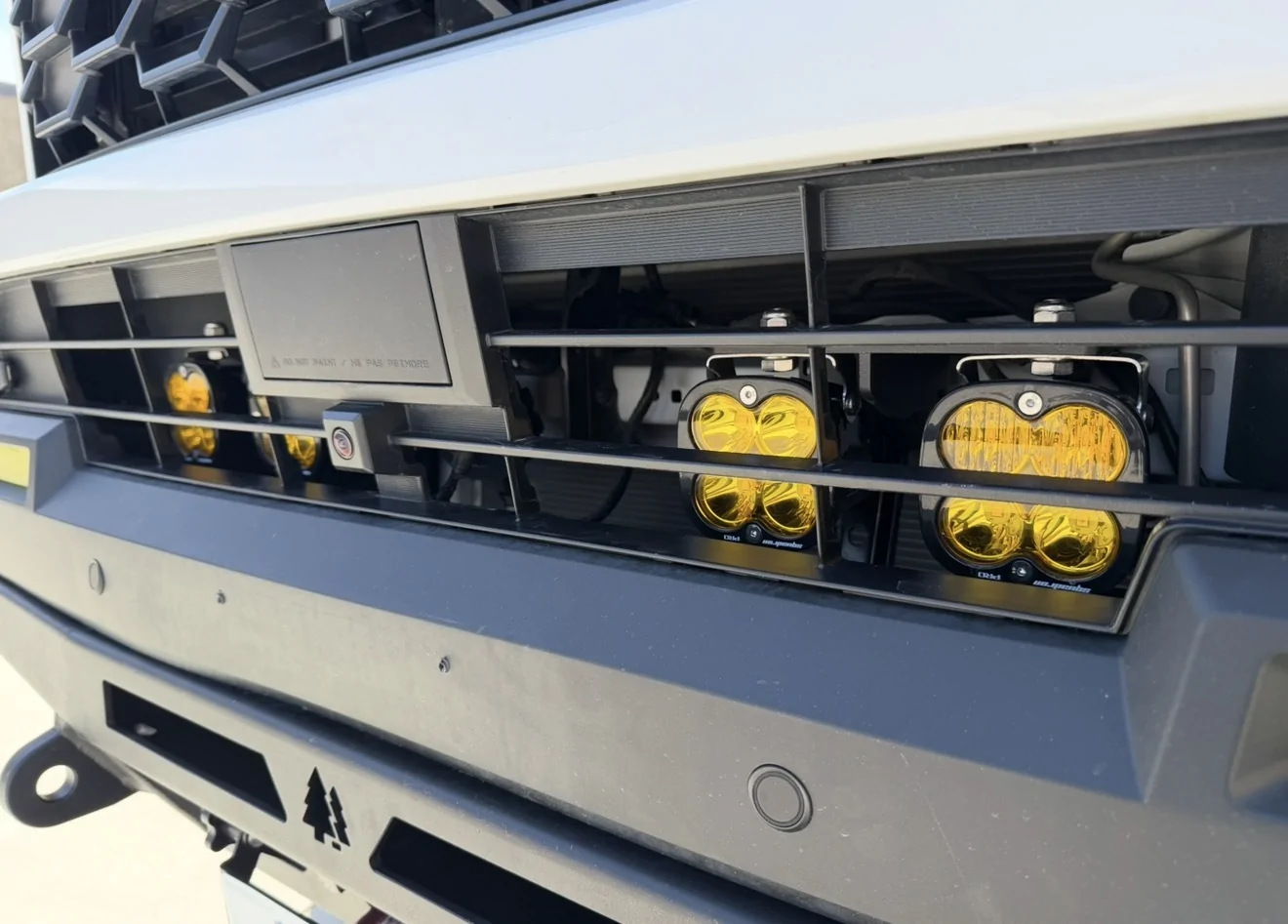
I haven't had a chance to really test these lights yet in any serious situations, but i have had the chance to blast them a bit in some fields and on empty highways. These things throw light better then any fog i have ran before. They are almost "to bright" where any use of them to other riders in front of you will just be painful for them. When i turn them on while driving open highway, they over power my head lights high bean and low beam and spread a light pattern unlike anything I have veer seen before. The install was very simple and the mount brackets worked flawlessly with no jutter or shake on the lights while driving. I will update this thread down the road after i have more opportunity to test these lights.

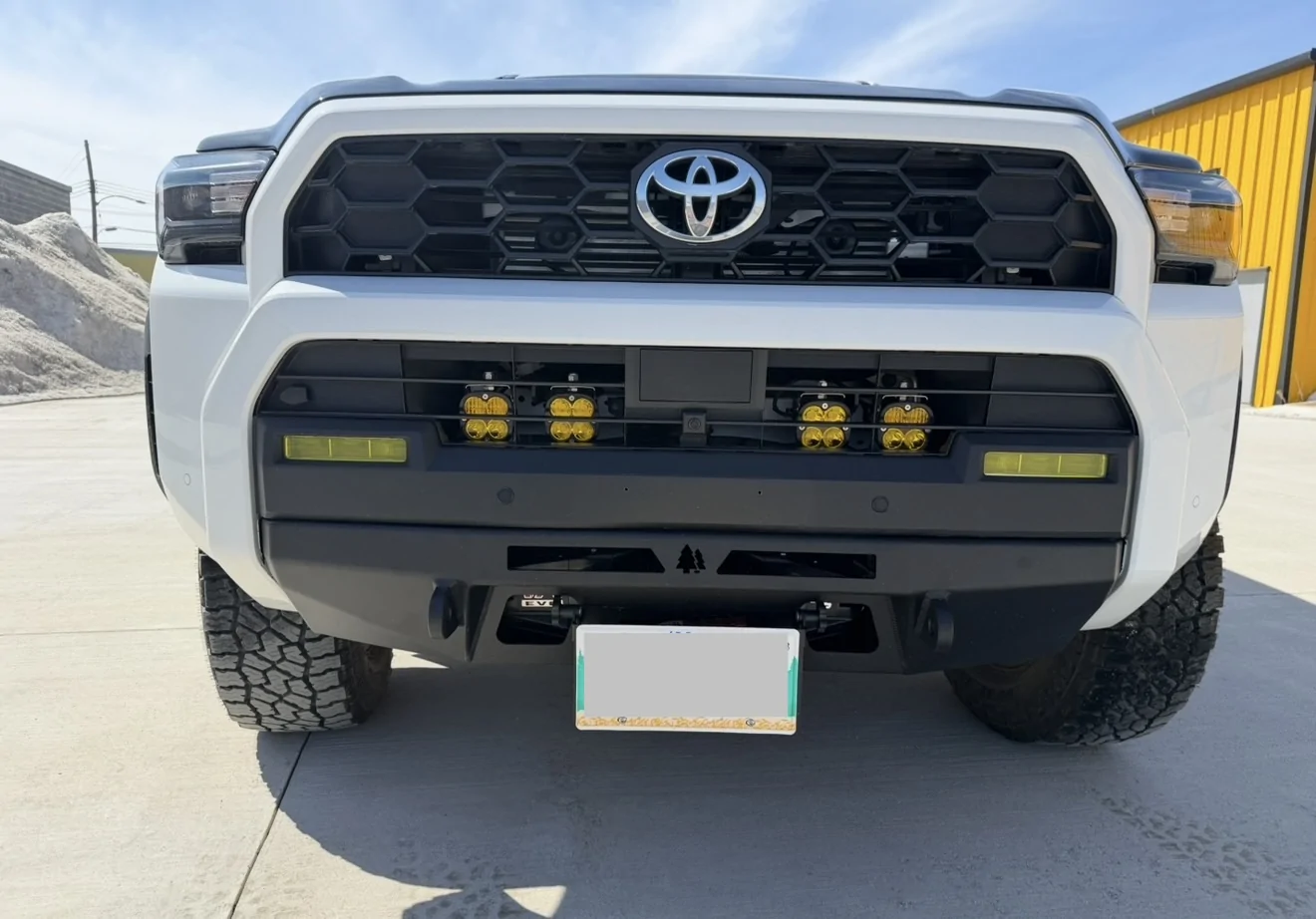
Greenlane Stump Bumper with Warn EVO 10-S 10,000 lb Winch
Anyone with a winch knows what im talking about when i say its the most comforting insurance policy. My 2019 4Runner i ran a bumper hidden Warn Zeon 10,000 lb system that never failed me. I even recall pulling a farmers stuck tractor out of a field with it once after being bet $20 “theres no way your truck can do it”. As long as you keep a few tree huggers and snatch blocks on hand, you should be able to get yourself out of ANY situation (as long as you can be creative with your spare tire and a shovel).
I decided to go with a CBI super stock hidden bumper just before tariffs got serious between USA and Canada. CBI is an incredibly good brand and i have nothing negative to say about them but once tariffs got substantial i made the decision to switch my purchase to a Canadian brand, Greenlane.
The Greenlane stump bumper was a beautiful alternative and frankly the aluminum design over steel was a plus to me as nose dive from the extra weight on the CBI steel was reported to be bad.
I did the full install of the Greelane bumper myself and it was a total nightmare (Link on Review Here) but the end result i am very happy with.
I did have some concerns in serious winch scenario’s where I was not totally confident on this bumpers reliability in off angle winch scenarios, however after reaching out to the manufacturer and raising these concerns they made it clear no movement would happen and their testing proved their design was solid.

ARB brushless Compressor
On all my rigs iv ran ARB systems however this rig is the first ARB system thats brushless. Iv used it several times already and can confirm the brushless system is almost twice as fast as the non brushless, but when it comes to airing up, you just want something thats reliable and will always work, and thats ARB.
I mounted the compressor in the engine bay rather then the rear cargo hatch area like the trailhunter. I chose to do this because i was worried the electrical for the compressor back there was not heavy gauge enough to handle the amps draw the ARB took. This was 100% just my feeling and i could be wrong, but when i lead or support group rides and have to air up 4 other rigs at the end of the day, making sure the power and wiring was right was important to me.

Storage - Survival / Utility / Kitchen
The contents of my storage system is purely based on real world experience of what i used in an emergency, what i wish i had during an emergency, and what comforts i appreciated to always have when i just wanted to enjoy myself.
In the rear cargo storage i went with the Overland Gear Guy storage packs with custom name tags. I got the bag ideas from another post here (Link on Bags Review Here). The bags are very expensive but upon arrival they were clearly worth it. These bags have clear tops as well so you can see your goodies before having to open them to make sure they are there. The bags are worth the expense if you can afford it, organization is critical in fast response times.
In the back seat Gun Rack

In the Survival bag i keep:
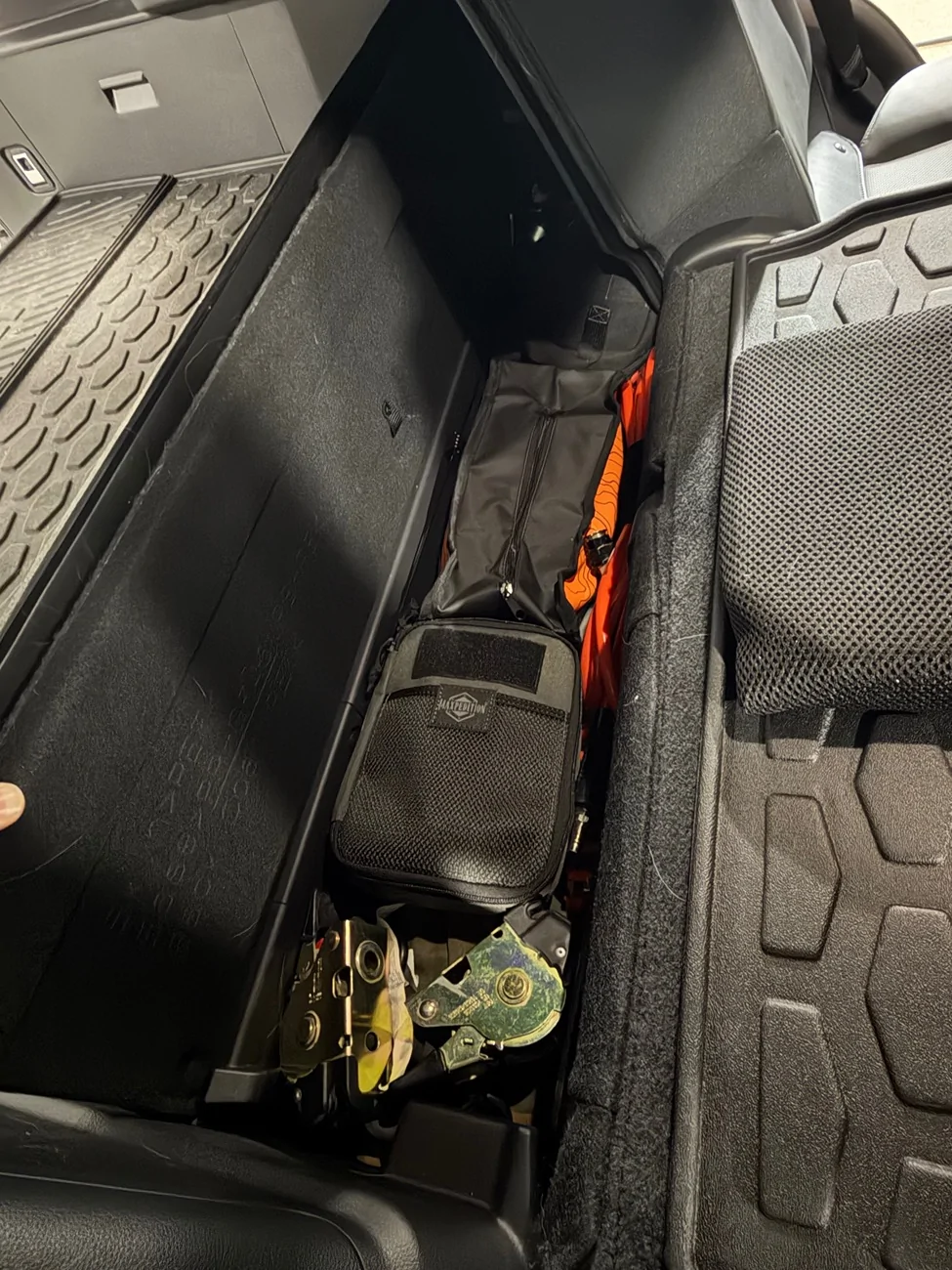
In the rear back seat storage compartment behind rear seats i keep:
In the Go Bag that sits behind driver seat (comes and goes with me as i leave)
Im sure ill add things down the road and try to keep this post updated with those changes.
Thanks!
Cranberry
Before i get too deep here i feel its important to give back story on my experience and reasoning to my build, as its a true “no nonsense” set up IMO.
I am an avid survivalist and outdoorsman that provides off road guiding / hunting / survival training and exploration service's. I also build and design prepper survival systems that regularly require me to find ways into usually unaccessible areas while also carrying my gear. I live in Northern Canada where long highway rides are a regular and -35C is considered a warm winter day. So between work and play I live on highways as well as off grid. Frankly, nobody is coming to save you or any emergency help is a 48 hour helicopter arrive time.
My first rig nearly 25 years ago prior to Toyota was Ford and as most of you likely suspect it was not a good experience. My second and third off road rigs ranged between Nissan and GMC till i finally had the money to buy a brand new 2019 4Runner, fully modded to my standards with over 200,000 km of off road service milage by the time i sold her. This Gen 6 is my 5th off road rig that for the first time i feel is “perfect”.
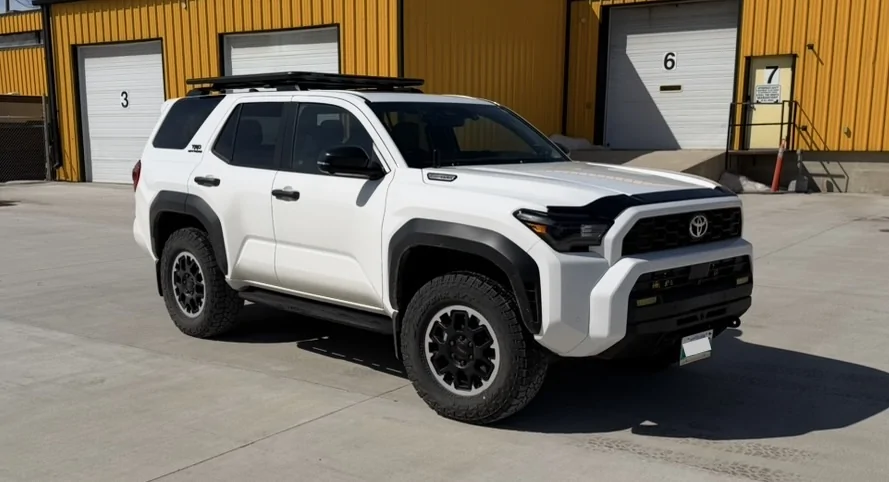
Coming from my Gen 5 4Runner that was heavily modded to handle most of everything i felt i wanted the Gen 6 to still be capable without loosing comfort. I am also getting a bit older now and feel its time to keep things looking somewhat reasonable. Every mod, part, interior item and storage system placement in my Gen 6 is there for a reason, my entire build is designed from my past experiences of what worked and what didn’t, and so i begin the explanation of my build and why its no nonsense to me.
Suspension
My 2019 4Runner I had the opportunity to run 3 different suspension systems ranging from Old Man Emu to a full $10,000 Kings Racing. The Kings system was hands down the best thing for my needs but after getting 60,000 km on them the idea of dropping another $10,000 to redo them hurt. I have also had bad experience with failures on my old rig where my truck was stuck on a lift for a week or 2 while we had to wait for aftermarket suspension parts to arrive for repairs.
After my experience’s it was clear the Gen 6 suspension had to be capable and had to be easily available for purchase in any catastrophic failure.
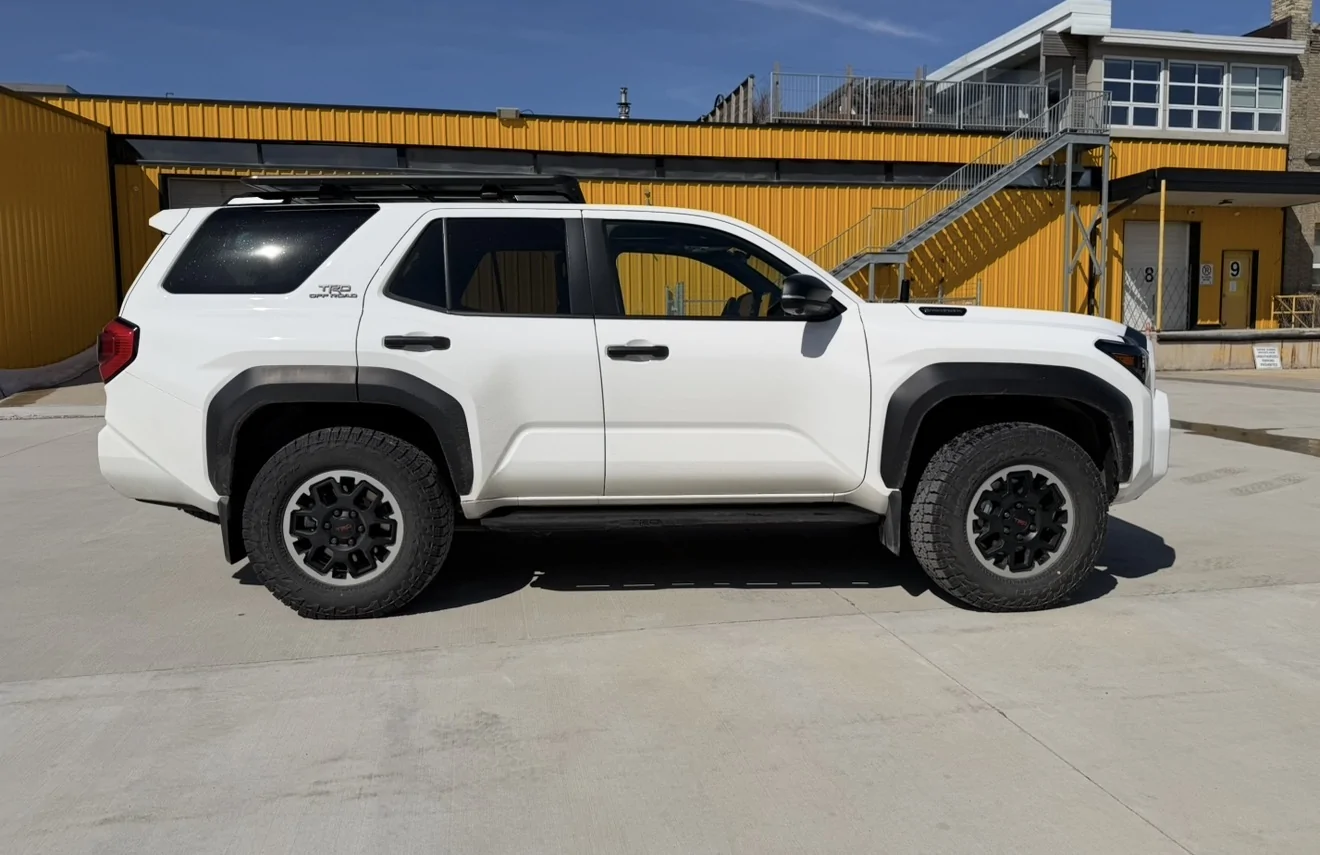
I intended on putting the TRD Pro FOX suspension on my rig as they seem on paper to actually be a serious contender. On day of pick up and having my first drive experience however with the factory suspension i was impressed. Its a substantially stiffer ride from Gen 5 and handles incredibly well on highway. Based on this unexpected experience and frankly shock due to the several negative reviews i had seen on the stock suspension, i decided to keep it and instead add a rough country spacer lift of 2.5” in the front while putting Firestone airbags in the rear.
I truly find the suspension is great, its clearly not a $10,000 kit that lets me ride 7” washboard at 90 km/h but its good, and it gets the job done perfect for me. The spacer lift gained me that extra clearance and removed the rake, so far the truck rides like a dream. Unless i start hitting rock gardens or MOAB crawls, i dont see a need to upgrade from here, but time will tell if the factory set up is truly as capable as i feel it will be.
Roof Rack
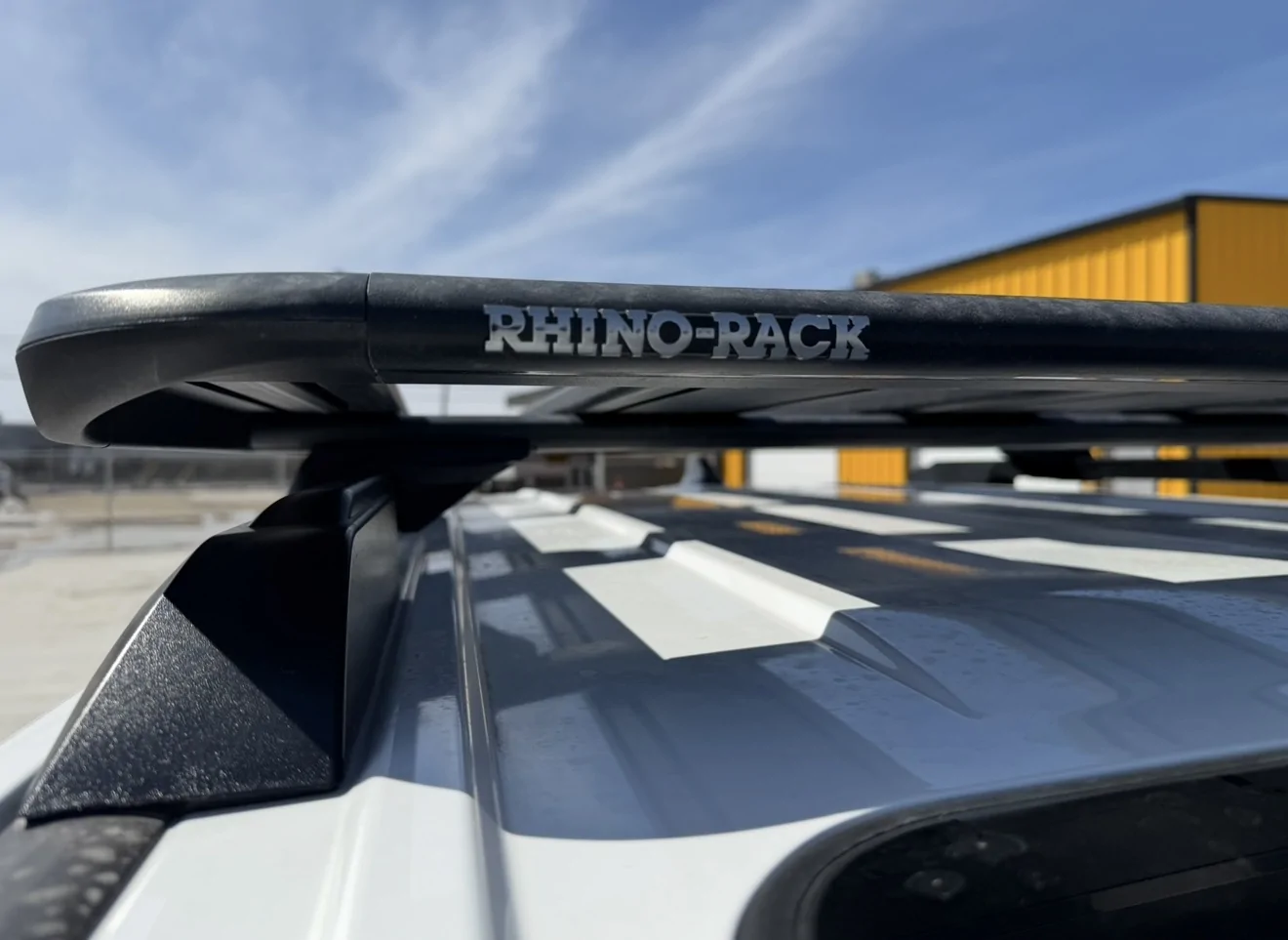
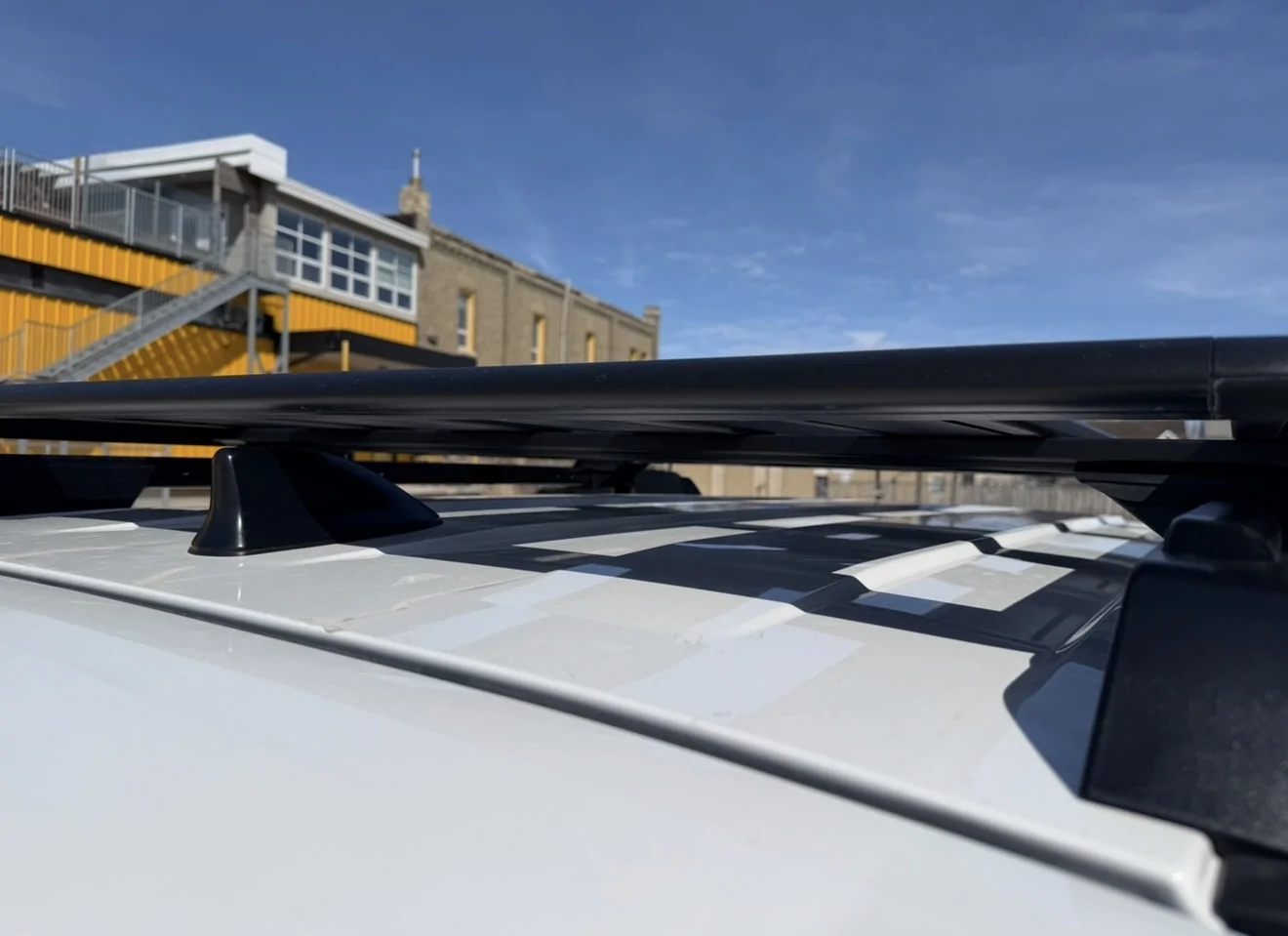
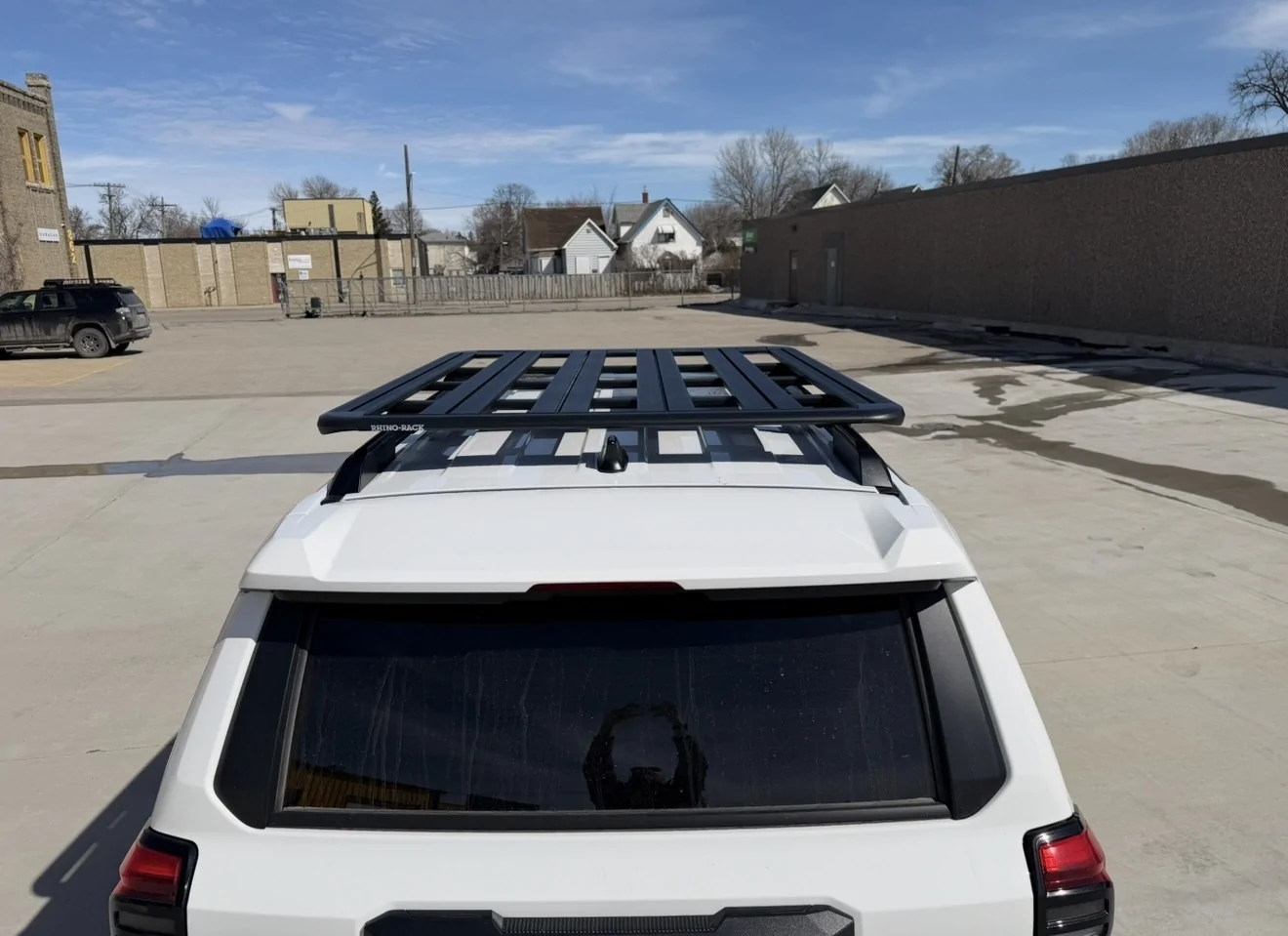
I hate the idea of drilling into the roof of my rig, I ran a Rhino Rack Pioneer system on my Gen 5 for 7 years with not 1 single failure. Iv mounted everythign from 12 sheets of 5/8 G1S Plywood to 40 2x4's to RotoPax etc... The roof rack has never had wind noise issues, never flexed or vibrated and never made road noise that drove me nuts. I ended up going with the exact same Pioneer system as previously only this model on the Gen 6 is Rhino Racks newer design (apparently 40% lighter with even less wind noise). The roof rack system i went with is great, it mounts on factory roof rails and requires no drilling. The mounting systems on the tracks are very easy to work with and the amount of accessories available ranging from MaxTrax mounts to Awning brackets are endless. I usually tun a 4 Max Trax holder with shovel along driver side, and a ARB Awning on the passenger side.
Tires
My previous rigs I went with 285 tires running 17” rims and never had issues other the constant rubbing on offset angles of approach or substantial 10” drops. I learned to live with the rubbing and almost mastered the turning points to stop at before the rubbing would start. Despite massive trimming of the bumper and constant adjustments (not to mention a 3” lift) to try and get it perfect, i was forced into accepting the rub was the cost of running the tire.
Moving to the Gen 6 it was important to me no rubbing occured. Despite several people on this forum as well as youtube saying there was no rub on a 285 tire, contradicting findings said otherwise with other posts. It was clear that putting 285 would rub without a lift , an offset rim set up or mudflap delete.
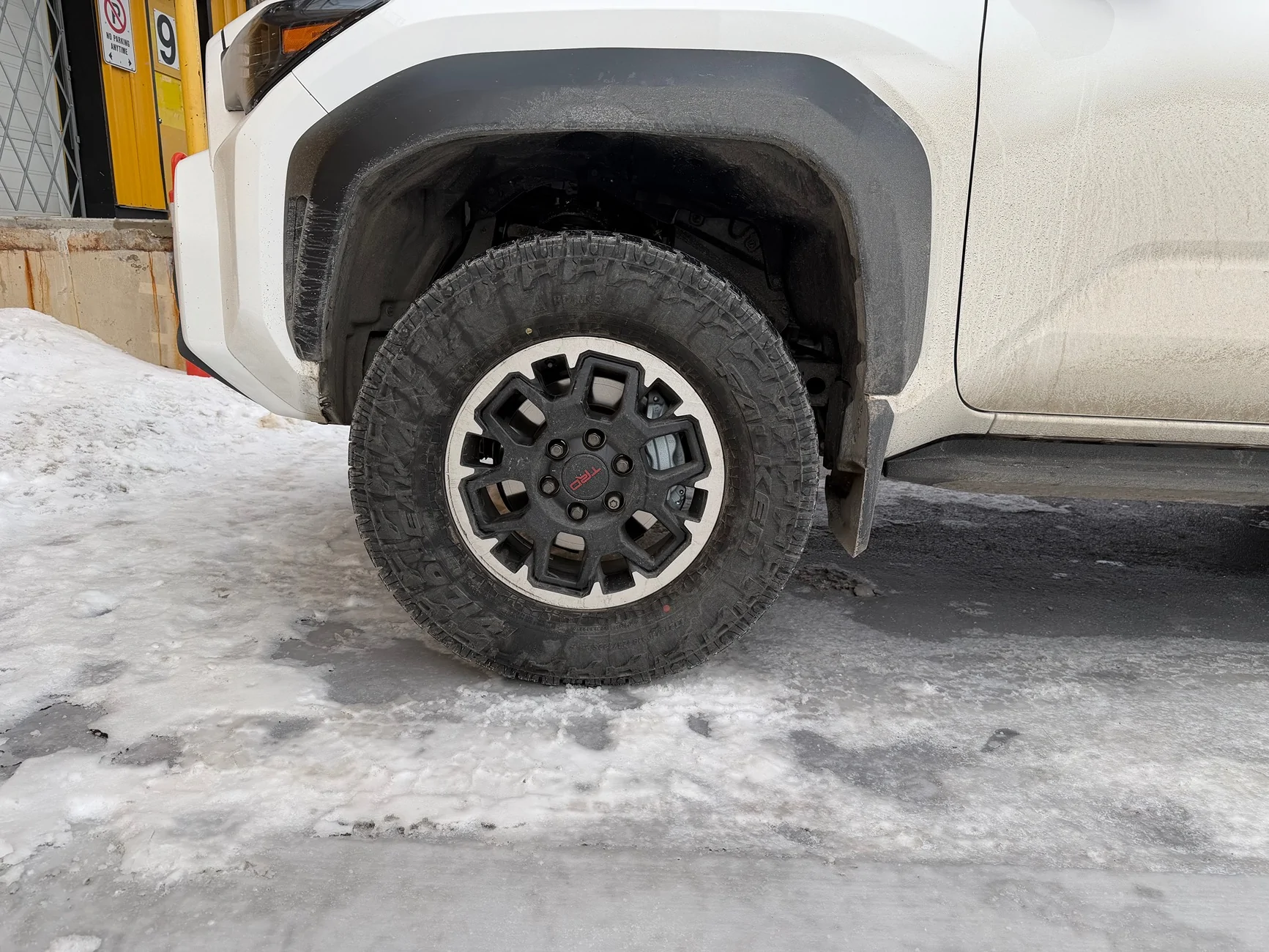
Based on this i chose to increase to a 275 rather then 285 from factory 265 as well as upgrade to a AT tire to gain me an extra 1.5” with tread depth. I currently run Falcon Wildpeaks AT4W 275’s on factory 18” rims.
Within the first week of owning the truck (less then 300 km on vehicle) i had the opportunity to test the tires in some snow while trying to access an off grid client space and immediately felt concern after airing down to 15psi. The 18” rim has definitely eliminated some play in side wall from the 17” i used to run where i do have concerns of pinching the rim but this will need to be assessed down the road. I wish a 17” was the primary rim or at least available for purchase from Toyota. More to follow on my experience here on 18’s down the road.
Radio
I have ran CB for a long time and over those years the one thing i can clearly say with CB is its dying.
As trail rides and group events became more common or hitting true remote areas it seemed only 1 other guy was running a CB and the conversations were limited. By the time i got my 2019 4Runner i can count only 2-4 times in 7 years i was able to talk to somone on the road. GMRS was definitely the go to with almost every rig having a handheld leaving me with a bulky CB on my dash and a small hand held GMRS in my cup holder.
For the Gen 6 i decided to go with a full Midland MXT575 with a Tram 1246-b NMO hood mount. I keep a stubby 3db antenna on at all times but also a 6db in trunk storage if needed.
The chatter i can pick up between job sites and hobbyists is fun, i enjoy scanning channels and listening but on group rides with the MXT575 the range is unprecedented, with highway driving getting 30+ km’s of talking distance (CB was lucky if we could get 2 km). In dense urban my friend and i were able to talk almost 8km apart where previous CB would be lucky if we could make 1/2 - 1 mile.
GMRS is the way to go, chatter seems more frequent in city but group rides on highway is an impressively serious system that you just need to experience to truly understand.
BAJA Squadron Grill Lights
I haven't had a chance to really test these lights yet in any serious situations, but i have had the chance to blast them a bit in some fields and on empty highways. These things throw light better then any fog i have ran before. They are almost "to bright" where any use of them to other riders in front of you will just be painful for them. When i turn them on while driving open highway, they over power my head lights high bean and low beam and spread a light pattern unlike anything I have veer seen before. The install was very simple and the mount brackets worked flawlessly with no jutter or shake on the lights while driving. I will update this thread down the road after i have more opportunity to test these lights.
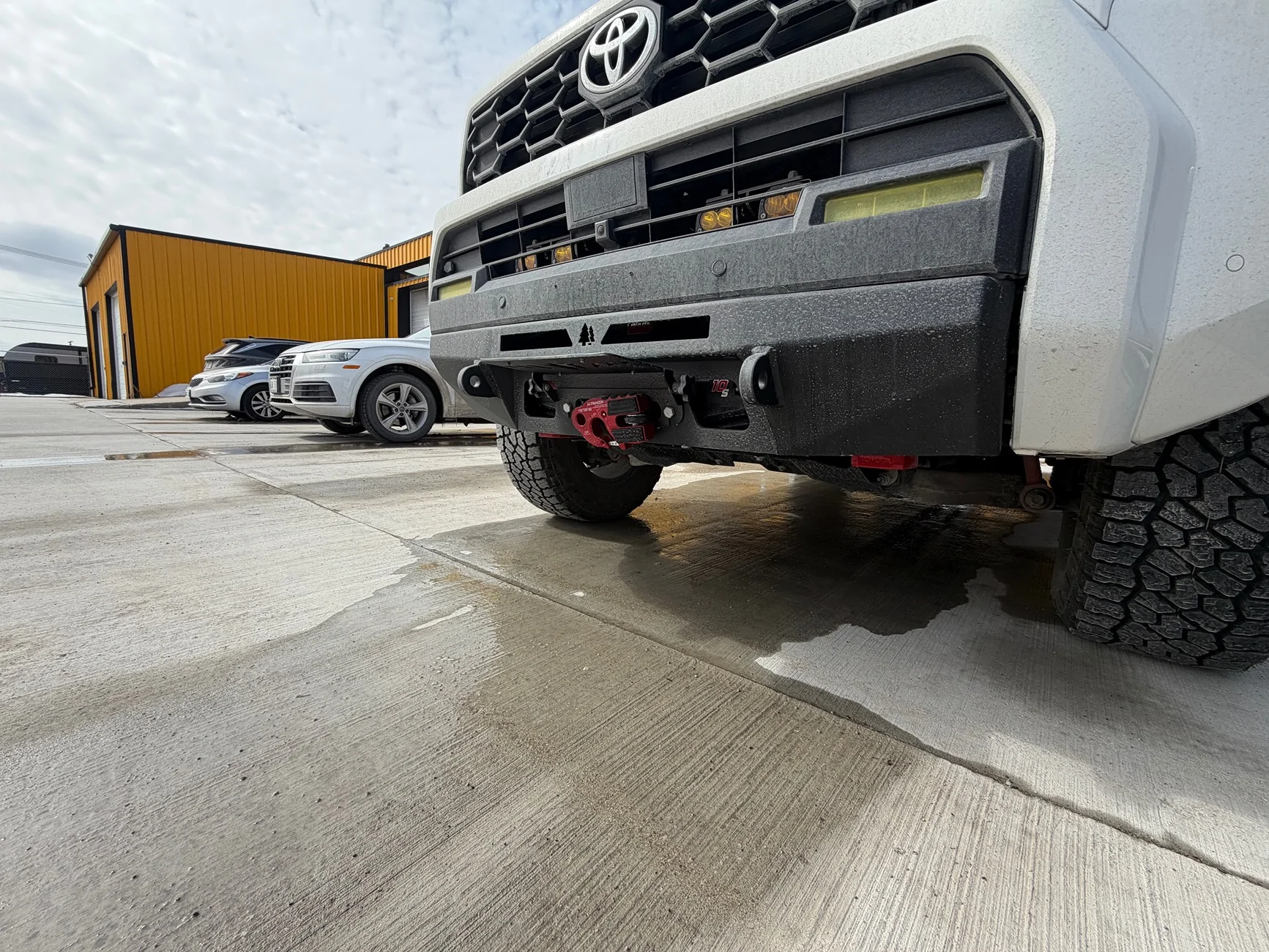
Greenlane Stump Bumper with Warn EVO 10-S 10,000 lb Winch
Anyone with a winch knows what im talking about when i say its the most comforting insurance policy. My 2019 4Runner i ran a bumper hidden Warn Zeon 10,000 lb system that never failed me. I even recall pulling a farmers stuck tractor out of a field with it once after being bet $20 “theres no way your truck can do it”. As long as you keep a few tree huggers and snatch blocks on hand, you should be able to get yourself out of ANY situation (as long as you can be creative with your spare tire and a shovel).
I decided to go with a CBI super stock hidden bumper just before tariffs got serious between USA and Canada. CBI is an incredibly good brand and i have nothing negative to say about them but once tariffs got substantial i made the decision to switch my purchase to a Canadian brand, Greenlane.
The Greenlane stump bumper was a beautiful alternative and frankly the aluminum design over steel was a plus to me as nose dive from the extra weight on the CBI steel was reported to be bad.
I did the full install of the Greelane bumper myself and it was a total nightmare (Link on Review Here) but the end result i am very happy with.
I did have some concerns in serious winch scenario’s where I was not totally confident on this bumpers reliability in off angle winch scenarios, however after reaching out to the manufacturer and raising these concerns they made it clear no movement would happen and their testing proved their design was solid.
ARB brushless Compressor
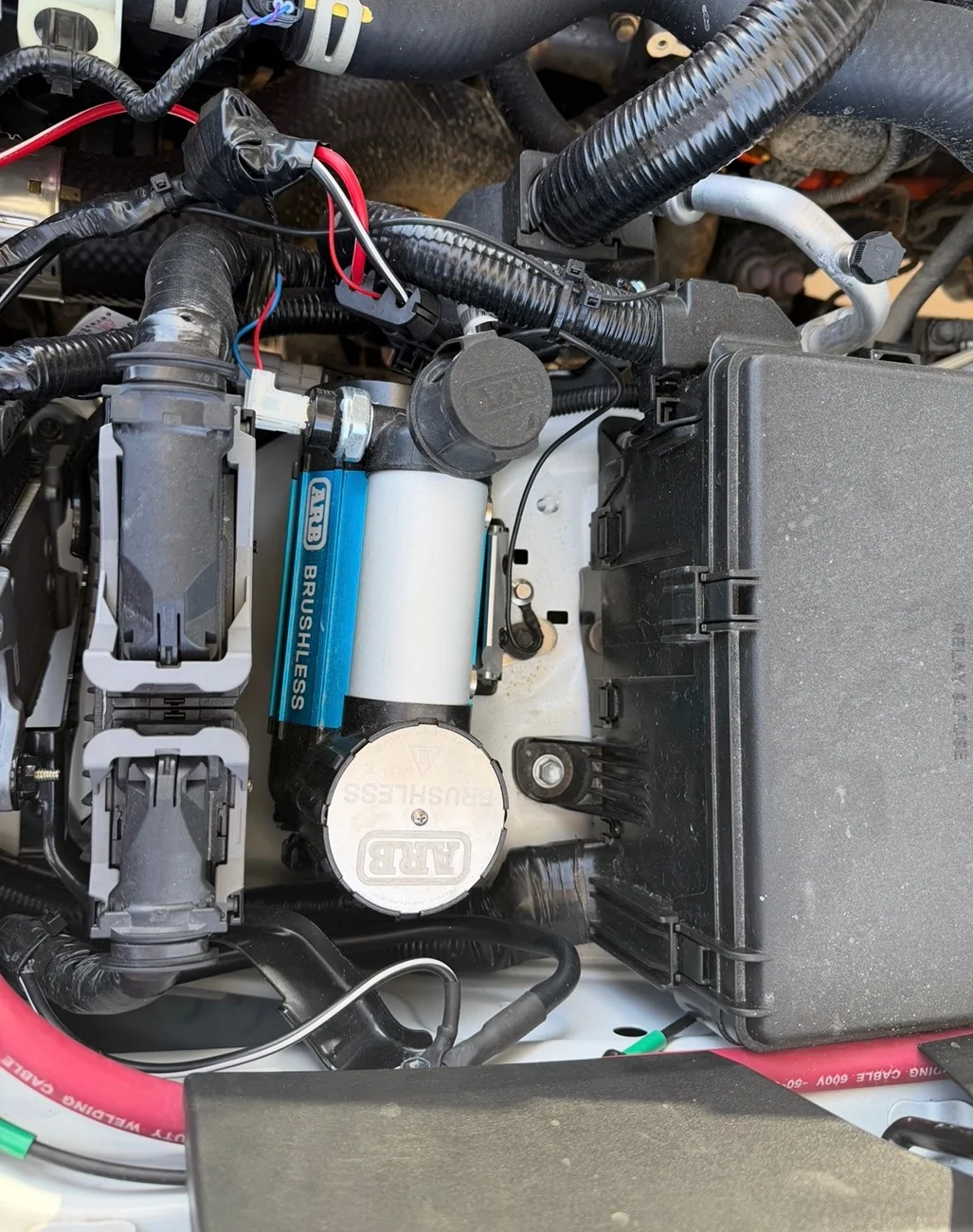
On all my rigs iv ran ARB systems however this rig is the first ARB system thats brushless. Iv used it several times already and can confirm the brushless system is almost twice as fast as the non brushless, but when it comes to airing up, you just want something thats reliable and will always work, and thats ARB.
I mounted the compressor in the engine bay rather then the rear cargo hatch area like the trailhunter. I chose to do this because i was worried the electrical for the compressor back there was not heavy gauge enough to handle the amps draw the ARB took. This was 100% just my feeling and i could be wrong, but when i lead or support group rides and have to air up 4 other rigs at the end of the day, making sure the power and wiring was right was important to me.
Storage - Survival / Utility / Kitchen
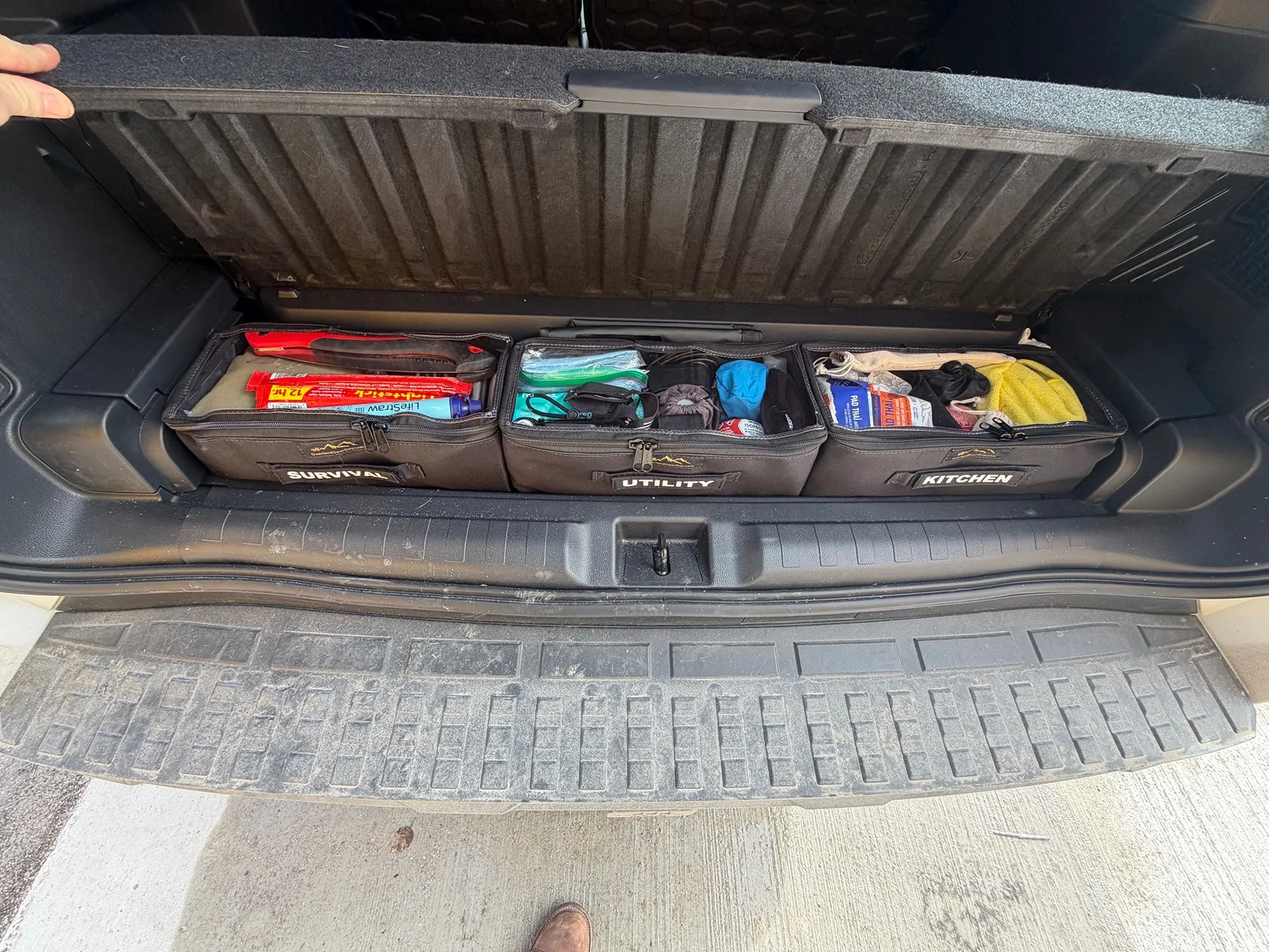
The contents of my storage system is purely based on real world experience of what i used in an emergency, what i wish i had during an emergency, and what comforts i appreciated to always have when i just wanted to enjoy myself.
In the rear cargo storage i went with the Overland Gear Guy storage packs with custom name tags. I got the bag ideas from another post here (Link on Bags Review Here). The bags are very expensive but upon arrival they were clearly worth it. These bags have clear tops as well so you can see your goodies before having to open them to make sure they are there. The bags are worth the expense if you can afford it, organization is critical in fast response times.
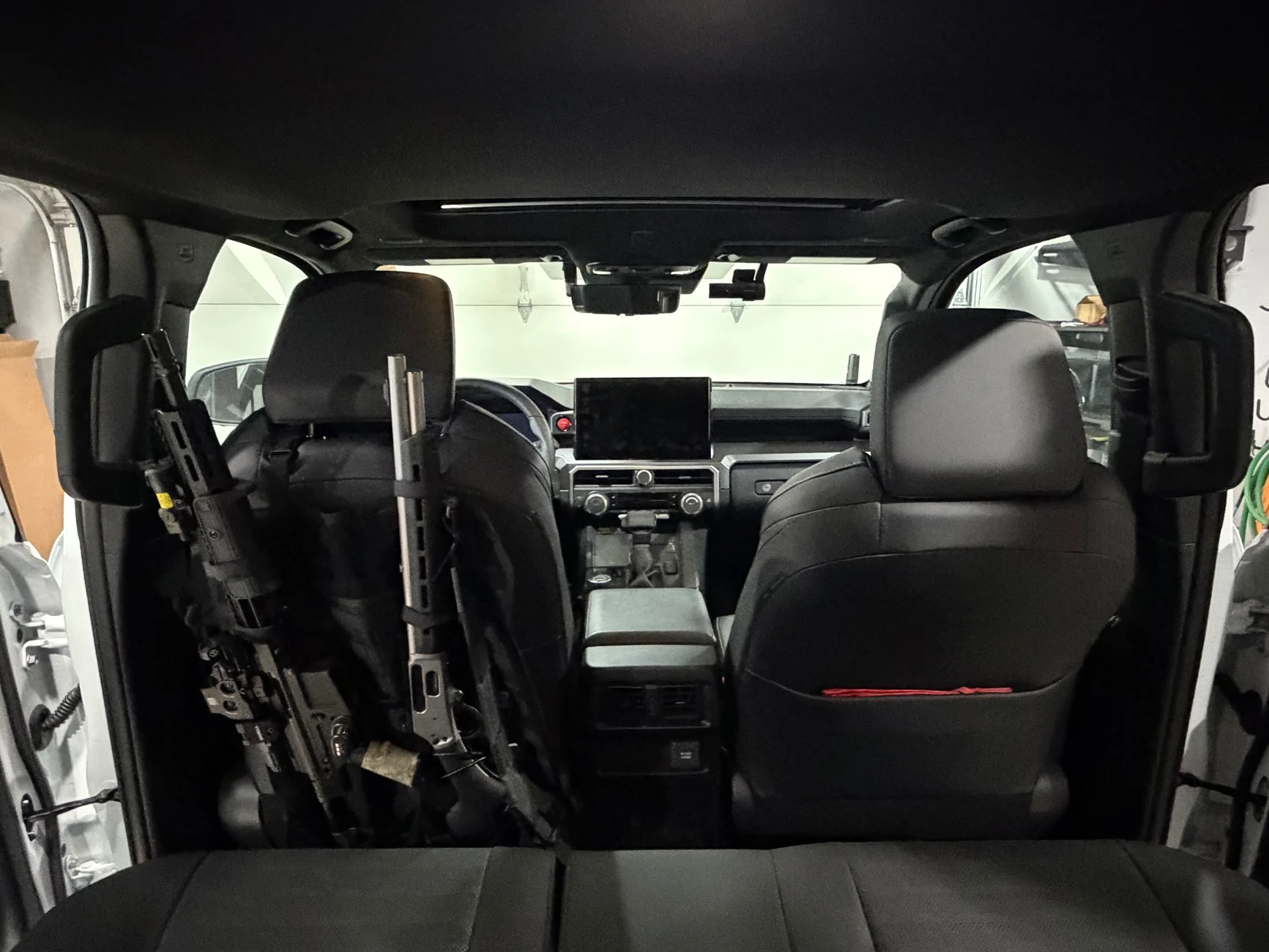
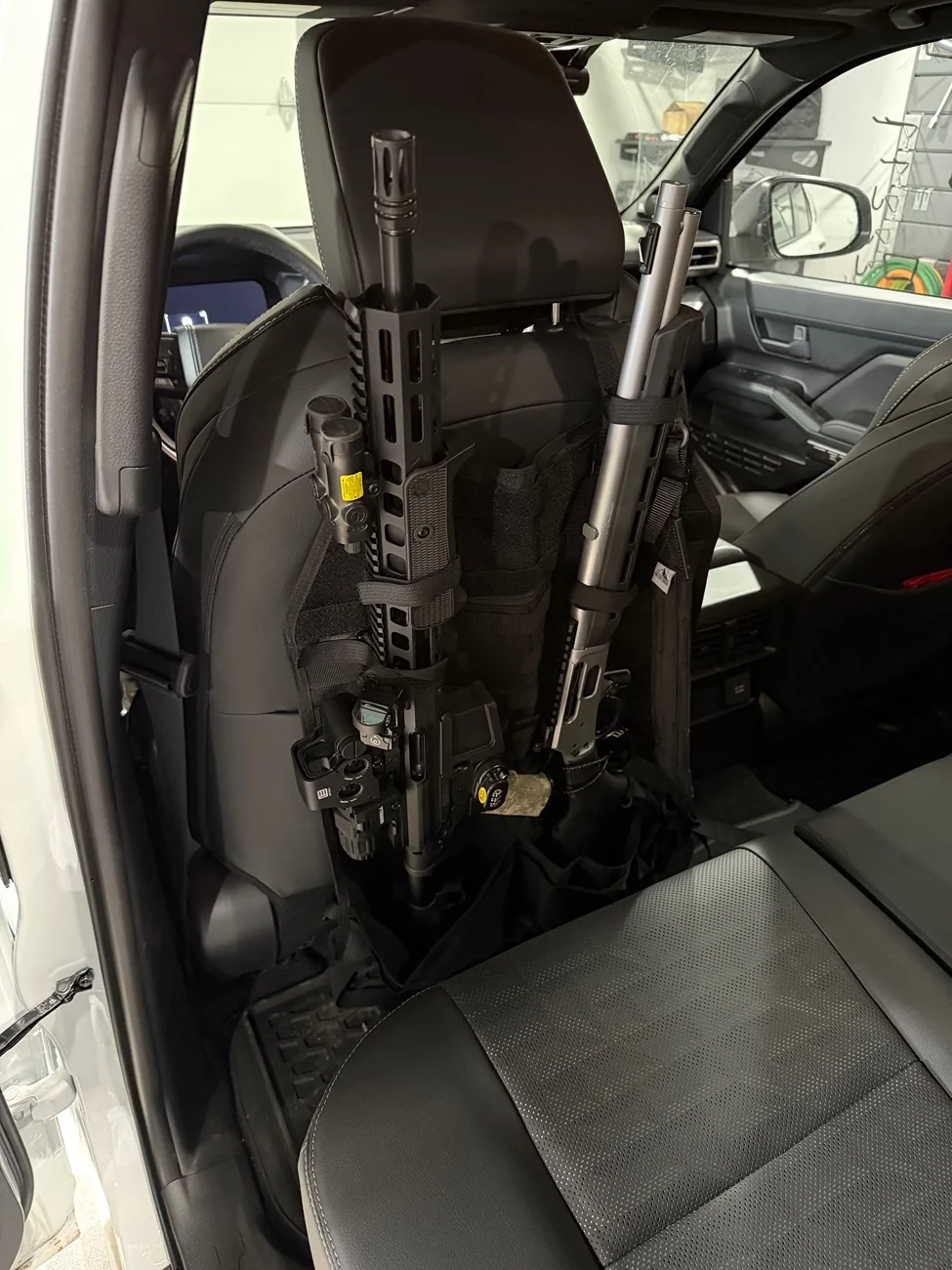
In the back seat Gun Rack
- Marlin 1895 MagPull 45/70 Trapper
- Troy PAR 5.56
In the Survival bag i keep:
- Fully compressed military trauma medic kit. First aid kit that will handle almost all serious injuries ranging from gun shot wounds to major blood loss situations and its designed to keep you alive till u get to a hospital.
- 2 glow sticks
- Para cord (25 feet)
- Emergency blanket
- hand held GMRS charger
- Midland GMRS GXT67
- Back up Anker battery pack
- USB cable
- Spare cooking gas
- Mosquito/ bug protection
- Folding saw
- Zippo fuel
- Zippo hand warmer X2
- Baby wipes
- Ollight Perun 3 flashlight
- Leatherman Signal
- Folding wood cook stove
- Knife sharpener
- Fave spices for cooking
- SOTO burner stove
- Back up alcohol stove
- MSA Stove fuel
- Fork / Spoon x2
- Water boiling kit
- Mug
- Coffee / tea kit (20 freeze dried coffee packs, sugar, dried creamer)
- 4 rolled up garbage bags
- 2 mountain house meals
- MSA water filter bag (filters 20 litres an hour)
- Stainless steel foldable wind break for cooking
- Foldable 20L water bucket
- Small cook pan
- Back up boundless voyage burner stove
- Cast iron chainmail scrubber
- Multi tong tool for cooking
- Phillips AED defibrillator
- Firebox Stove Apocalypse Kit
- Winch remote and cable
- 2 rolls of toilet paper
- X4 20 minute burn time road flares
- ESEE 6 Knife
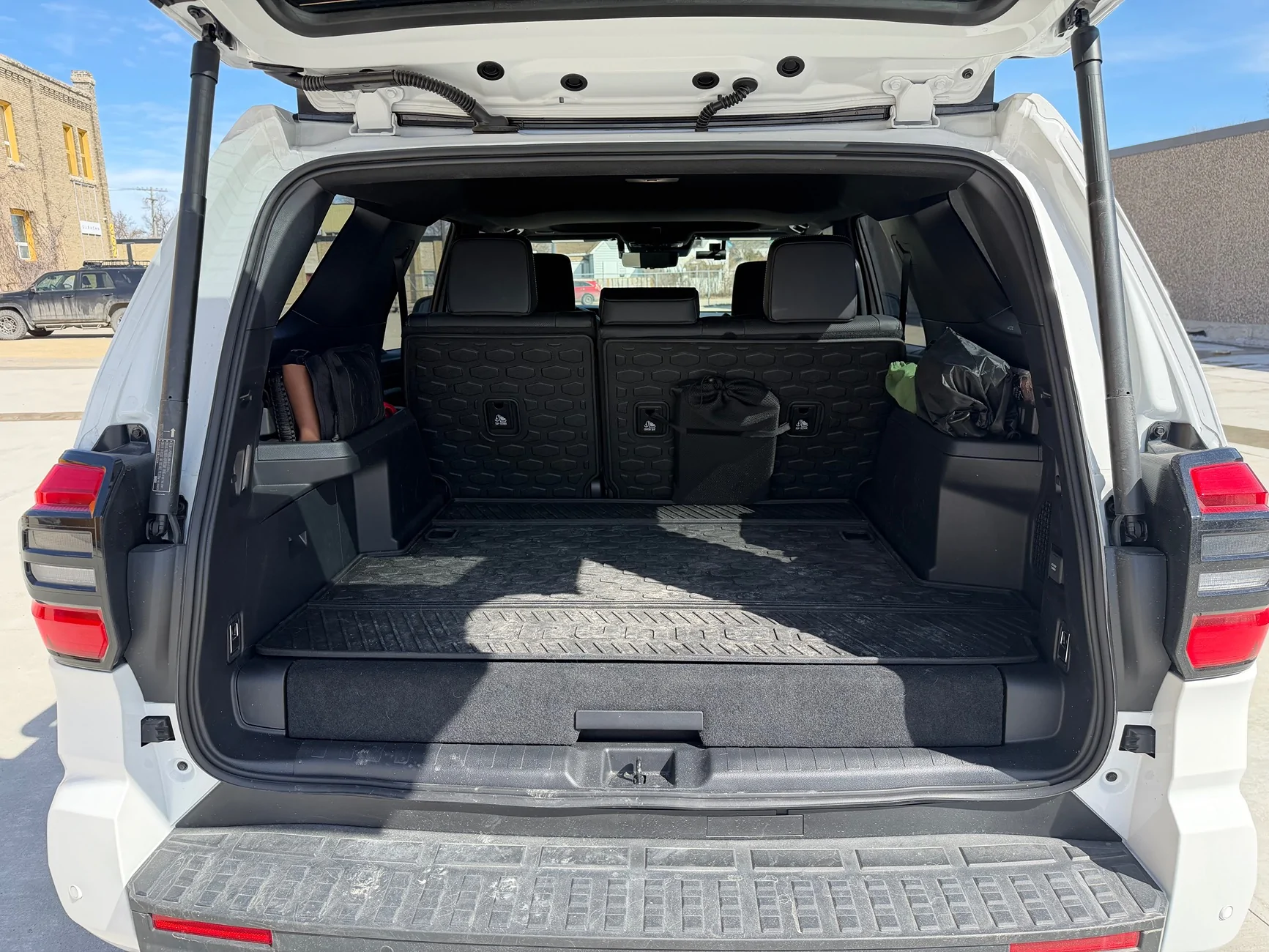
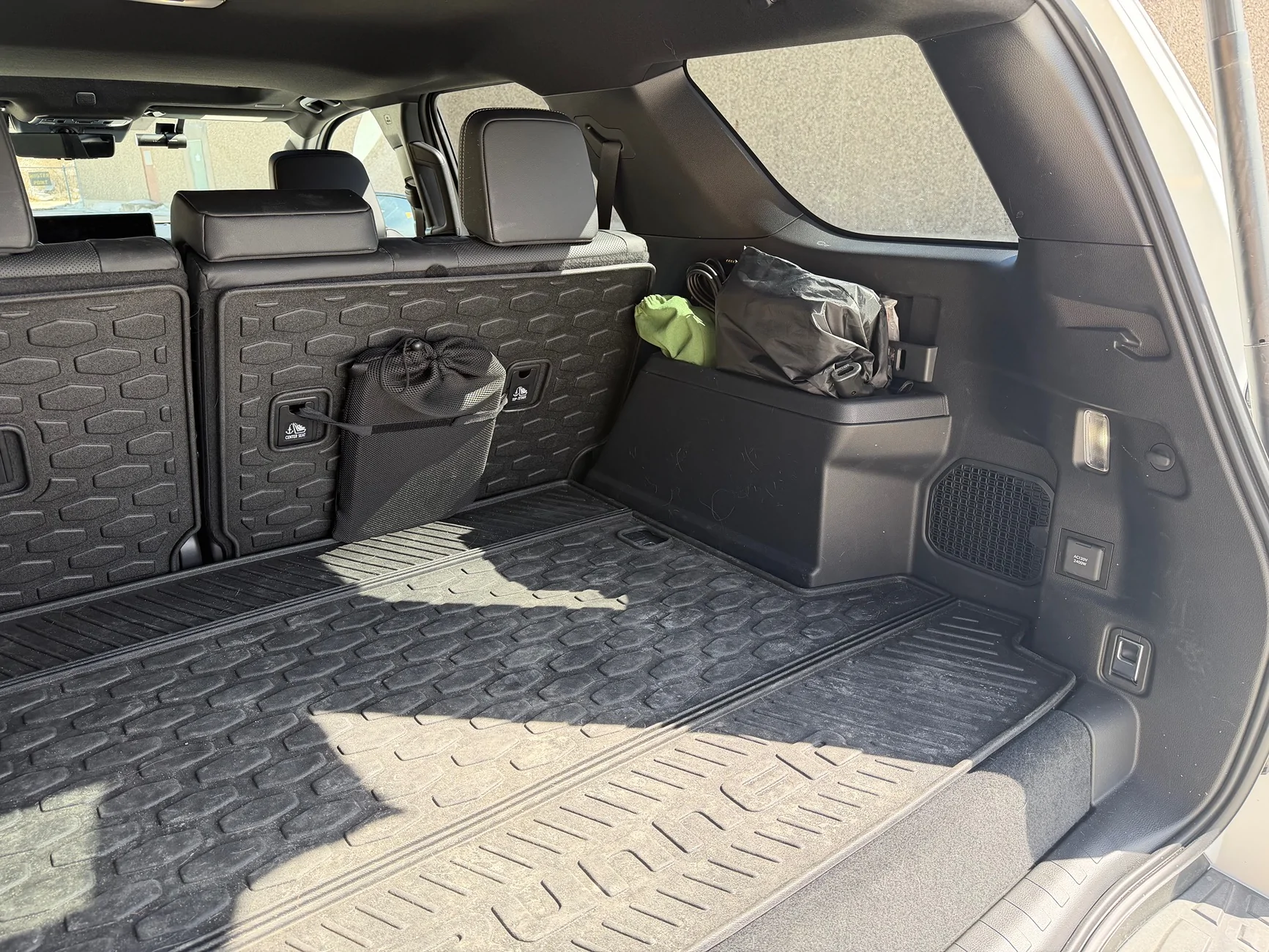
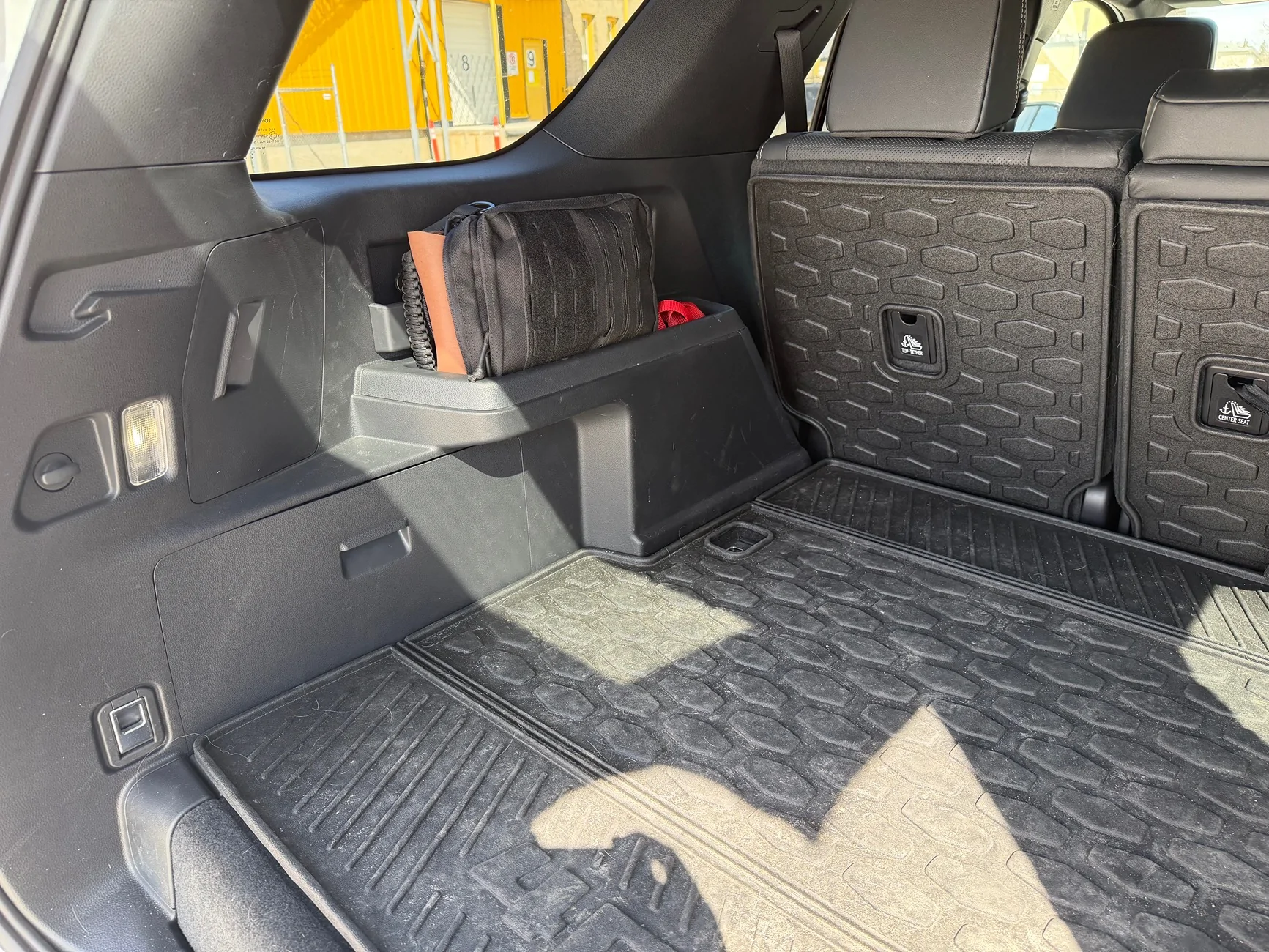
In the rear back seat storage compartment behind rear seats i keep:
- Electrical kit with replacement fuses, wire, tester and trouble shooting systems.
- Full tool set to fix ANYTHING on the road
- 2 Ratchets for roof top mounting
- Magnetic hazard flashers for emergency road side notice
- X2 ARB compressor hoses (long enough to air up trailers)
- Mechanics gloves
- NOCO GB70 booster
- 2 tree huggers
- 2 snatch blocks
- 2 threaded shackle recovery hooks
- ARB air up kit
- ARB tire deflator
- Tire repair kit
- Tire valve kit
In the Go Bag that sits behind driver seat (comes and goes with me as i leave)
- DJI Neo Drone (for quick reconnaissance of routs prior to taking forks in roads) (also good for checking traffic grid lock to see whats causing the delay)
- Full set of socks, underwear, pants and shirt.
- Yeti water canteen
- Whiskey flask (always full)
- Minor / basic first aid kit
- Military compass
- Trail marking tape
- Water life straw
- 1 MRE
- Lock pick kit (to unlock client trucks when they lock their own keys in it 6 hours off grid… trust me, this happens more often then you would think)
- X2 Cliff Bars
- X1 bag of beef jerky
Im sure ill add things down the road and try to keep this post updated with those changes.
Thanks!
Cranberry
Sponsored