- Joined
- Aug 7, 2026
- Threads
- 2
- Messages
- 8
- Reaction score
- 8
- Location
- Northern California
- Vehicle(s)
- 2026 4Runner TRD ORP
- Thread starter
- #1
Hey everyone,
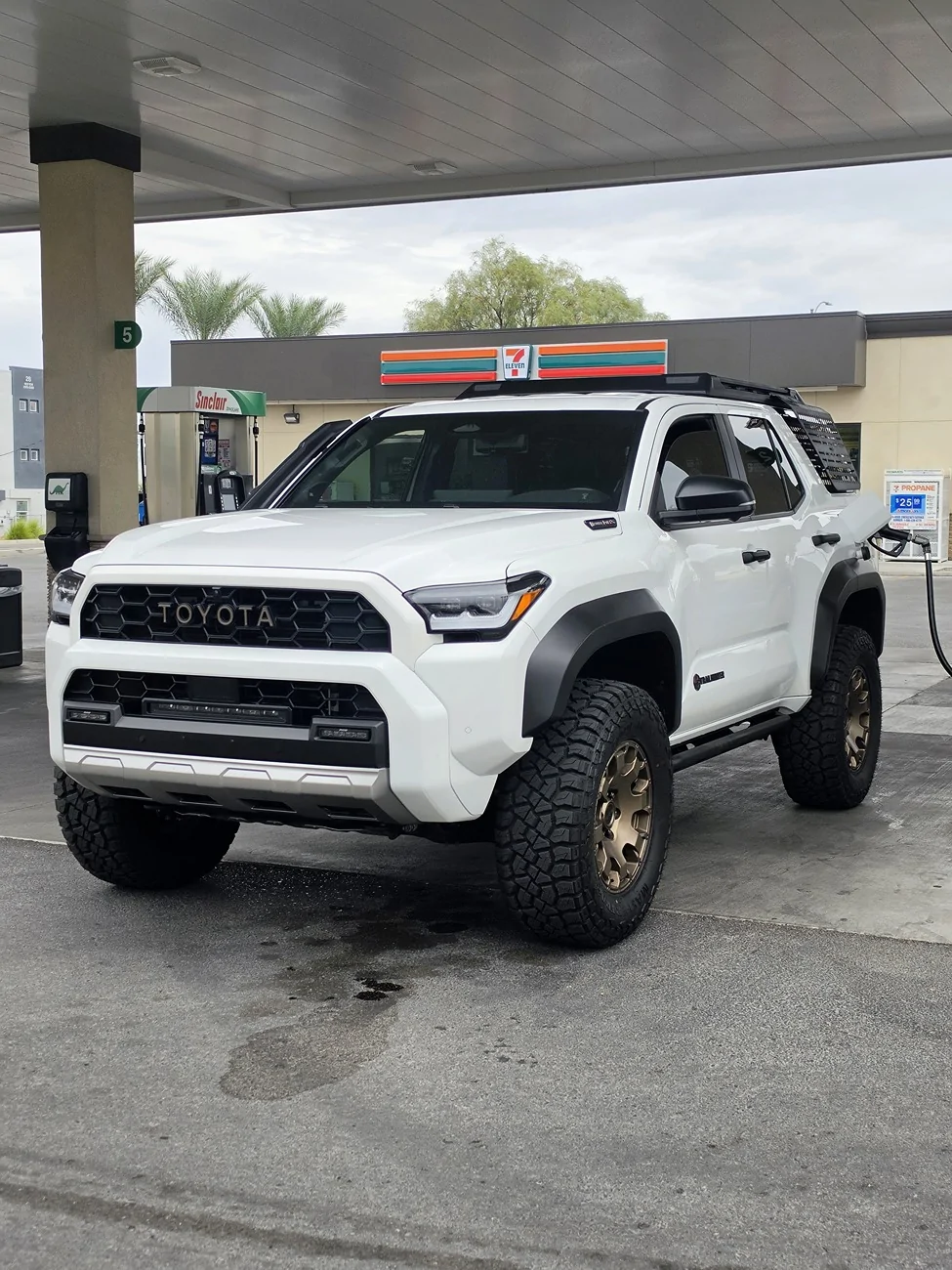
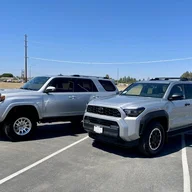
First-time 4Runner owner here. I wanted to share my build breakdown for my 2026 Toyota 4Runner TRD Off-Road Premium (ORP).
When shopping, I debated between buying a factory Trailhunter or modifying an ORP myself. The Trailhunter is fantastic out of the box, but it you don't get to have powertrain, armor, and gear choices. My goal was a purpose-built backcountry rig optimized for weekend camping, moderate off-roading, and technical trail exploration (up to 6/10 trails), while preserving daily street drivability and payload capacity.
I completed this build for right around $65K ($56,000 base vehicle + $8,500 in mods). Given that a stock Trailhunter carries an MSRP of $68,000+ (closer to $72K+ out the door), I’m really glad I went this route.
For anyone considering a similar build, I hope this breakdown offers some helpful insights. Of course, take it with a grain of salt—every build should be based on owner's specific use case.

Phase 1: Choosing the Powertrain & Platform
The factory Trailhunter comes with the heavier i-FORCE MAX Hybrid system. By going with a gas model, I was able to save 300+ lbs of real-world payload for camping gear, a drawer system, and recovery tools without overloading the rear axle. I could have chosen an SR5 to save more money upfront, but the factory rear locker was a non-negotiable for me, and I wanted the multi-terrain cameras and crawl control that come only on the Off-Road trim. Plus 14" screen is better for my aging eyes.
Phase 2: Armor & Protection
The factory Trailhunter armor utilizes stamped steel plates. I wanted solid underbody protection without turning the truck into an anchor on pavement.

Phase 3: Suspension, Wheels & Tires (Most Crucial)
Driving Impressions
On-road, the typical front-end brake dive, highway body roll, and floaty stock damping are completely gone. The truck feels planted, stable, and composed through sweeping bends. There is a faint hum from the Toyo AT3s over highway asphalt compared to passenger-car tires, but it's a negligible trade-off for the substantial off-road capability gain.
Off-road, it glides across washboards and tracks predictably over loose rock. Even with roughly 500 lbs of cargo in the back, suspension travel remains supple with plenty of room for articulation without rubbing. I intentionally keep roof-rack weight minimal to preserve a low center of gravity. If my gear load increases significantly down the road, I might consider stiffer rear coils, but for now, the damping and spring rates feel spot on.
While a factory Trailhunter would have been turnkey, I likely would have swapped the wheels and tires anyway (another $3,500). At $65,000 all-in, I ended up with what I like to call a "Trailhunter Lite"—custom-tailored to exactly how I use it.
Interior:
First-time 4Runner owner here. I wanted to share my build breakdown for my 2026 Toyota 4Runner TRD Off-Road Premium (ORP).
When shopping, I debated between buying a factory Trailhunter or modifying an ORP myself. The Trailhunter is fantastic out of the box, but it you don't get to have powertrain, armor, and gear choices. My goal was a purpose-built backcountry rig optimized for weekend camping, moderate off-roading, and technical trail exploration (up to 6/10 trails), while preserving daily street drivability and payload capacity.
I completed this build for right around $65K ($56,000 base vehicle + $8,500 in mods). Given that a stock Trailhunter carries an MSRP of $68,000+ (closer to $72K+ out the door), I’m really glad I went this route.
For anyone considering a similar build, I hope this breakdown offers some helpful insights. Of course, take it with a grain of salt—every build should be based on owner's specific use case.
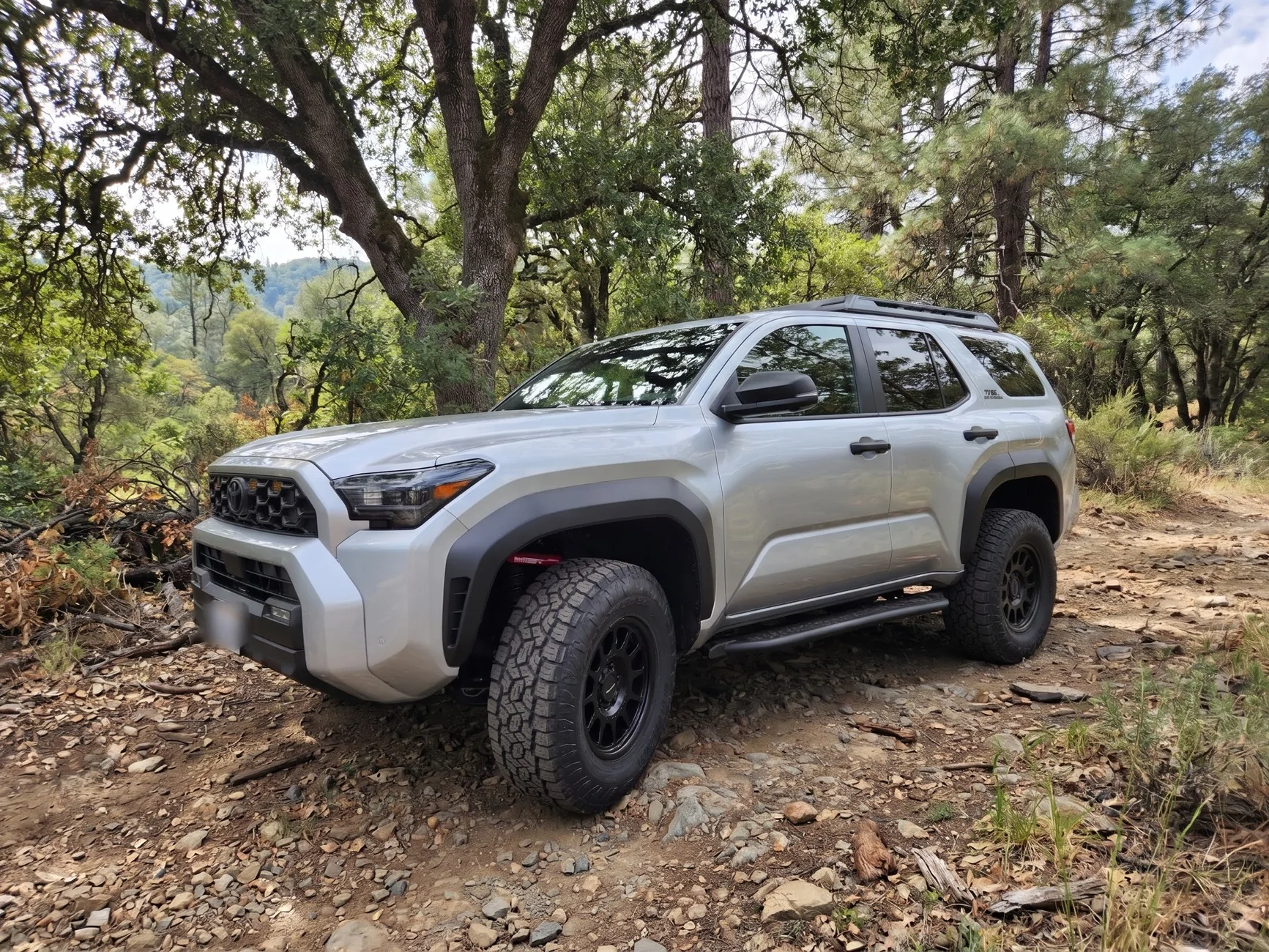
Phase 1: Choosing the Powertrain & Platform
- Base Vehicle: 2026 Toyota 4Runner TRD Off-Road Premium Cutting Edge (Gas Model, Moonroof, Factory ARB Roof Rack)
- Cost: $56,000 (before tax)
The factory Trailhunter comes with the heavier i-FORCE MAX Hybrid system. By going with a gas model, I was able to save 300+ lbs of real-world payload for camping gear, a drawer system, and recovery tools without overloading the rear axle. I could have chosen an SR5 to save more money upfront, but the factory rear locker was a non-negotiable for me, and I wanted the multi-terrain cameras and crawl control that come only on the Off-Road trim. Plus 14" screen is better for my aging eyes.
Phase 2: Armor & Protection
- Components: RCI Metalworks Full Plated Rock Sliders + Full Aluminum Skid Plate Suite (Engine, Transmission, Transfer Case with steel crossmember bar, and Catalytic Converter Guards)
- Cost: $2,800 (self-installed)
The factory Trailhunter armor utilizes stamped steel plates. I wanted solid underbody protection without turning the truck into an anchor on pavement.
- Skid Plates: I opted for a full set of RCI aluminum skids (~65 lbs total). Aluminum cuts the weight of steel roughly in half while offering plenty of protection for overlanding and moderate trail blazing. If I were building a dedicated rock crawler, I would have chosen steel; for overland travel, aluminum seemed to be the sweet spot.
- Rock Sliders: I went with full-plated RCI steel sliders because of their 5 dgree offering. My wife still needs a step to get in and out and DOM tubing RCI uses should support the full weight of the vehicle pivoting off a boulder. Installation note: This was tougher than advertised. My TRD ORP lacked threaded weld nuts in several frame holes, meaning I had to fish mounting brackets and hardware through the boxed frame to line everything up. If you don't have the patience for tight frame fishing, consider a shop install or a different mounting setup.
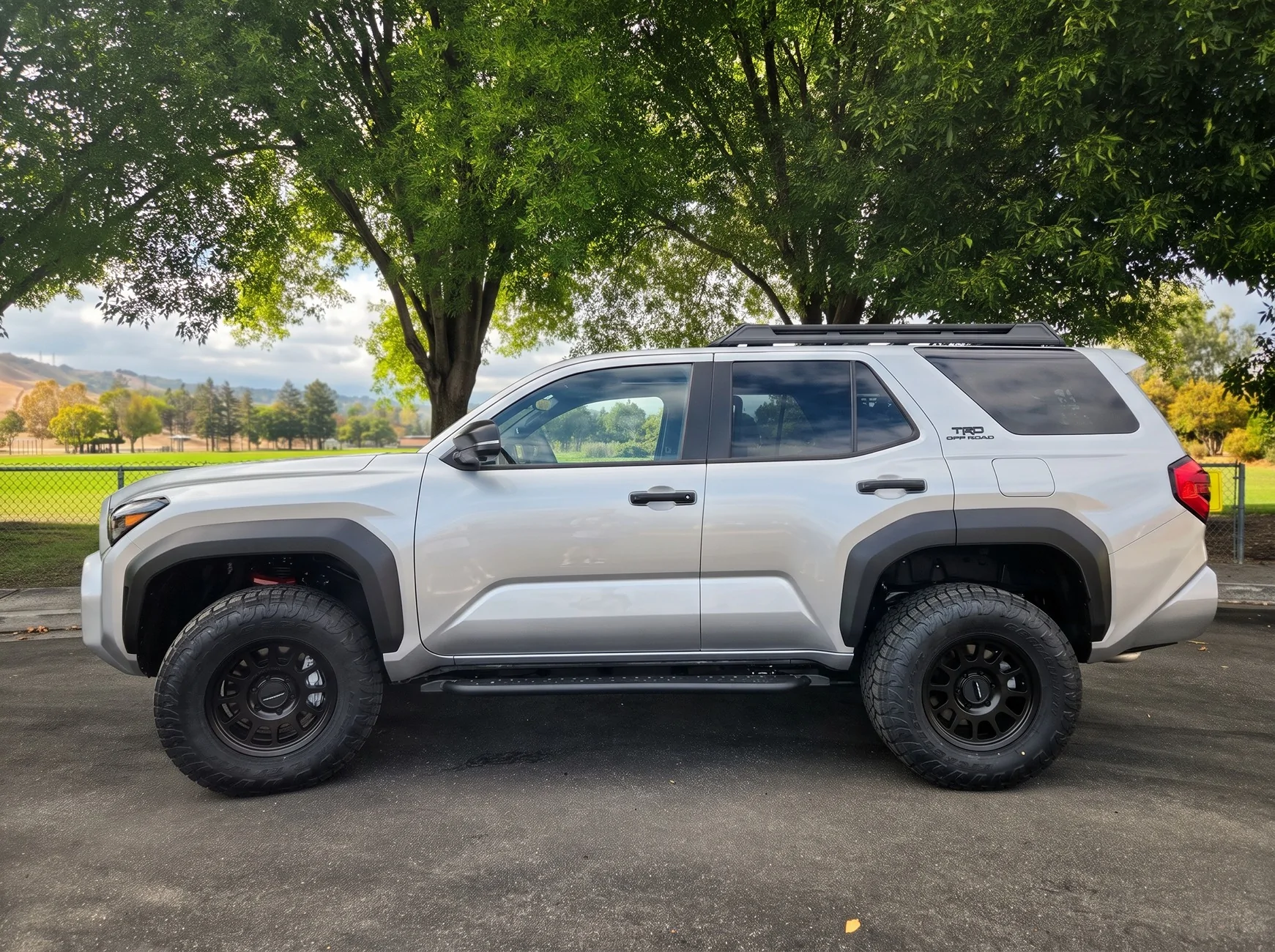
Phase 3: Suspension, Wheels & Tires (Most Crucial)
- Suspension: Toyota Trailhunter/OME Takeoff Suspension (struts, coils, springs) + Toyota TRD Pro Billet Aluminum Upper Control Arms (UCAs) — $1,700
- Wheels: Method Race Wheels 703 (Matte Black, 17x8.5, +35mm offset) x5 — $1,200 (heavily discounted)
- Tires: Toyo Open Country A/T III (LT285/70R17, Load Range C) x 5 — $1,600
- Professional Install & Setup: Suspension install, mount & balance, alignment, and Zero Point Calibration by Level 4x4 in Rocklin, CA — $1,050 (highly recommended)
- Total Phase Cost: $5,550
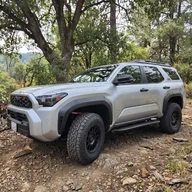
- The Takeoff Suspension: I found a 2,000-mile factory Trailhunter Old Man Emu takeoff package locally. I added the TRD Pro billet UCAs to make sure i have headroom for a proper alignment. Unlike universal aftermarket kits that can ride harsh when empty, this setup was tuned directly by ARB and Toyota for low-speed compliance and trail comfort. I ended up with an ideal ~1.5" front and ~1.25" rear lift, preserving about a 1" factory rake unladen. When loaded with ~500 lbs of gear, the truck sits dead level.
- UCAs & Alignment: The TRD Pro Billet UCAs provided the caster correction needed with the lift. Level 4x4 (Highly recommedned if you are in NorCal) dialed in the specs at +3.7° Left Caster, +3.8° Right Caster, 0° Camber, and 0.16° Total Toe. Tracking is dead straight on the highway and pushes the front tires forward to clear the wheel wells without any rubbing. They also performed a digital Zero Point Calibration, all included in a very reasonable labor cost they charged me.
- Wheels & Tires: The Method 703s (+35mm offset) provide a perfect stance without excessive wheel poke. For rubber, I chose 33-inch Toyo AT3s in Load Range C. They are perfectly flush to the fender flares. The installer recommended 34" instead, but i did not want to penalize breaking distance, fuel economy, and drivetrain gearing. The full-size spare hangs slightly lower underneath (costing about 1° of departure angle), but it’s a minor tradeoff i am willing to live with.
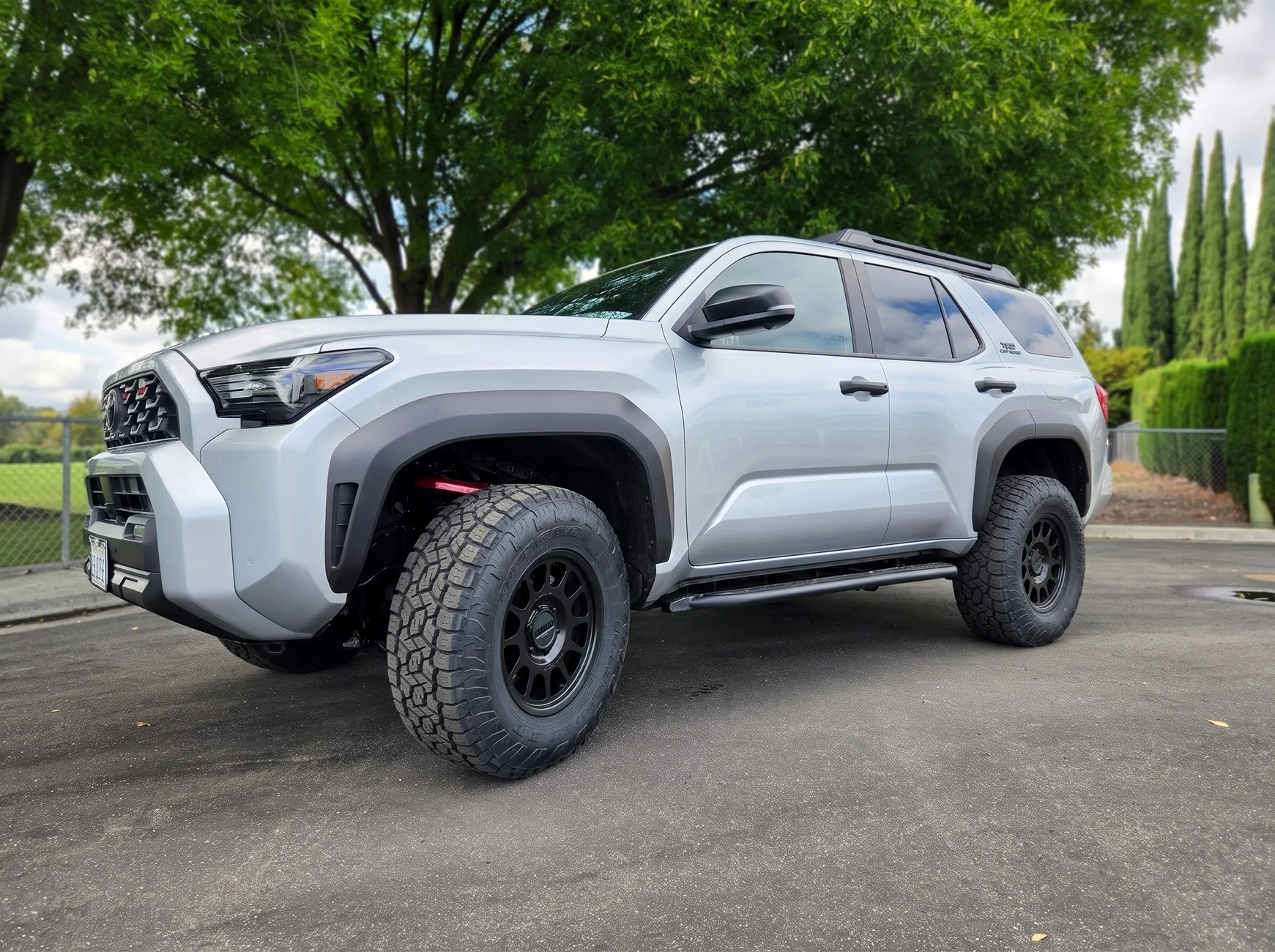
Driving Impressions
On-road, the typical front-end brake dive, highway body roll, and floaty stock damping are completely gone. The truck feels planted, stable, and composed through sweeping bends. There is a faint hum from the Toyo AT3s over highway asphalt compared to passenger-car tires, but it's a negligible trade-off for the substantial off-road capability gain.
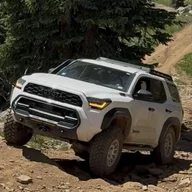
Off-road, it glides across washboards and tracks predictably over loose rock. Even with roughly 500 lbs of cargo in the back, suspension travel remains supple with plenty of room for articulation without rubbing. I intentionally keep roof-rack weight minimal to preserve a low center of gravity. If my gear load increases significantly down the road, I might consider stiffer rear coils, but for now, the damping and spring rates feel spot on.
While a factory Trailhunter would have been turnkey, I likely would have swapped the wheels and tires anyway (another $3,500). At $65,000 all-in, I ended up with what I like to call a "Trailhunter Lite"—custom-tailored to exactly how I use it.
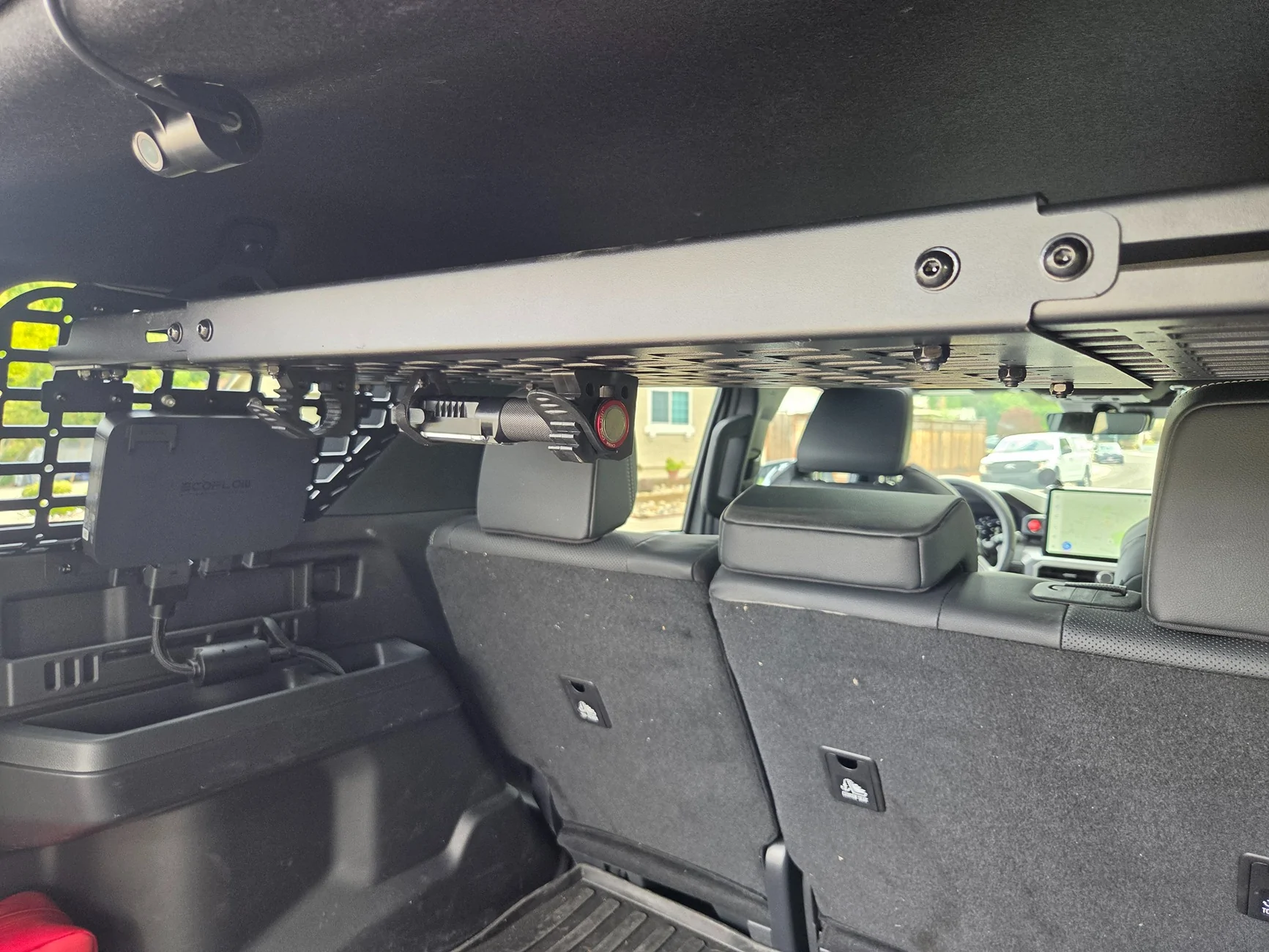
Interior:
- DV8 Interior Rear Molle Panel + Gear Shelf: one of my favorite mods, so practical for gear organization and storage
- Ecoflow Alternator Charger + Delta 3 Plus Max: technically a mobile dual battery system, I also run 400W or 160W Solar Panel
- Meso Custom Interior Lights: Love these bright dual color lights
- FitcamX Front and Rear Dashcam
Sponsored
Last edited: