
- Joined
- Aug 2, 2026
- Threads
- 3
- Messages
- 47
- Reaction score
- 38
- Location
- Washington
- Vehicle(s)
- 2026 TRD OR Hybrid
- Thread starter
- #1
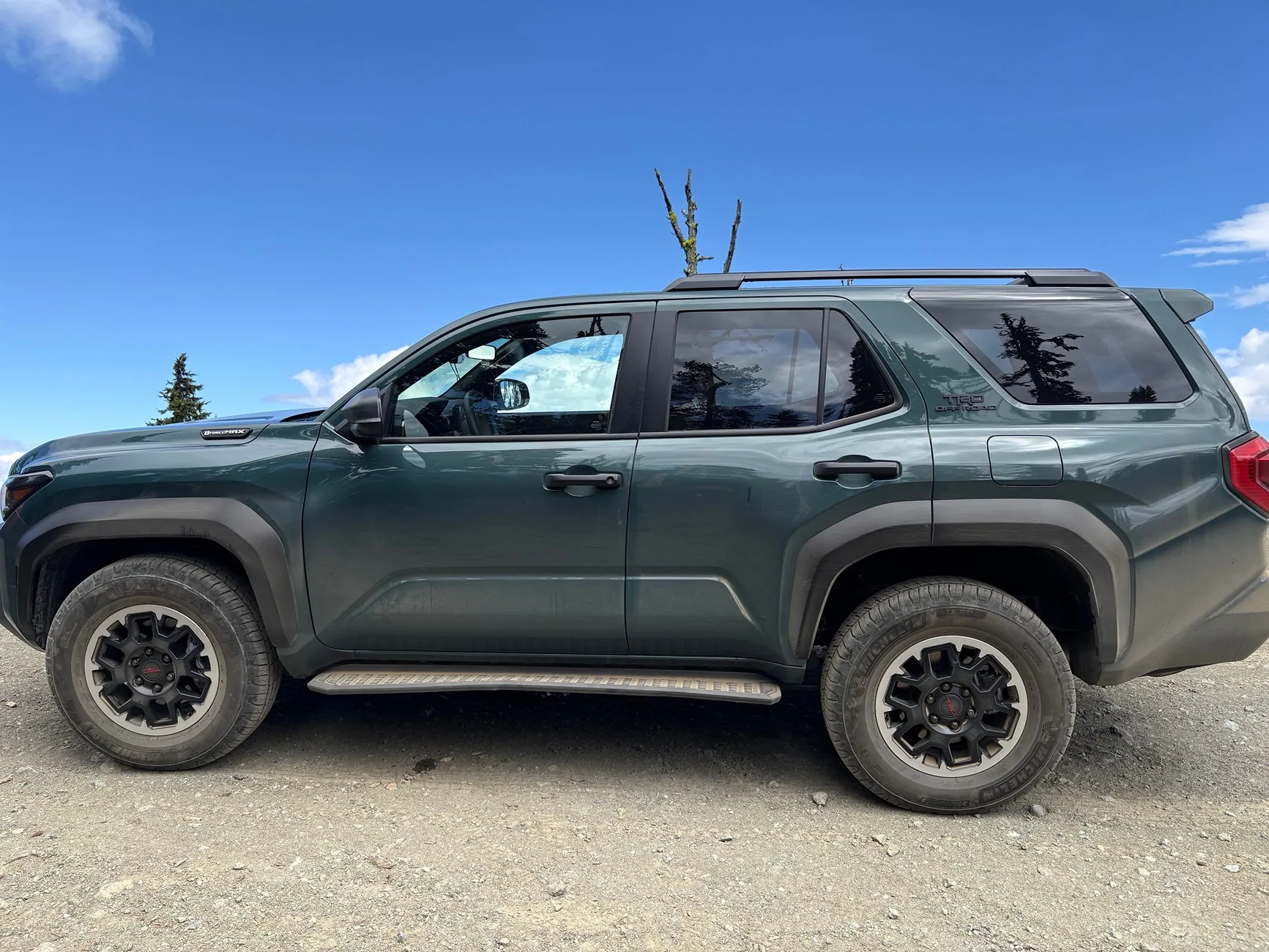
Hey all, new member and 6G owner here looking for some build advice from you knowledgeable folks.
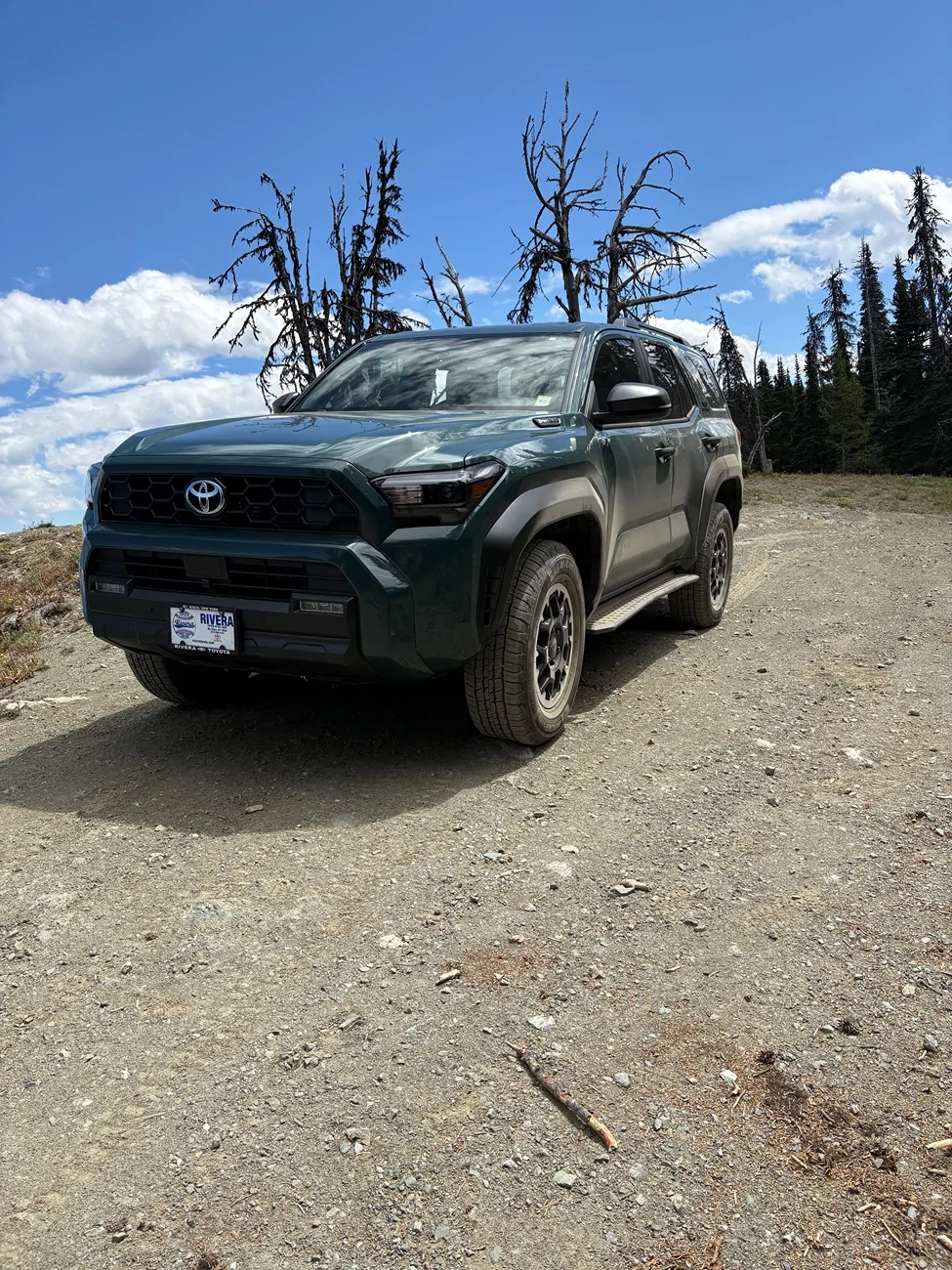
I own a 2026 TRD Offroad Hybrid which I bought about a month ago. It will be my daily driver for commuting 40 miles round trip during the week. On the weekends I’ll be using it mostly for getting to remote spots for long range shooting up in the mountains and general offroad shenanigans. I planned on leaving it stock (except for a front skid plate) until the original tires needed replacement but my first trip to scout some spots revealed deficiencies. I’m looking for a sanity check and advice on part selection.
The ground clearance was pretty limited and I couldn’t make it up the trail (OnX 4 I believe) without wrecking my running boards. Now I have a C4 transfer case/transmission skid and C4 rock sliders on the way. Even with the protection I think I want to lift it about 2” up front and 1” in the rear. At the same time I’ll probably want to put tougher tires on there.
Goals:
Suspension:
Wheels/tires:
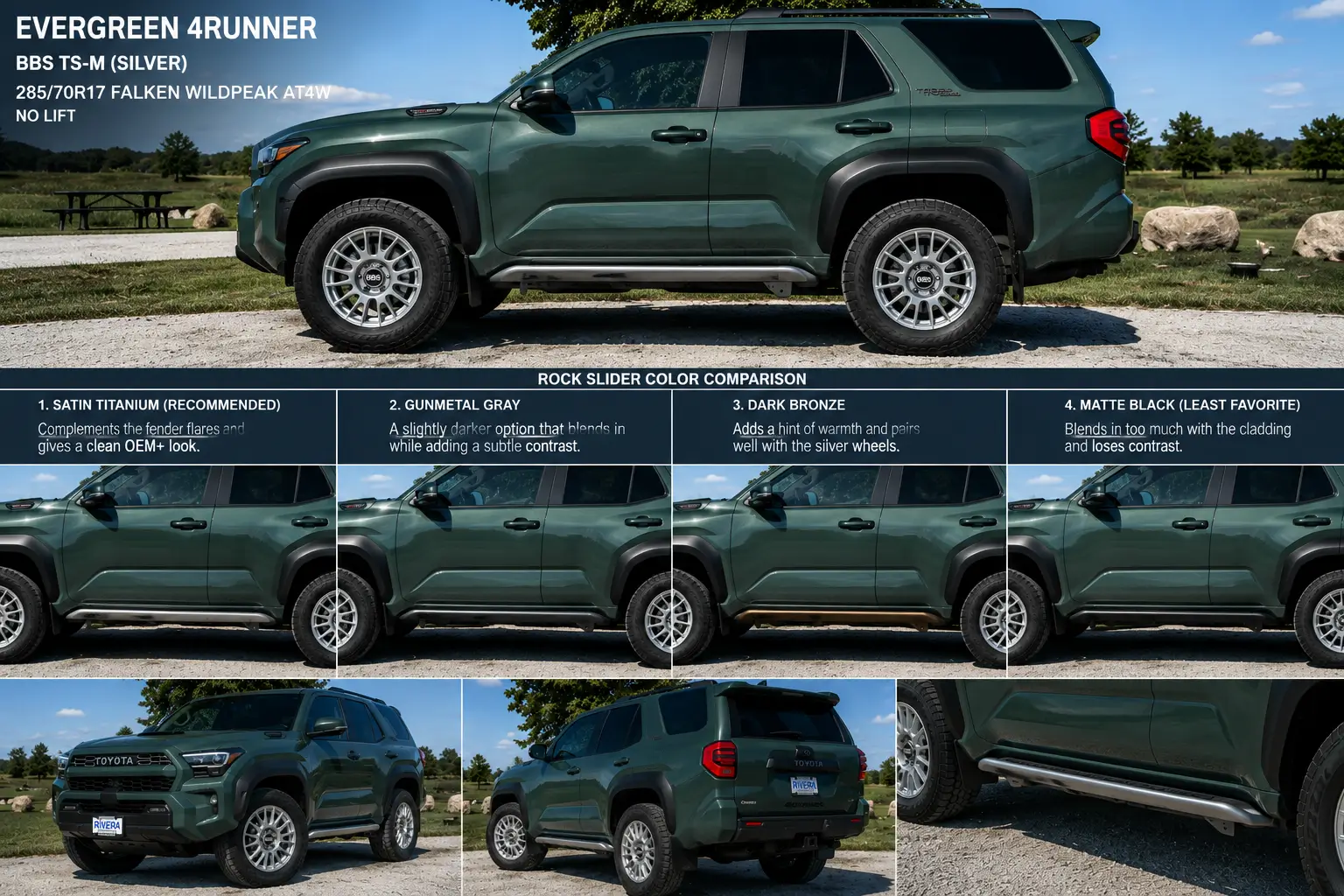
I plan on keeping the stock size outer diameter. I may do these before the suspension. With reservoir shocks I think I’ll need to either add wheel spacers or go with lower offset wheels. I like the American Racing AR172 Baja or the Fifteen52 Analog HDs. I don’t want to be a basic bitch and go bronze even though it looks good. If I change wheels I’ll probably go with 17”. Only simple questions here:
Unfortunately the C4 skid plate requires removing the front recovery hooks. Very disappointing and quite misleading that they don’t put this in the product description. It would have been incredibly easy to design the skid plate in such a way to bolt over or under a flat tow hook. This is an incredibly poor design decision. I’m pretty set against a steel bumper because I don’t want the weight and installation looks like a PITA.
Anyone have clever ideas for restoring a front recovery point without going to a steel bumper?
Conclusion
I have some significant and expensive upgrades planned. Does it seem like I’m approaching my goals in the right way? I’d love to hear your opinions. Thanks for making it this far.


I own a 2026 TRD Offroad Hybrid which I bought about a month ago. It will be my daily driver for commuting 40 miles round trip during the week. On the weekends I’ll be using it mostly for getting to remote spots for long range shooting up in the mountains and general offroad shenanigans. I planned on leaving it stock (except for a front skid plate) until the original tires needed replacement but my first trip to scout some spots revealed deficiencies. I’m looking for a sanity check and advice on part selection.
The ground clearance was pretty limited and I couldn’t make it up the trail (OnX 4 I believe) without wrecking my running boards. Now I have a C4 transfer case/transmission skid and C4 rock sliders on the way. Even with the protection I think I want to lift it about 2” up front and 1” in the rear. At the same time I’ll probably want to put tougher tires on there.
Goals:
- Enough clearance so I don’t smash into obstacles
- Improve ride comfort on poorly maintained forest service/fire/logging roads. A lot of washboard sections and potholes and the stock suspension was lacking. I like to go fast where it’s reasonably responsible to do so.
- Not get stranded in the mountains because a rock goes through my sidewall
- Retain the factory position of the spare tire
- Preserve daily-driver considerations as much as possible. In order of prio gas mileage, comfort, road noise
Suspension:
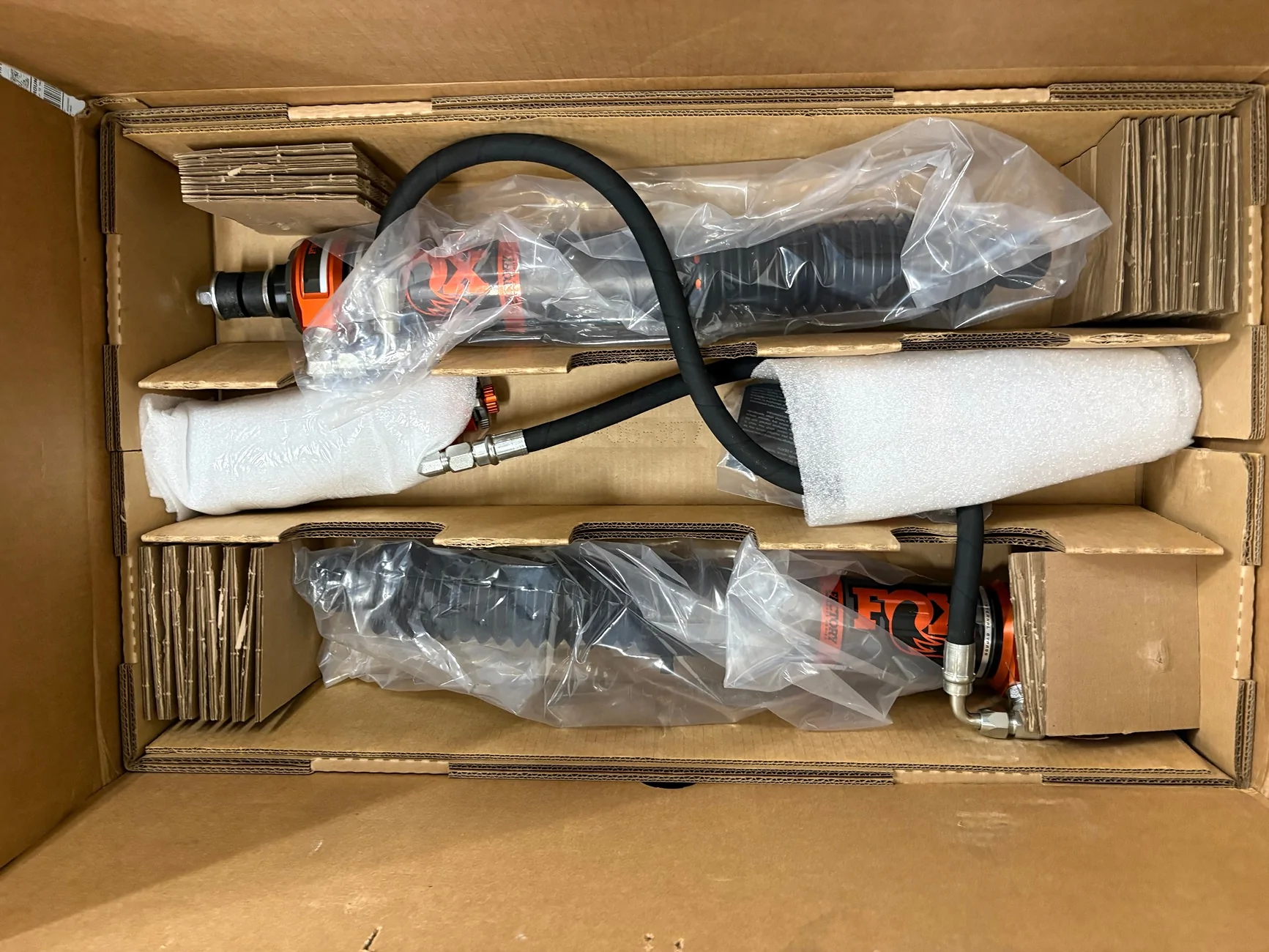
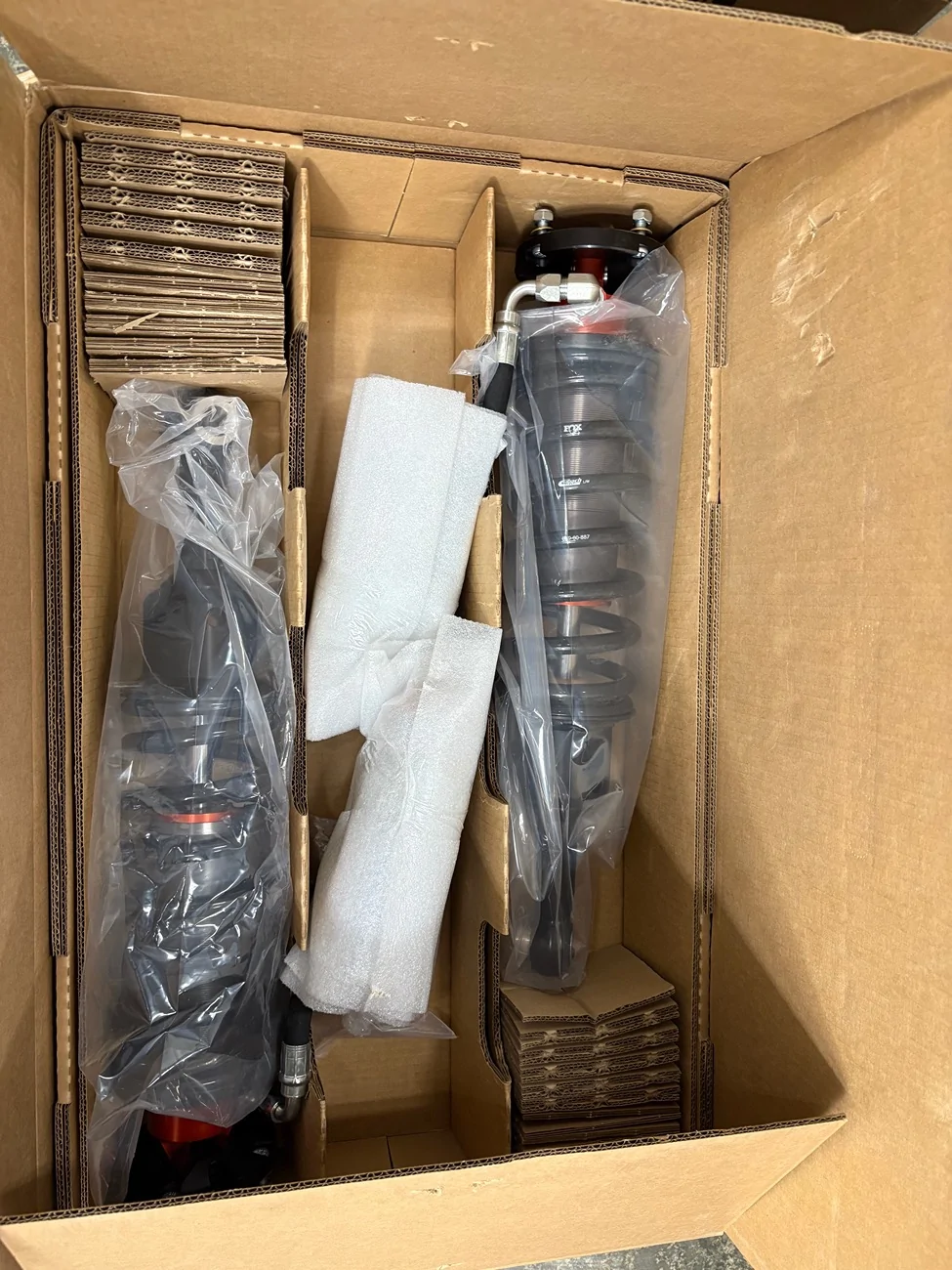
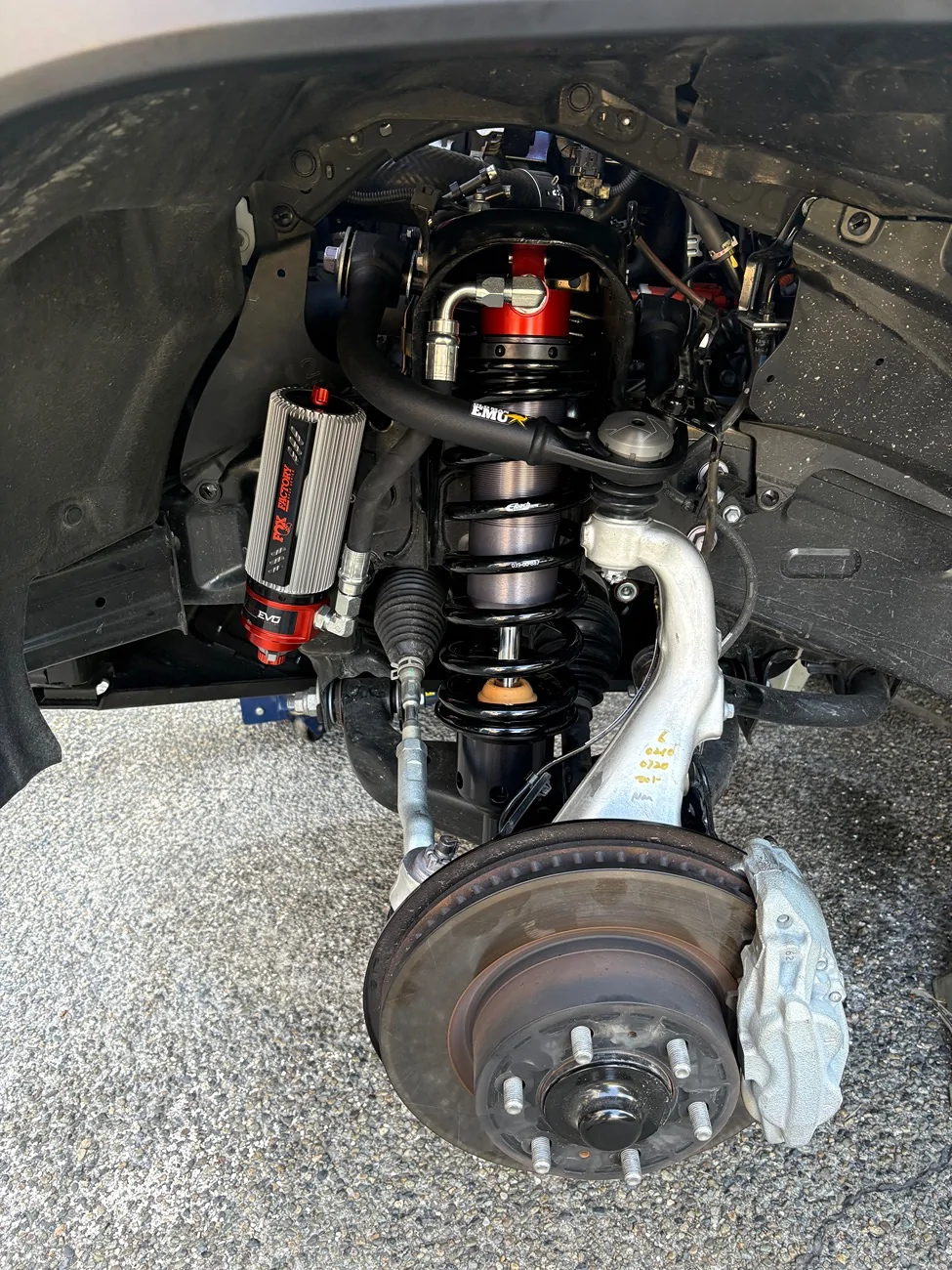
- Fox 3.2 coilovers/shocks and to-be-determined rear springs - arguably overkill, but I will be spending quite a bit of time on rough logging roads at moderate speeds and these seem like the best there is for that use case
- UCAs of an undetermined type - this is an area where my knowledge is lacking. I’m thinking a tubular arm with a bushing and uniball is the way to go, but does that leave performance on the table compared to a Heim Joint? Unclear to me what the practical advantage is: does it let me tune behavior more, or just align easier to factory specs? Do billet arms have a practical strength advantage?
- Is there anything else I should upgrade while I’m down there and why? I don’t want to handicap the 3.2s by missing an obvious upgrade.
- The 3.2 rears aren’t described as ”extended travel” so I‘m assuming I won’t get any more rear travel. Could I possibly be better off going with one of the 2.5 Fox/Icon/King kits that’s specified as extended travel and upgrading rear links etc? I plan on DIYing this so I’m hesitant to go that direction but I’m interested to hear what the pros/cons would be.
Wheels/tires:
I plan on keeping the stock size outer diameter. I may do these before the suspension. With reservoir shocks I think I’ll need to either add wheel spacers or go with lower offset wheels. I like the American Racing AR172 Baja or the Fifteen52 Analog HDs. I don’t want to be a basic bitch and go bronze even though it looks good. If I change wheels I’ll probably go with 17”. Only simple questions here:
- Before I do the lift, can I go all the way to 0 offset wheels without running into rubbing issues?
- Has anyone fit larger tires than stock in the factory spare location? It looks like there’s at least an inch of clearance between the spare and the hitch and exhaust, but I don’t want to do something dumb and start a fire
- Are E rated tires the only logical choice here? SLs would obviously be better for the road but I’m not sure how big the sidewall toughness difference is in practice.
Unfortunately the C4 skid plate requires removing the front recovery hooks. Very disappointing and quite misleading that they don’t put this in the product description. It would have been incredibly easy to design the skid plate in such a way to bolt over or under a flat tow hook. This is an incredibly poor design decision. I’m pretty set against a steel bumper because I don’t want the weight and installation looks like a PITA.
Anyone have clever ideas for restoring a front recovery point without going to a steel bumper?
Conclusion
I have some significant and expensive upgrades planned. Does it seem like I’m approaching my goals in the right way? I’d love to hear your opinions. Thanks for making it this far.
Sponsored
Last edited:


![Kurvet [SCAMMER]](https://cdn.4runner6g.com/data/avatars/l/9/9778.jpg?1782296904)