
Sponsored

Lamuncha

Limited
Well-known member
First Name
don
Joined
Sep 26, 2025
Threads
6
Messages
131
Reaction score
57
Location
new england
Vehicle(s)
2025 4 runner
Certainly free to load in whatever you think is best for you. But I wouldn't rely on faith that it is true.

Forget the noise out there about it being proven. It cannot be proven - the three popular fuels have almost the same energy, how can you get more out of one vs the other.

Tuning is a separate discussion..

The squeaking- maybe it is the rear seat where in the hinge.
Sponsored

 

HVLA

TRD Off-Road Premium
Well-known member
Joined
Feb 28, 2025
Threads
9
Messages
543
Reaction score
371
Location
USA
Vehicle(s)
Lexus
Certainly free to load in whatever you think is best for you. But I wouldn't rely on faith that it is true.

Forget the noise out there about it being proven. It cannot be proven - the three popular fuels have almost the same energy, how can you get more out of one vs the other.

Tuning is a separate discussion..

The squeaking- maybe it is the rear seat where in the hinge.
Noise???? What are you talking about????? Dynos have PROVEN that premium fuel increases horsepower in THIS ENGINE by 15-20hp.

I feel like I am taking crazy pills here.
 

HVLA

TRD Off-Road Premium
Well-known member
Joined
Feb 28, 2025
Threads
9
Messages
543
Reaction score
371
Location
USA
Vehicle(s)
Lexus
If it does than is the minimal HP gain really worth the Premium grade price paid per gallon especially with the cost apporaching record highs?
What do you mean IF??? It isnt an IF. The increase is 15-20hp. This isnt a debate. And yes $5 per fill up is absolutely worth 15-20hp to me.
 

The_Dark_Knight_Forever

TRD Sport Premium
Well-known member
First Name
J.
Joined
Mar 31, 2025
Threads
8
Messages
268
Reaction score
108
Location
Houston, TX
Vehicle(s)
2003 Toyota Tundra SR5 TRD Sport Stepside
What do you mean IF??? It isnt an IF. The increase is 15-20hp. This isnt a debate. And yes $5 per fill up is absolutely worth 15-20hp to me.
Noise???? What are you talking about????? Dynos have PROVEN that premium fuel increases horsepower in THIS ENGINE by 15-20hp.

I feel like I am taking crazy pills here.
You should take a chill pill, bud. This is a forum for fellow 4Runner owners where different opinions & thoughts about topics are a given.

Maybe the Dynos do show a slight HP increase with premium gas in a shop under controlled circumstance. I mean we're talking “15-20 HP” which is only 5.4-7.19% of the factory spec 278 HP (gasoline powertrain) using Regular fuel. I personally doubt it can even be more than barely perceived in real world driving which is less controlled than testing on a Dyno in some shop. I'm far from being a gearhead though...I just try to learn from others & ultimately I decide after further research if I believe the information I was given. Everyone is incorrect occassionally & that's okay...though I'm not saying the Dyno results are incorrect nor correct. If you or others can actually perceive it & have some need for a slight bump in HP then that's great...keep on fueling with Premium & enjoy the drive.

Ponder this though: The new Land Cruisers & the new 4Runners are very similar SUVs both using the i-FORCE MAX Hybrid powertrain...a 2.4-liter turbocharged inline-4 cylinder paired with an electric motor. But the 4R only requires Regular grade gas versus the LC which requires Premium grade gas. The reason apparently is that the same engine is tuned differently in the LC due to it being a heavier SUV. I speculate that Toyota engineers did not tune the 4R engines (neither gas only or hybrid models) to require Premium grade gas because in their learned opinion it's not needed due to the lighter weight & which makes me a skeptic of filling with Premium grade gasoline is going to somehow increase HP when the engine is not tuned from the factory to benefit from the higher octane. Just compare the stock HP of the hybrid 4R to the hybrid LC (which is the only powertrain) & you'll find that they both deliver 326 HP despite the 4R requiring only Regular grade gasoline where as again the LC requires Premium grade gasoline. This tells me that the 4R engine isn't tuned to benefit from Premium grade or even Mid grade gasolines.

Is anyone here able to produce any official documentation from Toyota stating that the 4R will deliver increased HP when Premium grade gas is used?
I would think Toyota would be very happy to advertise such a benefit if it were true as that would be a nice selling point & could get Toyota some nice kick backs from gasoline producers of 91-93 octane gasolines.
 
Last edited:

HVLA

TRD Off-Road Premium
Well-known member
Joined
Feb 28, 2025
Threads
9
Messages
543
Reaction score
371
Location
USA
Vehicle(s)
Lexus
You should take a chill pill, bud. This is a forum for fellow 4Runner owners where different opinions & thoughts about topics are a given.

Maybe the Dynos do show a slight HP increase with premium gas in a shop under controlled circumstance. I mean we're talking “15-20 HP” which is only 5.4-7.19% of the factory spec 278 HP (gasoline powertrain) using Regular fuel. I personally doubt it can even be more than barely perceived in real world driving which is less controlled than testing on a Dyno in some shop. I'm far from being a gearhead though...I just try to learn from others & ultimately I decide after further research if I believe the information I was given. Everyone is incorrect occassionally & that's okay...though I'm not saying the Dyno results are incorrect nor correct. If you or others can actually perceive it & have some need for a slight bump in HP then that's great...keep on fueling with Premium & enjoy the drive.

Ponder this though: The new Land Cruisers & the new 4Runners are very similar SUVs both using the i-FORCE MAX Hybrid powertrain...a 2.4-liter turbocharged inline-4 cylinder paired with an electric motor. But the 4R only requires Regular grade gas versus the LC which requires Premium grade gas. The reason apparently is that the same engine is tuned differently in the LC due to it being a heavier SUV. I speculate that Toyota engineers did not tune the 4R engines (neither gas only or hybrid models) to require Premium grade gas because in their learned opinion it's not needed due to the lighter weight & which makes me a skeptic of filling with Premium grade gasoline is going to somehow increase HP when the engine is not tuned from the factory to benefit from the higher octane. Just compare the stock HP of the hybrid 4R to the hybrid LC (which is the only powertrain) & you'll find that they both deliver 326 HP despite the 4R requiring only Regular grade gasoline where as again the LC requires Premium grade gasoline. This tells me that the 4R engine isn't tuned to benefit from Premium grade or even Mid grade gasolines.

Is anyone here able to produce any official documentation from Toyota stating that the 4R will deliver increased HP when Premium grade gas is used?
I would think Toyota would be very happy to advertise such a benefit if it were true as that would be a nice selling point & could get Toyota some nice kick backs from gasoline producers of 91-93 octane gasolines.
Toyota knows who buys 4runners. They arent people who want to use premium fuel as clearly evidenced by the large group here that use regular fuel. It is more marketing with a small slice of ecu tune than anything.

Premium fuel increasing horsepower isnt an "opinion". I dont care what fuel anyone uses. I do care that people keep posting factually incorrect information.
Want to save $3 a month in fuel? Be my guest.
 

The_Dark_Knight_Forever

TRD Sport Premium
Well-known member
First Name
J.
Joined
Mar 31, 2025
Threads
8
Messages
268
Reaction score
108
Location
Houston, TX
Vehicle(s)
2003 Toyota Tundra SR5 TRD Sport Stepside
Toyota knows who buys 4runners. They arent people who want to use premium fuel as clearly evidenced by the large group here that use regular fuel. It is more marketing with a small slice of ecu tune than anything.

Premium fuel increasing horsepower isnt an "opinion". I dont care what fuel anyone uses. I do care that people keep posting factually incorrect information.
Want to save $3 a month in fuel? Be my guest.
🙄
Until I see some hard evidence in the form of official documentation from Toyota stating that the stock engine as is will deliver more HP when fueled with Mid grade or Premium grade gasolines I will cast doubt on Dyno results & claims that the stock engine does deliver a slight increase in HP.
I mean come on...how do we really know that the Dyno testing was performed properly & is completely accurate? Where is the widespread proof obtained through proper scientific testing of these engines in large numbers?
Why does Toyota keep silent if their stock engines are capable of delivering more HP with higher octane gasolines? If true it would be an added benefit for consumers who want more HP, right?
And by the way, the 4Rs cost notably less money than the LCs so it would seem logical that part of the reason is because the engines aren't tuned from factory to increase HP output with higher octane gasolines. Comparing both SUVs overall, the 4R is the wiser purchase for value which has been said by most popular & respected critics & reviewers. In fact, it's often questioned why Toyota would make such similar vehicles in a mechanical sense which basically compete with each other...but I digress.
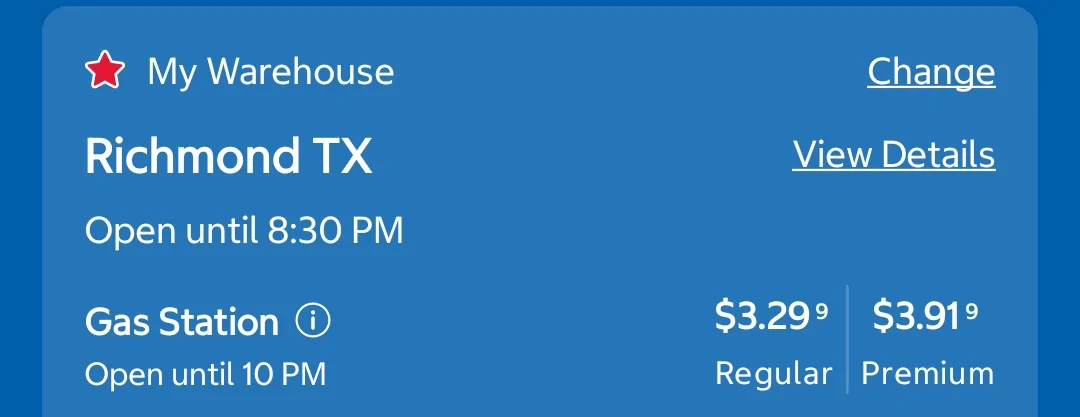
I do want to call attention to your math though...“Want to save $3 a month in fuel?”? That's not actually factual from someone insisting on people posting factual information. Your math ain't mathin', bud. Let's think about this. I've attached a screenshot of what is currently the gasoline prices at a Costco nearest to my residence. Costco typically always offer the lowest prices around for Top Tier certified gasolines...at least in my area. As an example, if I fill with 19 gallons of Premium instead of Regular then I'm paying $11.78 more for one fill up & for what...maybe a 5-7% increase in HP that is likely inperceptable in real world driving scenarios. I personally fill up at least 4 times a month so that would be $47.12 more than if I had filled with Regular grade gasoline. People are free to spend their money how they choose to. I'm just not seeing the value in paying for Premium grade because it's very likely not doing very much at all that's going to make my 4R last longer than Regular grade Top Tier gasoline would be doing because the engine is not tuned to benefit from higher octane gasoline.
Oh but wait...what about detergents in the fuel? The U.S. government mandates that a certain amount of detergents must be added to all gasoline sold in the U.S.. All grades have the minimum required detergents but Top Tier certified gasolines exceed the minimum required amount of detergents which is one reason why they cost more. What is false is that Mid grade & Premium grade contains more detergents...it's practically false advertising. There is a study in particular conducted by AAA using brand name gasolines that proved that the only differences between grade is the octane rating...the detergent amounts are approximately the same between grades. I digress again but you're welcome to search for the AAA study & review the Top Tier Fuels website if you want to know more.
All the best to fellow 4R owners in here & out there!

2025 4runner 6th gen 2026 4Runner TRD Sport Dyno Results (Stock vs Tuned on 86 Octane) Screenshot_2026-03-30-14-32-51-67_b8f6d823f6da9df06c3068d1ef133aea
 
Last edited:

HVLA

TRD Off-Road Premium
Well-known member
Joined
Feb 28, 2025
Threads
9
Messages
543
Reaction score
371
Location
USA
Vehicle(s)
Lexus
Stillen is a very reputable company in business for decades. They gain nothing by lying about the hp gains on premium.

Sheldon Brown also alluded to the premium fuel use.

The "$3" was sarcasm thanks.
 

The_Dark_Knight_Forever

TRD Sport Premium
Well-known member
First Name
J.
Joined
Mar 31, 2025
Threads
8
Messages
268
Reaction score
108
Location
Houston, TX
Vehicle(s)
2003 Toyota Tundra SR5 TRD Sport Stepside
Stillen is a very reputable company in business for decades. They gain nothing by lying about the hp gains on premium.

Sheldon Brown also alluded to the premium fuel use.

The "$3" was sarcasm thanks.
If you think Stillen gains nothing from their claim then continue to fool yourself, bud. It's a reputable company, yes, but they sell performance parts after all & are very likely in league with gasoline producers.

Did Sheldon Brown assist in designing the 25-26 4Runners?
Please direct me to where he “alluded” to HP gain when using Premium grade gasoline in these engines.

Ahhh okay...you were being sarcastic about the $3 a month thing. Whatever. 😒

I just find it interesting that you haven't really addressed the points that I've made earlier refuting the possibility of gain in HP using Premium grade gasoline. Instead you've avoided them largely in part. It would be interesting to know how you can explain away my points. But maybe you're too busy to reply at length because you're working to fund your Premium grade gas purchases among other things that also aren't firmly proven to be of much tangible benefit. You do you.

Whatever the case may be, no hate is intended. I've expressed my opinion on the topic & said my piece. I just feel like it's all bunk & very circumstantial until Toyota officially states it's not. Maybe I'm wrong & maybe I'm not. Just know that there is the possibility that Dyno testing can be skewed & that the stock engine without aftermarket tuning might not even have the capability of delivering increased HP using Premium grade gasoline.

God bless (with respect to whatever you believe in or don't) & peace, bud! ✝☮
 
Last edited:

FoRunna

TRD Off-Road Premium
Well-known member
First Name
Matt
Joined
Apr 1, 2025
Threads
3
Messages
80
Reaction score
87
Location
Atlanta, GA
Vehicle(s)
2012 Xterra, 2025 4Runner TRD ORP, 2019 Z06
I'm not even sure how this is a debate. Octane has been 100% proven to affect power output, and it has for decades.

The octane rating is directly linked to the fuels ability to withstand pre-ignition. Completely disregard the "chemistry" and "energy" because that doesn't matter. The entire reason that higher octane fuels make power is because you can run more timing (and boost) which means you get more power.

In the case of modern fuel injection systems, they will pull timing when knock is detected until the condition is corrected. This is why 87 octane fuel makes LESS power than 93, but Toyota still states that 87 is the lowest acceptable fuel octane.

TL;DR
It has nothing to do with the "chemistry" and "stored energy", and everything to do with timing and boost.
 

FoRunna

TRD Off-Road Premium
Well-known member
First Name
Matt
Joined
Apr 1, 2025
Threads
3
Messages
80
Reaction score
87
Location
Atlanta, GA
Vehicle(s)
2012 Xterra, 2025 4Runner TRD ORP, 2019 Z06
🙄
Until I see some hard evidence in the form of official documentation from Toyota stating that the stock engine as is will deliver more HP when fueled with Mid grade or Premium grade gasolines I will cast doubt on Dyno results & claims. I mean come on...how do we really know that the Dyno testing was performed properly & is completely accurate? Where is the widespread proof obtained through proper scientific testing of these engines in large numbers?
Why does Toyota keep silent if their stock engines are capable of delivering more HP with higher octane gasolines? If true it would be an added benefit for consumers who want more HP, right?
And by the way, the 4Rs cost notably less money than the LCs so it would seem logical that part of the reason is because the engines aren't tuned from factory to increase HP output with higher octane gasolines. Comparing both SUVs overall, the 4R is the wiser purchase for value which has been said by most popular & respected critics & reviewers. In fact, it's often questioned why Toyota would make such similar vehicles in a mechanical sense which basically compete with each other...but I digress.
Here's some clarity;

"Until I see some hard evidence in the form of official documentation from Toyota stating that the stock engine as is will deliver more HP when fueled with Mid grade or Premium grade gasolines I will cast doubt on Dyno results & claims"

Toyota isn't going to go out and post results. They aren't listening, and they don't care. If it didn't matter, they would rate 100% of their powertrains at 87 octane fuel because it lowers operating costs.

"how do we really know that the Dyno testing was performed properly & is completely accurate? Where is the widespread proof obtained through proper scientific testing of these engines in large numbers?"

Valid to question results, but when the entire performance industry, has ralied behind high octane fuels in performance (especially forced induction applications) you have to ask yourself why that is. There's significant information on the web about this, backed by dyno results that share the exact same result. Dyno's are the scientific testing method necessary to prove the point you're refuting.

"Why does Toyota keep silent if their stock engines are capable of delivering more HP with higher octane gasolines?"

The 4Runner is still a vehicle purchased by budget-conscious consumers. If they made a blanket statement that said "in order to achieve the powertrains' advertised performance figures, you have to run the highest octane and most expensive fuel you can find at every pump, they probably wouldn't be happy. That, and most people won't be able to tell the difference between the output with both fuels when commuting at low RPM's.

Consumers who buy luxury vehicles like Lexus (or Land Cruiser) that also share this platform WOULD likely notice, which is why they rate the same engine at 93 octane.

I get the feeling you may not be very well-versed in performance automotive applications so I want to express this in the nicest way possible;


The automotive performance aftermarket has made incredible strides in the past 2 decades. Tuning and fueling technology have gone a long way, and fuel quality and octane are two of the most important factors in a vehicles performance. This is why we like ethanol (E85)...it's cheap, and octane is comparable to 100-105, which lets us get a TON of power out of these engines with much less risk of pre-ignition (spark knock). High-octane fuels are one of the most valued parts of high-performance engines. Unless you've had a tuned high performance engine, you probably would never know this.
 
Last edited:
OP
OP
CAMTuning

CAMTuning

TRD Off-Road
Well-known member
Site Sponsor
First Name
Cam
Joined
Nov 14, 2025
Threads
10
Messages
116
Reaction score
174
Location
NM
Vehicle(s)
2025 Tacoma TRD OffRoad
While it wasn't the intention of this post to create a debate, I love a good technical discussion. Thanks for all the participation! This same 4Runner will be going on the dyno next week. We will repeat the stock tune pulls on 91 octane and then re-tune it on the 91 octane tune that I did recently on 91 to record any performance gains. Same dyno and same gear is about as controlled as you can get so those results will be definitive.
 

The_Dark_Knight_Forever

TRD Sport Premium
Well-known member
First Name
J.
Joined
Mar 31, 2025
Threads
8
Messages
268
Reaction score
108
Location
Houston, TX
Vehicle(s)
2003 Toyota Tundra SR5 TRD Sport Stepside
Here's some clarity;

"Until I see some hard evidence in the form of official documentation from Toyota stating that the stock engine as is will deliver more HP when fueled with Mid grade or Premium grade gasolines I will cast doubt on Dyno results & claims"

Toyota isn't going to go out and post results. They aren't listening, and they don't care. If it didn't matter, they would rate 100% of their powertrains at 87 octane fuel because it lowers operating costs.

"how do we really know that the Dyno testing was performed properly & is completely accurate? Where is the widespread proof obtained through proper scientific testing of these engines in large numbers?"

Valid to question results, but when the entire performance industry, has ralied behind high octane fuels in performance (especially forced induction applications) you have to ask yourself why that is. There's significant information on the web about this, backed by dyno results that share the exact same result. Dyno's are the scientific testing method necessary to prove the point you're refuting.

"Why does Toyota keep silent if their stock engines are capable of delivering more HP with higher octane gasolines?"

The 4Runner is still a vehicle purchased by budget-conscious consumers. If they made a blanket statement that said "in order to achieve the powertrains' advertised performance figures, you have to run the highest octane and most expensive fuel you can find at every pump, they probably wouldn't be happy. That, and most people won't be able to tell the difference between the output with both fuels when commuting at low RPM's.

Consumers who buy luxury vehicles like Lexus (or Land Cruiser) that also share this platform WOULD likely notice, which is why they rate the same engine at 93 octane.

I get the feeling you may not be very well-versed in performance automotive applications so I want to express this in the nicest way possible;


The automotive performance aftermarket has made incredible strides in the past 2 decades. Tuning and fueling technology have gone a long way, and fuel quality and octane are two of the most important factors in a vehicles performance. This is why we like ethanol (E85)...it's cheap, and octane is comparable to 100-105, which lets us get a TON of power out of these engines with much less risk of pre-ignition (spark knock). High-octane fuels are one of the most valued parts of high-performance engines. Unless you've had a tuned high performance engine, you probably would never know this.
I can appreciate your POV & perspective on this topic. As I said in a previous post, I'm not a gearhead or well-versed in high performance automotive applications. With that said, I'm no meathead either & this is a topic that has captured my attention & curiosity. I've thought alot about this because I want my own 4Runner to have very limited problems & keep taking me places for the next 20+ years.

I personally do not believe that the factory tuned stock engines in the '25-'26 4Runners are tuned by Toyota to deliver more horsepower from commercially available gasolines with more than 87 octane. It's just not tuned from factory to take advantage of the higher octane. The turbos make very little to no difference regarding the higher octane because the engine is simply not tuned to benefit from higher octane...unlike the '25-'26 Land Cruiser HV which does require 91 octane or higher.

Quoting ChatGPT now:

⚠ Important nuance (this is subtle but critical)
Some turbo engines do dynamically increase power with higher octane.
But only if:
The ECU has octane-learning maps
And is programmed to advance beyond the baseline
👉 Toyota did not do this on your 4Runner’s 87-octane calibration

🎯 Final, precise answer
Your 4Runner’s ECU:
Is not knock-limited on 87
Does not advance further on 91
➜ 0 HP gain
Land Cruiser’s ECU:
Relies on higher octane to maintain performance
➜ Lower octane would reduce HP, not increase it”

What I do believe is that aftermarket tuning can & does increase HP if tuned to benefit from higher than 87 octane gasolines...though I do wonder what that does to the lifespan of the engine as a whole.

With that said, the stock engines in this 6th generation of 4Runners, both Non-Hybrid & Hybrid powertrains, are not tuned by Toyota to deliver more HP when using more than 87 octane gasolines.
 
Last edited:
OP
OP
CAMTuning

CAMTuning

TRD Off-Road
Well-known member
Site Sponsor
First Name
Cam
Joined
Nov 14, 2025
Threads
10
Messages
116
Reaction score
174
Location
NM
Vehicle(s)
2025 Tacoma TRD OffRoad
I can appreciate your POV & perspective on this topic. As I said in a previous post, I'm not a gearhead or well-versed in high performance automotive applications. With that said, I'm no meathead either & this is a topic that has captured my attention & curiosity. I've thought alot about this because I want my own 4Runner to have very limited problems & keep taking me places for the next 20+ years.

I personally do not believe that the factory tuned stock engines in the '25-'26 4Runners are tuned by Toyota to deliver more horsepower from commercially available gasolines with more than 87 octane. It's just not tuned from factory to take advantage of the higher octane. The turbos make very little to no difference regarding the higher octane because the engine is simply not tuned to benifit from higher octane...unlike the '25-'26 Land Cruiser HV which does require 91 octane or higher.

Quoting ChatGPT now:

⚠ Important nuance (this is subtle but critical)
Some turbo engines do dynamically increase power with higher octane.
But only if:
The ECU has octane-learning maps
And is programmed to advance beyond the baseline
👉 Toyota did not do this on your 4Runner’s 87-octane calibration

🎯 Final, precise answer
Your 4Runner’s ECU:
Is not knock-limited on 87
Does not advance further on 91
➜ 0 HP gain
Land Cruiser’s ECU:
Relies on higher octane to maintain performance
➜ Lower octane would reduce HP, not increase it”

What I do believe is that aftermarket tuning can & does increase HP if tuned to benefit from higher than 87 octane gasolines...though I do wonder what that does to the lifespan of the engine as a whole.

With that said, the stock engines in this 6th generation of 4Runners, both Non-Hybrid & Hybrid powertrains, are not tuned by Toyota to deliver more HP when using more than 87 octane gasolines.
If I provide real dyno data and data logs from the ecu will it change your mind? The ecu has authority to adjust timing based on octane and will without a doubt make more power. I’ve been tuning 4 cylinder turbo engines across multiple platforms for 20 years.
 

The_Dark_Knight_Forever

TRD Sport Premium
Well-known member
First Name
J.
Joined
Mar 31, 2025
Threads
8
Messages
268
Reaction score
108
Location
Houston, TX
Vehicle(s)
2003 Toyota Tundra SR5 TRD Sport Stepside
If I provide real dyno data and data logs from the ecu will it change your mind? The ecu has authority to adjust timing based on octane and will without a doubt make more power. I’ve been tuning 4 cylinder turbo engines across multiple platforms for 20 years.
I would be interested to see them...as long as the Dyno results show the same exact engine bone stock from factory in the same exact vehicle using an 87 octane gas AND again using a 91 octane gas. But to be very transparent, even if the results show an increase in HP I'll still be skeptical until I see official documentation from Toyota confirming & stating that fueling with mid grade or premium grade higher octane gasolines will increase HP.

I mean you kind of also have “skin in the game” since you seemingly make a living off of tuning engines, right?

Even if there is a 5-7% increase in HP somehow then I personally don't believe it's worth the increased cost of gasolines with higher than 87 octane unless the vehicle is being driven up mountains, loaded down with cargo or towing a heavy load. For the average driver, a minimal increase in HP isn't going to be perceptible in real world driving.
 
Last edited:
OP
OP
CAMTuning

CAMTuning

TRD Off-Road
Well-known member
Site Sponsor
First Name
Cam
Joined
Nov 14, 2025
Threads
10
Messages
116
Reaction score
174
Location
NM
Vehicle(s)
2025 Tacoma TRD OffRoad
I would be interested to see them...as long as the Dyno results show the same exact engine bone stock from factory in the same exact vehicle using an 87 octane gas AND again using a 91 octane gas. But to be very transparent, even if the results show an increase in HP I'll still be skeptical until I see official documentation from Toyota confirming & stating that fueling with mid grade or premium grade higher octane gasolines will increase HP.

I mean you kind of also have “skin in the game” since you seemingly make a living off of tuning engines, right?

Even if there is a 5-7% increase in HP somehow then I personally don't believe it's worth the increased cost of gasolines with higher than 87 octane unless the vehicle is being driven up mountains, loaded down with cargo or towing a heavy load. For the average driver, a minimal increase in HP isn't going to be perceptible in real world driving.
It will be the same 4Runner, same dyno. I’ve already done multiple runs on 86 octane. I always take the best of three since there’s a few hp of run-to-run variation. Also worth noting—the first pull after an ECU flash is consistently lower on this platform, so I don’t use that one.

If Toyota documentation is the only thing you’ll accept, that’s fair—but that also means no amount of real-world testing is going to change your mind. I’m still going to post the data.

On the “skin in the game” comment—I don’t make any more or less money based on what fuel someone runs. A tune on 87 vs 93 is the same for me. The only reason I bring up octane is because of how these engines actually operate. Someone is getting rich on these fuel prices, but it isn't me!

These are high compression, turbocharged engines. They’re knock-limited. Higher octane doesn’t “add power” on its own—it allows the ECU to run the timing and load it wants without pulling back.

And power aside, it’s not just about peak numbers- it's about mechanical sympathy. Lower octane means the ECU has to intervene more often to control knock. Even when it’s doing its job, that’s still added stress compared to running fuel that gives the engine more margin.
Sponsored


Top