
Sponsored
OP
OP
dirtwheeler

dirtwheeler

TRD Off-Road Premium
Well-known member
Joined
Jan 22, 2025
Threads
27
Messages
258
Reaction score
495
Location
United States
Vehicle(s)
2025 Toyota 4Runner
Thank you for a great write up, much appreciated trying to decide whether to go Gas or Hybird. Leaning hybrid for the extra power, because I take trips on highways through mountainous terrain. Long uphill and down hill grades traveling on average of 70mph. Usually, fully loaded cargo space and up to 4 adults. In your opinion after one year, do you think it’s better to opt for more power with the hybrid. Really not to concerned about fuel economy just want a vehicle that does not struggle for power and excessive downshifting and would like to pass others without the same. Again, great write up, I currently own a 2016 Tacoma, time for my 10 year trade.
I don't have personal experience with the hybrid - just what I've read. I will say that the '25 4Runner non-hybrid has had plenty of power for everything I've wanted/needed it for so far. In 10,000+ miles of driving I've never once thought "gee, I need more power in this thing". I owned a fourth gen with V8, and drove some fifth gens before test driving the sixth gen. I test drove several sixth gens, but I don't think any of them were hybrids because I specifically wanted a non-hybrid. There wasn't much of a difference in overall fuel efficiency and the non-hybrid was actually advertised to have slightly better fuel efficiency in some conditions. I was worried about the increased complexity and decreased cargo space, but the hybrid has more torque which might be valuable in some situations. I believe the Trailhunter is only available in a hybrid, which is the main reason I wanted the ORP instead. There was also a significant price difference between the Trailhunter and ORP, and I could upgrade the ORP/non-hybrid over time.

Again, this was just my personal assessment for our needs. Obviously, there are advantages to the hybrid models, but I went for the non-hybrid variant and I've been very happy with it. I know there are others that got the hybrid variant and have been very happy as well. It might be interesting to look for real world tests that show where the hybrid demonstrates significant advantage over the non-hybrid. I'm not sure what I would suggest testing, but long/steep off-road climbs maybe (e.g. 25+ degrees) and heavy towing might be where I'd expect differences. I never looked for these tests because I gravitated towards non-hybrid for other reasons, but that's what I would have looked for if I was concerned about measurable real-world differences power, torque, etc.
Sponsored

 

Nodak

Platinum
Well-known member
First Name
JR
Joined
Jan 22, 2025
Threads
31
Messages
1,572
Reaction score
910
Location
ND
Vehicle(s)
2025 4R Platinum Heritage Blue , 2023 Tundra Platinum Blueprint no-HV
Thank you for a great write up, much appreciated trying to decide whether to go Gas or Hybird. Leaning hybrid for the extra power, because I take trips on highways through mountainous terrain. Long uphill and down hill grades traveling on average of 70mph. Usually, fully loaded cargo space and up to 4 adults. In your opinion after one year, do you think it’s better to opt for more power with the hybrid. Really not to concerned about fuel economy just want a vehicle that does not struggle for power and excessive downshifting and would like to pass others without the same. Again, great write up, I currently own a 2016 Tacoma, time for my 10 year trade.
the only advantage you will get mostly with the hybrid is from dead stop momentum with a towing load. the electric motor will assist the gas in getting your load moving.

it will also help with passing with a towing load since you have that extra torque to assist the gas engine.

the hybrid on the BoF vehicles is geared toward supplemental power not mpg. without a load all the hybrid does is flatline your mpg for city/highway 23/24 vs the gas where is has a wider spread between city/highway mpg ratings
 

lrettura

Limited
New member
First Name
Lou
Joined
Aug 3, 2025
Threads
1
Messages
3
Reaction score
3
Location
Bethel Park, PA
Vehicle(s)
Toyota Tacoma
Very helpful, much appreciated. 10000 miles in, provides a great prospective to pass along. I think I may have been overthinking it because of my Tacoma and the excessive downshifting and gear searching on the v6, 5speed auto trans. The one and only thing I could never get accustomed to. I think that problem has been minimized or eliminated totally with the current motor/transmission configuration. I am fairly certain now, gas is more than adequate for my needs. Thanks again for your feedback.
 

Joe Dirt

TRD Off-Road Premium
Well-known member
First Name
Mike
Joined
Sep 24, 2025
Threads
6
Messages
167
Reaction score
69
Location
SoCal
Vehicle(s)
25 ORP
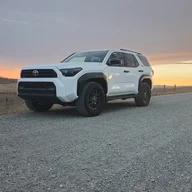
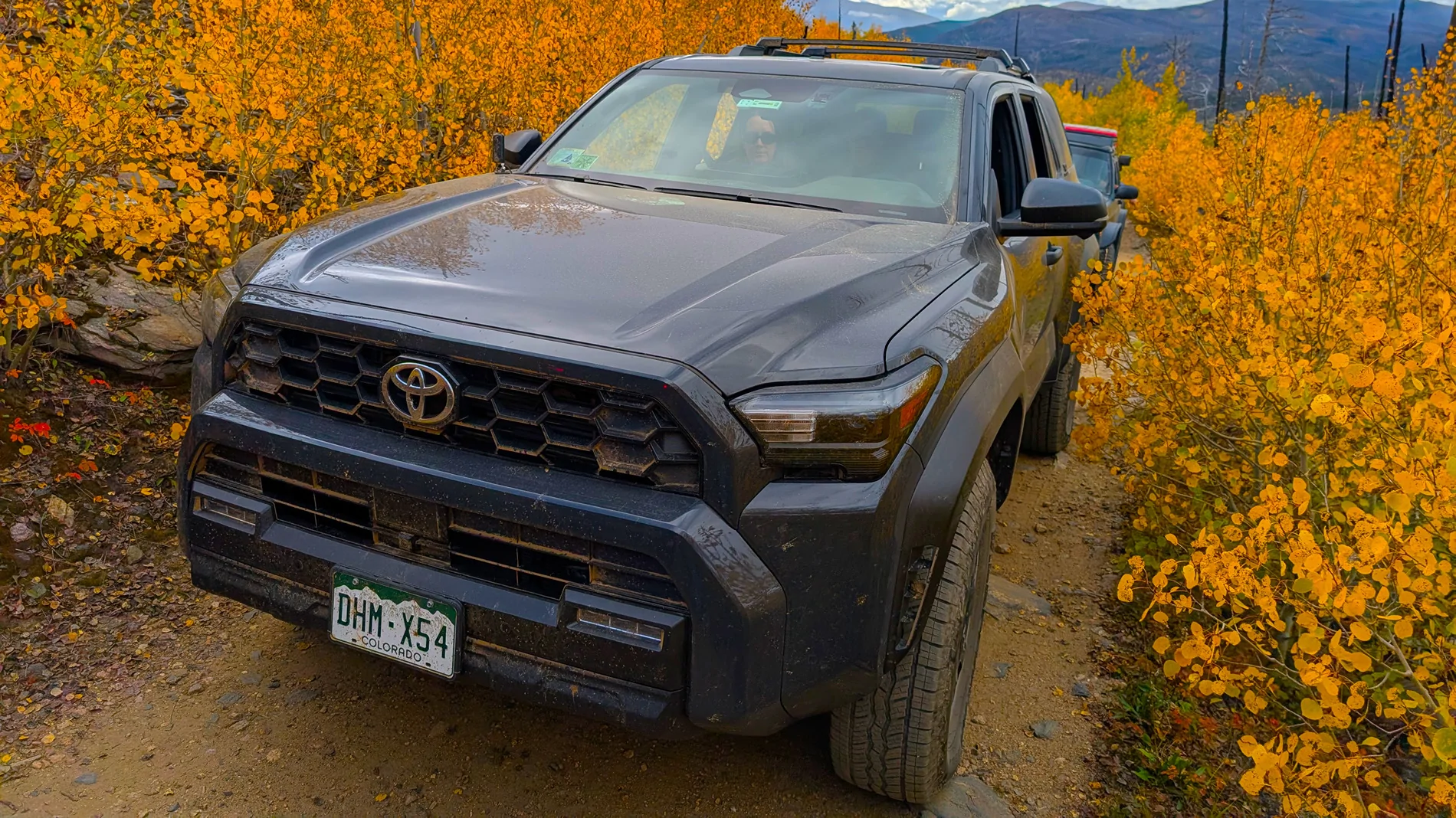
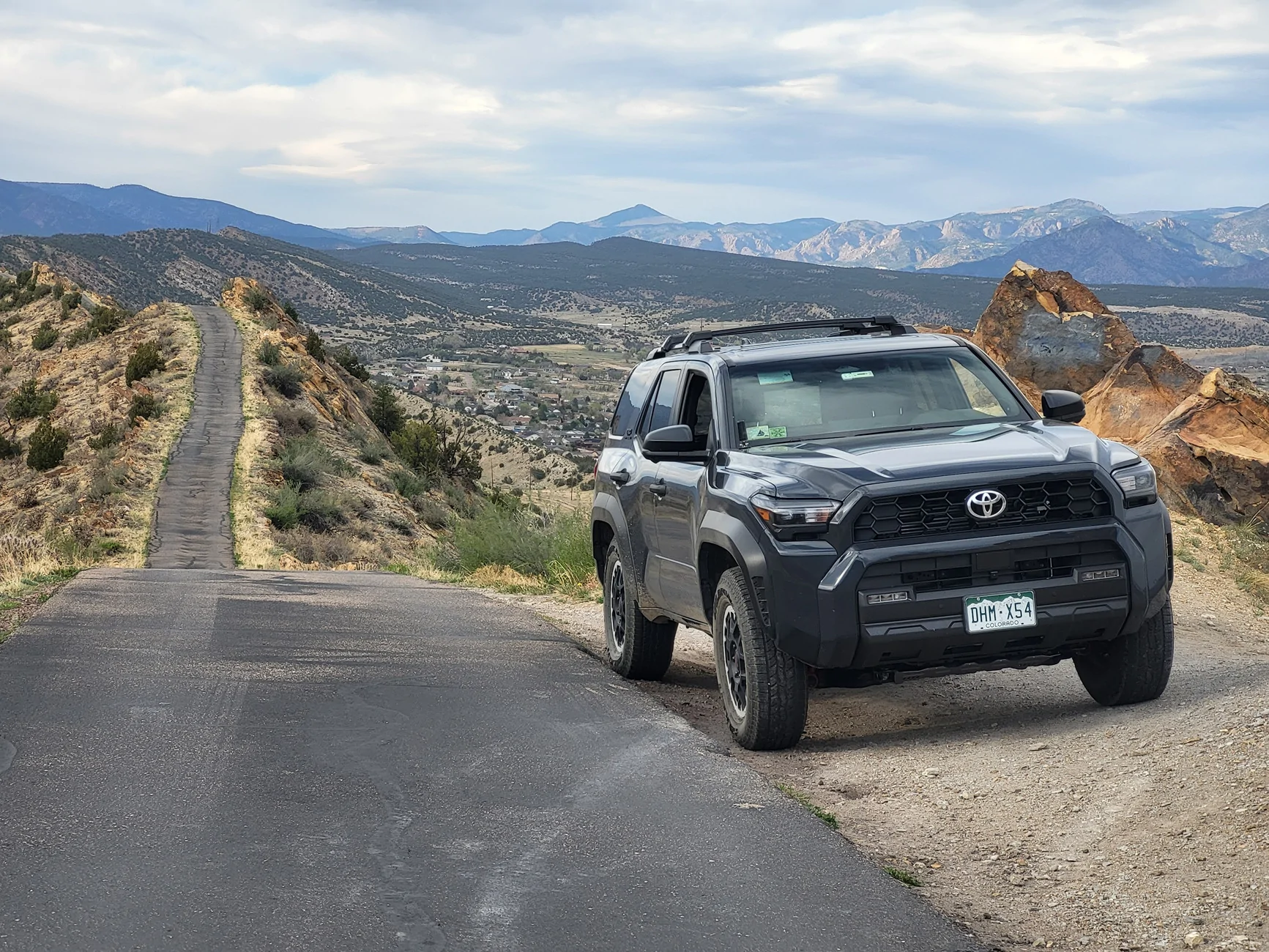
Highlights: After eight months and 10,000 miles in a 2025 4Runner Off-Road Premium (ORP), non-hybrid, the 4Runner has been a near-ideal family road-trip vehicle that also handles light to moderate trails well. Average fuel economy is 19.9 mpg, with a best tank of 23.6 mpg on highway and a worst of 15.5 mpg off-road. Maintenance has included one owner-performed early oil change at 2,000 miles, then dealer services at 4,800 and 9,850 miles. Current changes are minimal—running-board and air-dam removal, Trailhunter front and transfer-case skid plates, GMRS radio—while planned upgrades focus on a modest front-leaning level lift, Method 703 wheels (+35 mm), and ~34-inch KO3 tires for small gains in clearance and traction without sacrificing on-road manners. The 4Runner is the daily and trip hauler; the Wranglers handle the harder trails. Comfort, driver-assist features, and general drivability have exceeded expectations. Long-term reliability remains to be seen, but Toyota’s reputation is reassuring.

PXL_20250921_204702112.webp


This follow-up builds on my earlier posts at 200, 500, 1,000, and 2,000 miles:
Ten thousand miles felt like the right point to wrap the series and share a few updates, including thoughts about off-road modifications.

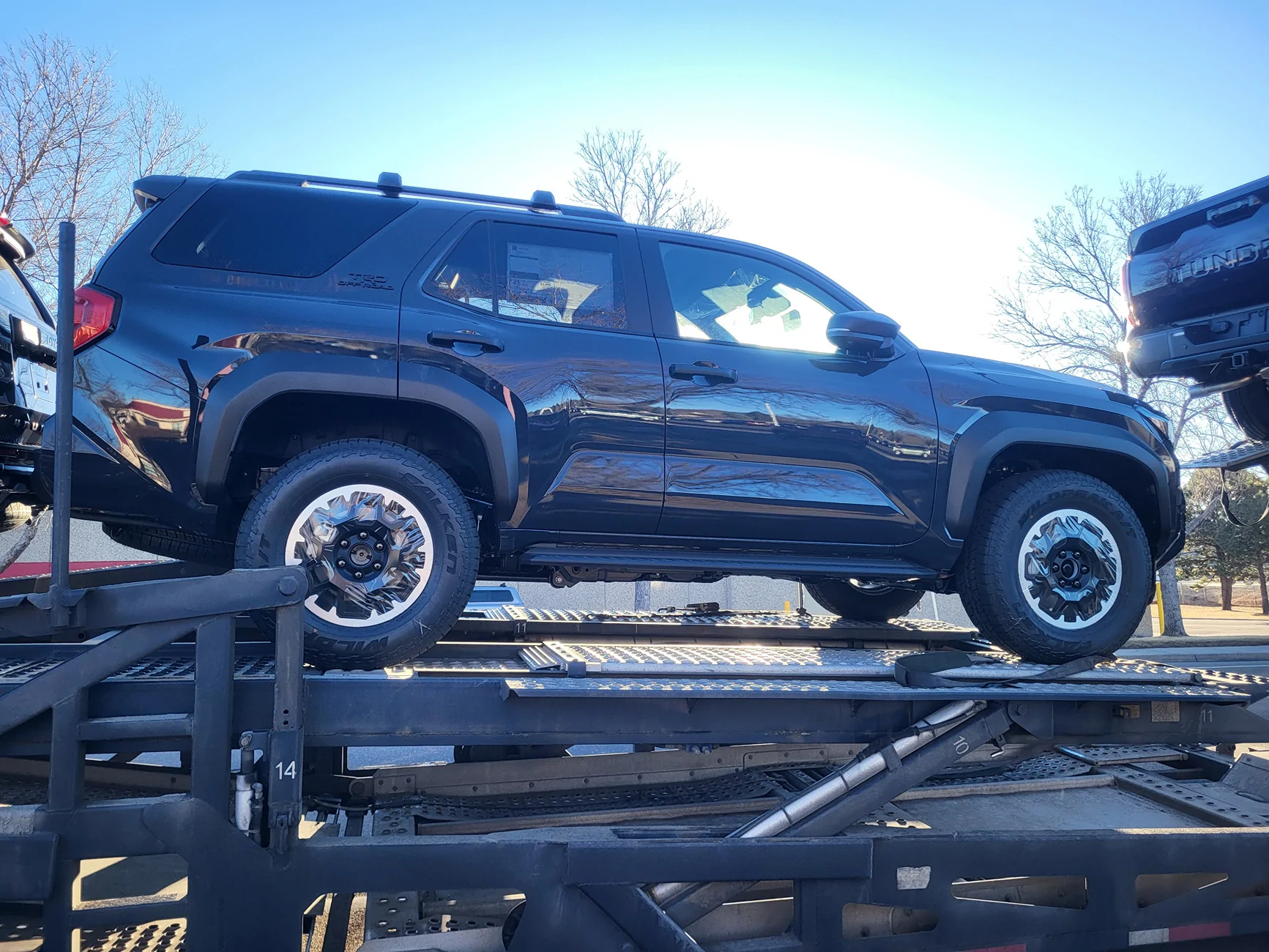
My 2025 4Runner Off-Road Premium (ORP), non-hybrid, in Underground (dark gray), was built in Japan in January 2025 and purchased in Fort Collins in February. It includes the Tow Tech package, a power tilt/slide moonroof with sunshade, cross bars, and all-weather floor liners. The Tow Tech package adds a digital rearview mirror, an Integrated Trailer Brake Controller (ITBC), and Trailer Backup Guide with Straight Path Assist (SPA).

20250226_073614.webp


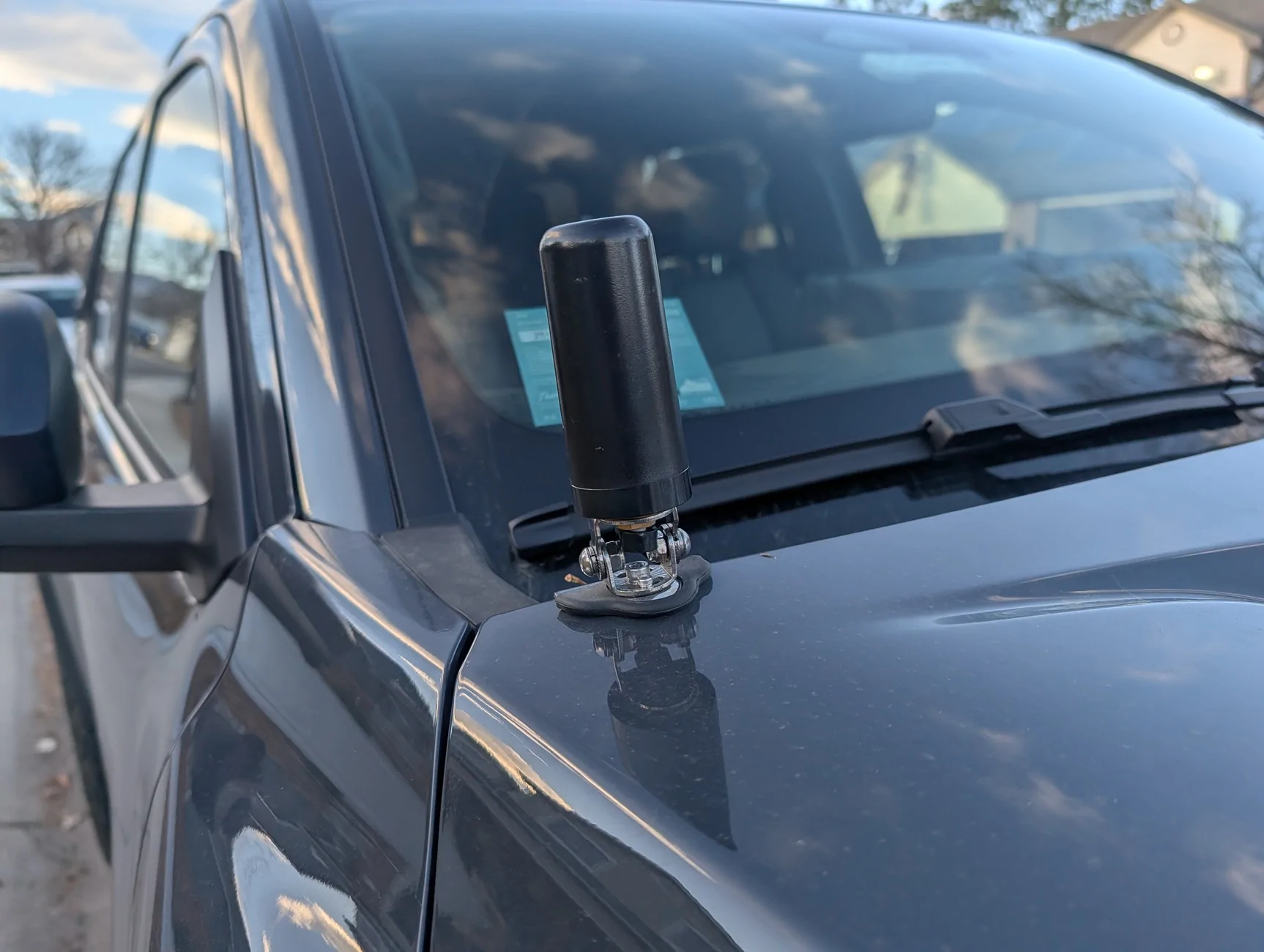
The 4Runner is mostly stock. I removed the air dam and running boards for added clearance and to avoid damaging the factory boards, which I’ve done on past vehicles. I replaced the composite front skids with the Trailhunter front skid and added the matching transfer-case skid. A rear differential skid is planned. I also installed a GMRS radio and antenna, plus a rear cargo floor liner, if those count as modifications.

20250315_122809.webp


On maintenance, I did an early oil change at 2,000 miles to inspect the oil during break-in. Toyota does not require this, but it offers peace of mind, and early changes used to be common. The dealer handled the next two services, at 4,800 and 9,850 miles, under their complimentary program. The last visit took about two and a half hours, so I am weighing the value of “free” against doing it myself to save time.

20250412_174908.webp


On fuel, I have used only premium, top-tier gasoline and tracked every fill-up. I know there is debate about whether premium is necessary. I’m choosing to err on the side of long-term engine care; if it costs a bit more, the peace of mind is worth it to me. Others may disagree, which is fine.

PXL_20250810_193154798_cropped.webp


Across 10,000 miles, my average fuel economy is 19.9 mpg. The best single tank was 23.6 mpg on an ideal freeway run; the worst was 15.5 mpg during an off-road day. I prefer Shell when available, but I’ll use other reputable brands on trips.

Plans to modify the 4Runner took a back seat because we added a second new vehicle this year, a 2025 Jeep Wrangler, alongside our 1997 Wrangler. After thinking through roles, it made sense to build a Wrangler as the more dedicated off-road platform and keep the 4Runner closer to stock for daily duty. That balance has worked well. The 4Runner is our primary family and road-trip vehicle; we usually take one of the Wranglers for tougher trails, though the 4Runner still sees trail time when we want the comfort or need more passenger or cargo space.

Next up for the 4Runner is a ReadyLIFT-style leveling kit that raises the front more than the rear, Method 703 wheels with +35 mm offset, and ~34-inch KO3 tires. The goal is modest gains in ground clearance and traction with minimal impact to on-road manners. The wheel offset should help with clearance on the slightly wider tires. I expect a small but noticeable hit to overall performance, offset by improved capability where it matters for us. Additional skid plates, possible rock rails, and a higher-capacity roof rack are also on the list. Bullhide 4x4 in Fort Collins will install the lift, wheels, and tires.

Before buying parts, I spent time reading forum accounts, talking with 4Runner and Tacoma owners, and comparing notes with techs at 4x4 shops about what they see firsthand and hear from customers. That research helped temper my plans and sequence the work.

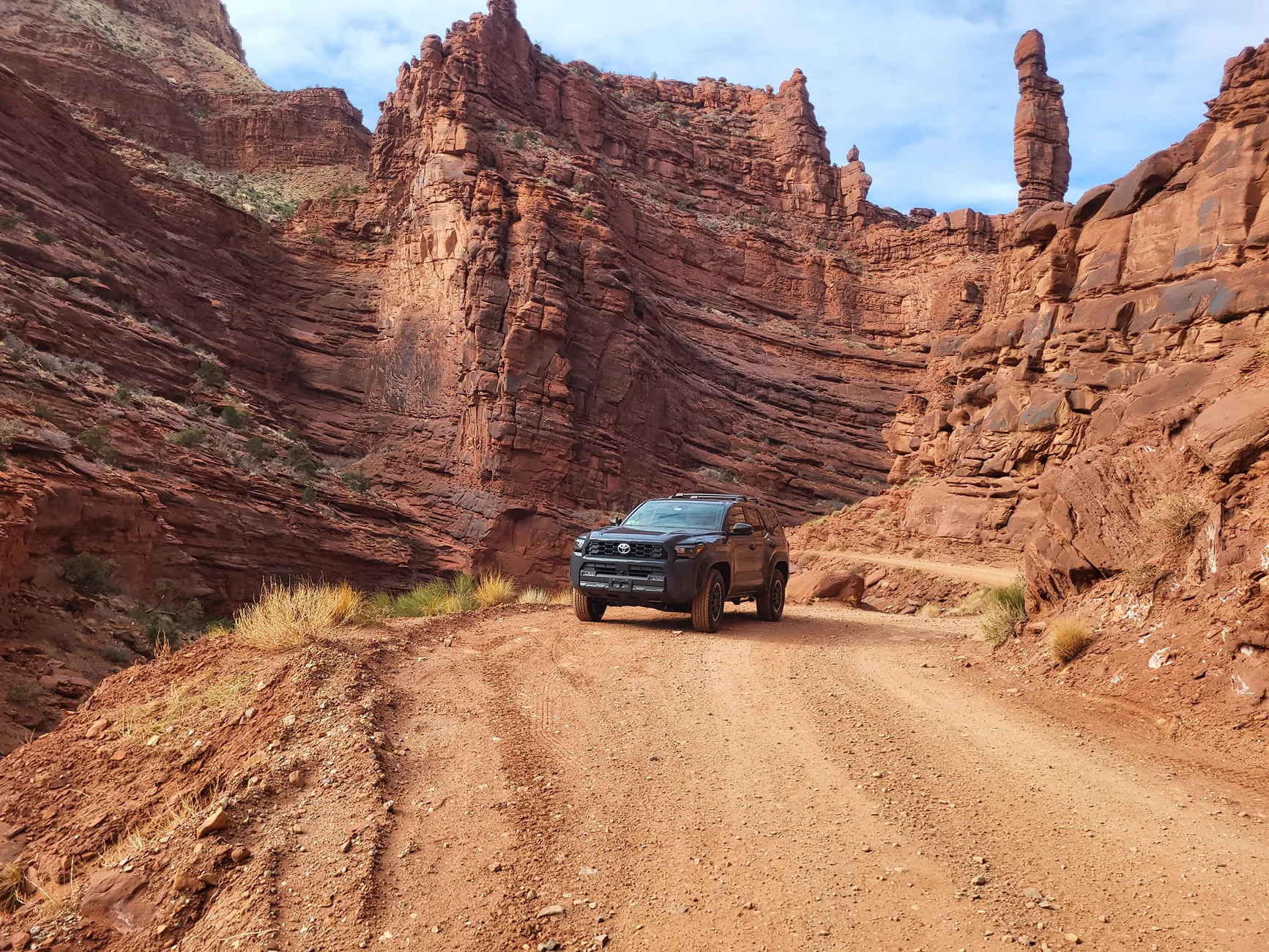
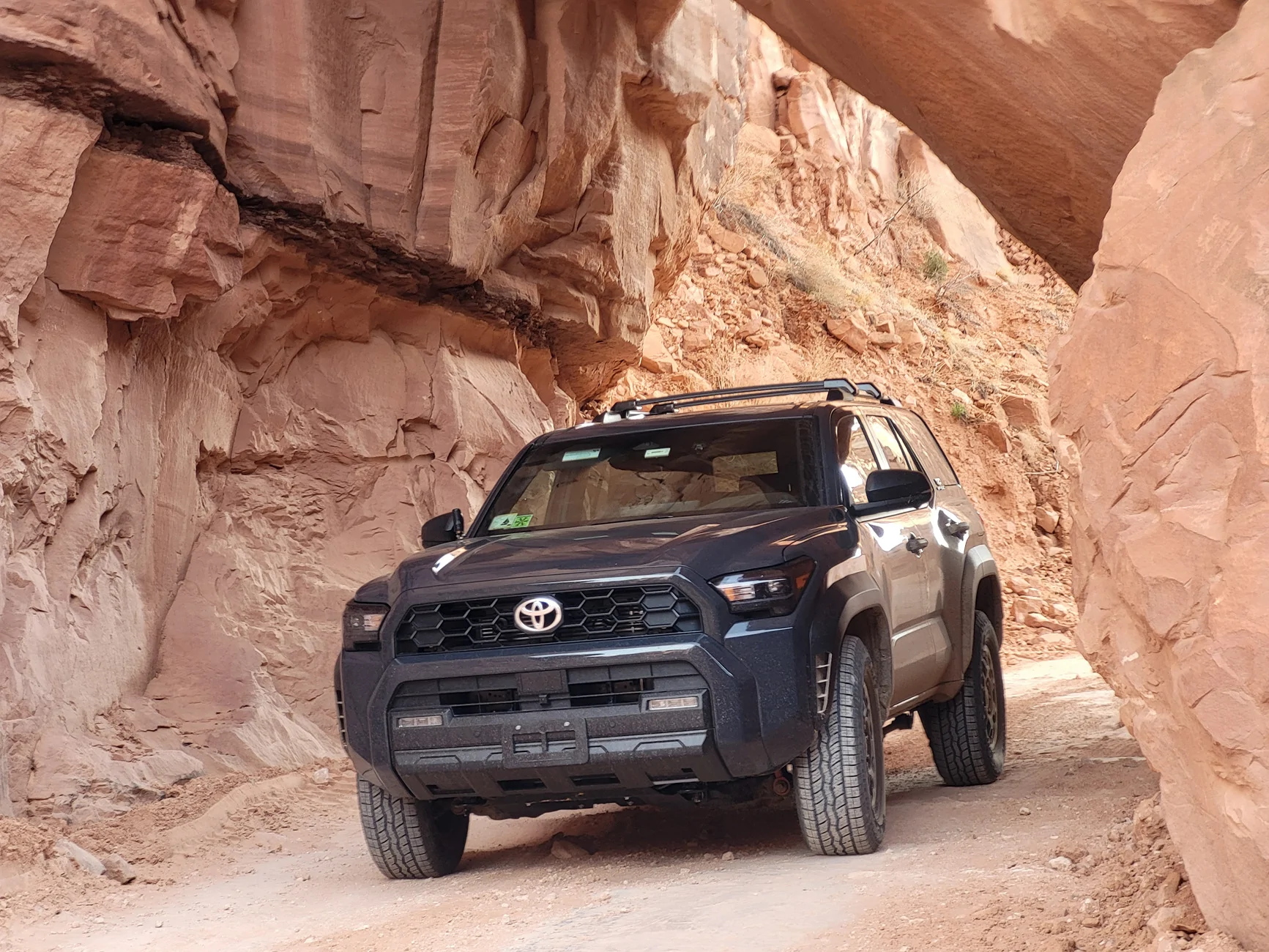
Our first off-road outing in the 4Runner was Baby Lion’s Back in Moab in March 2025, followed by Onion Creek and Hideout Canyon the next day, then Fins ‘n Things and Long Canyon. Back in Colorado, we ran Phantom Canyon, Pierson Park Road, Deadman Road, Sand Creek Pass, and Old Flowers Road. We would have logged more trail miles in the 4Runner if not for the Wranglers, which we gravitate toward for harder routes.

20250320_181045.webp


Most of the 10,000 miles came from road trips through Colorado, Utah, Wyoming, Nebraska, Oklahoma, New Mexico, Arizona, Texas, and Arkansas, with brief passes into other states. On the highway and around town, the 4Runner has exceeded expectations. The only real learning curve was getting comfortable with the various controls and options. I won’t criticize every feature, but a few standouts are worth mentioning. Overall comfort and drivability are excellent, which is why I’m cautious about any modification that could compromise them. Dynamic cruise control and active driving assist reduce fatigue on long days. The heated seats and steering wheel are great in cold weather, and the ventilated seats perform well in summer. Power seats with memory make it easy to restore seating and steering-wheel position after someone else has adjusted them. The audio system, Android Auto, and SiriusXM have worked as expected. Cabin noise is a subjective topic, but to my ear the 4Runner is quiet; impressions vary based on what you’re used to.

20250321_095940.webp


We typically have three people onboard. I am 5'11", my wife is 5'9", and our son, who rides in back, is 6'1". All of us are comfortable with adequate space. It is not as roomy as the oversized cab on our previous Ram 1500, so I understand why some consider the 4Runner’s rear seat tight. For context, our Wranglers are two-door models with limited legroom and rear access, and we also have a Mazda CX-5. Even with those comparisons, the 4Runner is our 6'1" son’s preferred back seat.

20250322_180301.webp


After about eight months and 10,000 miles, the 4Runner is close to an ideal family vehicle for our needs. I initially considered building it into the primary off-road rig, but we decided to keep the rock-crawling focus with the Wranglers and preserve the 4Runner’s everyday comfort, while still allowing for light to moderate trail use. Even stock, the 4Runner is capable and often outperforms modified vehicles in certain trail conditions. As winter returns to the Colorado high country, I expect to choose the 4Runner over the Wranglers for snow-wheeling in some conditions, especially when icy conditions are likely rather than deep powder. We will also favor the 4Runner for trips that include camping or more than two people.

20250329_172945.webp


I share these notes to help anyone weighing a sixth-generation 4Runner. The goal is not to convince anyone to buy one, because everyone’s priorities and trade-offs differ. The platform has been excellent for us so far, but this is a snapshot at eight months and 10,000 miles. Long-term reliability remains to be seen, although Toyota’s reputation for quality and vehicles that run for hundreds of thousands of miles is encouraging. If the sixth generation matches prior 4Runners, owners should be in good shape, but time will tell.

Nice review, good to see the 4Runner hasn't changed in its off and on Road antics.

This is a bit off of the topic, but how do you folks in Colorado handle the rust? I guess where my head is really going is from seeing friends Subarus and RAV4s that have been subjected to the heavy salt, they are literally rust buckets underneath.

It bothers me to pay premium price only to know that in at least 3 to 5 years there's a potential rust issue.

I have seen the undercarriage car washes but do they really improve or must the undercarriage be completely cleaned and then sealed with some type of rust inhibiting sealer? Thanks in advance
 
OP
OP
dirtwheeler

dirtwheeler

TRD Off-Road Premium
Well-known member
Joined
Jan 22, 2025
Threads
27
Messages
258
Reaction score
495
Location
United States
Vehicle(s)
2025 Toyota 4Runner
Nice review, good to see the 4Runner hasn't changed in its off and on Road antics.

This is a bit off of the topic, but how do you folks in Colorado handle the rust? I guess where my head is really going is from seeing friends Subarus and RAV4s that have been subjected to the heavy salt, they are literally rust buckets underneath.

It bothers me to pay premium price only to know that in at least 3 to 5 years there's a potential rust issue.

I have seen the undercarriage car washes but do they really improve or must the undercarriage be completely cleaned and then sealed with some type of rust inhibiting sealer? Thanks in advance
I can't speak for others, but I have one of those "monthly subscriptions" to a carwash near my house. I can use it once a day -- either the auto-wash or the manual bays. I don't think the automatic car wash with the undercarriage sprayers are nearly as effective as taking the car into the bays where you can use a pressure washer. This lets you get into the wheel wells, get into areas that the auto-wash can't reach, and spend more time on bad sections. They have some special chemicals you can use that supposedly are for cleaning off the road salt, but I usually stick with the "normal" high pressure wash, rinse, and wax. The wax setting is a little silly (not really a replacement for waxing), but I use it anyway.

The humidity is also much lower in Colorado than I think people realize. So things dry out pretty fast.
 

Joe Dirt

TRD Off-Road Premium
Well-known member
First Name
Mike
Joined
Sep 24, 2025
Threads
6
Messages
167
Reaction score
69
Location
SoCal
Vehicle(s)
25 ORP
I can't speak for others, but I have one of those "monthly subscriptions" to a carwash near my house. I can use it once a day -- either the auto-wash or the manual bays. I don't think the automatic car wash with the undercarriage sprayers are nearly as effective as taking the car into the bays where you can use a pressure washer. This lets you get into the wheel wells, get into areas that the auto-wash can't reach, and spend more time on bad sections. They have some special chemicals you can use that supposedly are for cleaning off the road salt, but I usually stick with the "normal" high pressure wash, rinse, and wax. The wax setting is a little silly (not really a replacement for waxing), but I use it anyway.

The humidity is also much lower in Colorado than I think people realize. So things dry out pretty fast.
Thanks for that info, I only say this because I was living in Long Island finishing College in the early '80s and I bought the shipyards managers daughter's car, it was a big Impala with push bars on it, looked like a police special in a dark brown!

I knew nothing about salt and the devastation that it does and I remember feeling the seat kind of squishy and moving around, and it was a bench seat. I looked underneath the car one day just nosing around and the entire bottom was ready to fall out! I was kind of thinking Fred Flintstone at that point. Anyways second winter I was out of that arctic tundra and headed west where the surf and bikinis were that I was used to:)
 
OP
OP
dirtwheeler

dirtwheeler

TRD Off-Road Premium
Well-known member
Joined
Jan 22, 2025
Threads
27
Messages
258
Reaction score
495
Location
United States
Vehicle(s)
2025 Toyota 4Runner
Thanks for that info, I only say this because I was living in Long Island finishing College in the early '80s and I bought the shipyards managers daughter's car, it was a big Impala with push bars on it, looked like a police special in a dark brown!

I knew nothing about salt and the devastation that it does and I remember feeling the seat kind of squishy and moving around, and it was a bench seat. I looked underneath the car one day just nosing around and the entire bottom was ready to fall out! I was kind of thinking Fred Flintstone at that point. Anyways second winter I was out of that arctic tundra and headed west where the surf and bikinis were that I was used to:)
I'm not a big fan of the cold, but planning to stay in Colorado for a few more years anyway. I'll probably spend more time in warmer climates as I get older.

The rust is something people should look for in used vehicles. When I was shopping for used TJ series Jeeps, that was the number one thing people said to look for -- frame rust. I ended up getting a '97 Wrangler that was in pretty good condition and I've done some additional mitigation and preventative work since. I haven't heard about it being a major issue with old 4Runners, but it's something to look for in any case. I am one of those guys that will crawl under a used vehicle with a flash light and poke around for issues that I don't want to deal with later. I don't think most people do this or know what to look for. It's also well worth the money to get a professional pre-buy inspection (PBI) done if you're buying a used vehicle -- compared to what it could cost you if there's major issues.
 

coloradomarmot

TRD Pro
Well-known member
Joined
Jul 28, 2025
Threads
7
Messages
93
Reaction score
71
Location
Colorado
Vehicle(s)
2025 Pro
The hybrid makes a massive difference going up I-70…it’ll drive faster than I’m comfortable with, at low RPM. Also is about a 25% mileage improvement over my 5th gen, and the torque off road is really impressive. Only downside other than cost, is a couple more air filters to worry about, and a 4” lift in the cargo area.

As far as rust goes, I haven’t seen it on any of my vehicles, including a 98 4Runner we traded in in 2021. They’ve largely switched to mag chloride here in CO, not salt. Better for cars, worse for trees. We run through touchless car washes periodically (usually after the snow melts and streets are dry), and that’s about it.
 
OP
OP
dirtwheeler

dirtwheeler

TRD Off-Road Premium
Well-known member
Joined
Jan 22, 2025
Threads
27
Messages
258
Reaction score
495
Location
United States
Vehicle(s)
2025 Toyota 4Runner
The hybrid makes a massive difference going up I-70…it’ll drive faster than I’m comfortable with, at low RPM. Also is about a 25% mileage improvement over my 5th gen, and the torque off road is really impressive. Only downside other than cost, is a couple more air filters to worry about, and a 4” lift in the cargo area.
FWIW, I've been on I-70 with my non-hybrid a bunch and I've never noticed an issue with power or acceleration going up any of the grades. I'll have to pay more attention next time I head up. Anything I should be looking for?
 

paresthesia

Member
Joined
Apr 8, 2025
Threads
1
Messages
6
Reaction score
1
Location
NJ
Vehicle(s)
n/a
Hi, thank you for the excellent write up and pictures.
Could you share some pictures of how you mounted your radio inside, and what antenna mount you used outside? Looking to do something similar when I get one.
 
OP
OP
dirtwheeler

dirtwheeler

TRD Off-Road Premium
Well-known member
Joined
Jan 22, 2025
Threads
27
Messages
258
Reaction score
495
Location
United States
Vehicle(s)
2025 Toyota 4Runner
Hi, thank you for the excellent write up and pictures.
Could you share some pictures of how you mounted your radio inside, and what antenna mount you used outside? Looking to do something similar when I get one.
For the radio, I'm pretty sure I just used these velcro strips (just the hook side to grip to the interior): https://www.amazon.com/dp/B0DYCK9KDS

For the antenna, I used a "Nilight LED Light Bar Mounting Bracket": https://www.amazon.com/dp/B0824RPMDB

2025 4runner 6th gen Observations after 10,000 miles ownership PXL_20251124_223342285
2025 4runner 6th gen Observations after 10,000 miles ownership PXL_20251124_223313351

I'm sure there are better looking ways of doing this, but this has worked well for me so far.
 

Nodak

Platinum
Well-known member
First Name
JR
Joined
Jan 22, 2025
Threads
31
Messages
1,572
Reaction score
910
Location
ND
Vehicle(s)
2025 4R Platinum Heritage Blue , 2023 Tundra Platinum Blueprint no-HV
k.i.s.s. works the best,

plus you only have to install it when needed. not like you need it while in the city
Sponsored


Top