
- Joined
- Jan 22, 2025
- Threads
- 31
- Messages
- 293
- Reaction score
- 579
- Location
- United States
- Vehicle(s)
- 2025 Toyota 4Runner
- Thread starter
- #1
Highlights: After eight months and 10,000 miles in a 2025 4Runner Off-Road Premium (ORP), non-hybrid, the 4Runner has been a near-ideal family road-trip vehicle that also handles light to moderate trails well. Average fuel economy is 19.9 mpg, with a best tank of 23.6 mpg on highway and a worst of 15.5 mpg off-road. Maintenance has included one owner-performed early oil change at 2,000 miles, then dealer services at 4,800 and 9,850 miles. Current changes are minimal—running-board and air-dam removal, Trailhunter front and transfer-case skid plates, GMRS radio—while planned upgrades focus on a modest front-leaning level lift, Method 703 wheels (+35 mm), and ~34-inch KO3 tires for small gains in clearance and traction without sacrificing on-road manners. The 4Runner is the daily and trip hauler; the Wranglers handle the harder trails. Comfort, driver-assist features, and general drivability have exceeded expectations. Long-term reliability remains to be seen, but Toyota’s reputation is reassuring.

This follow-up builds on my earlier posts at 200, 500, 1,000, and 2,000 miles:
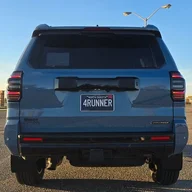
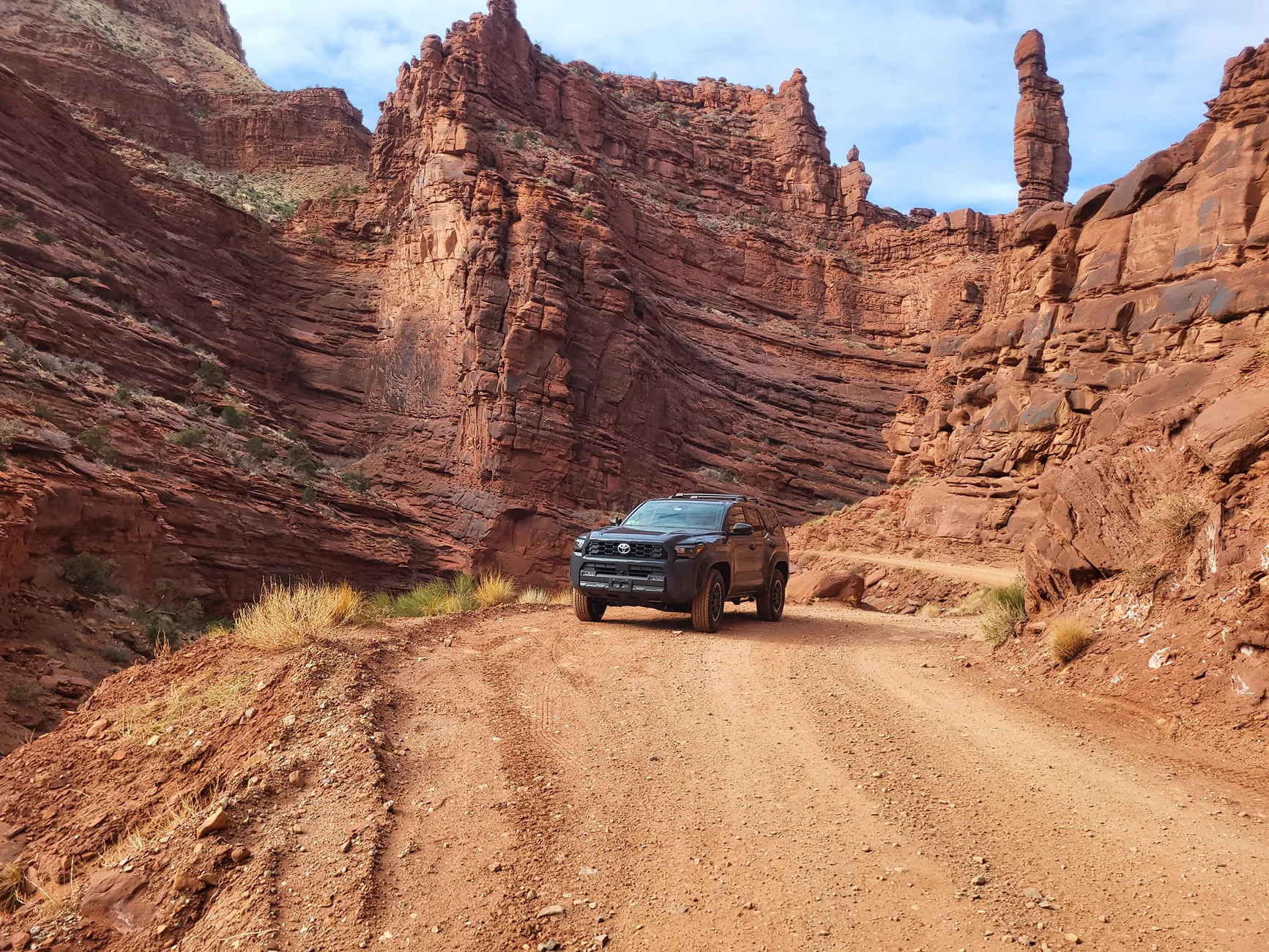
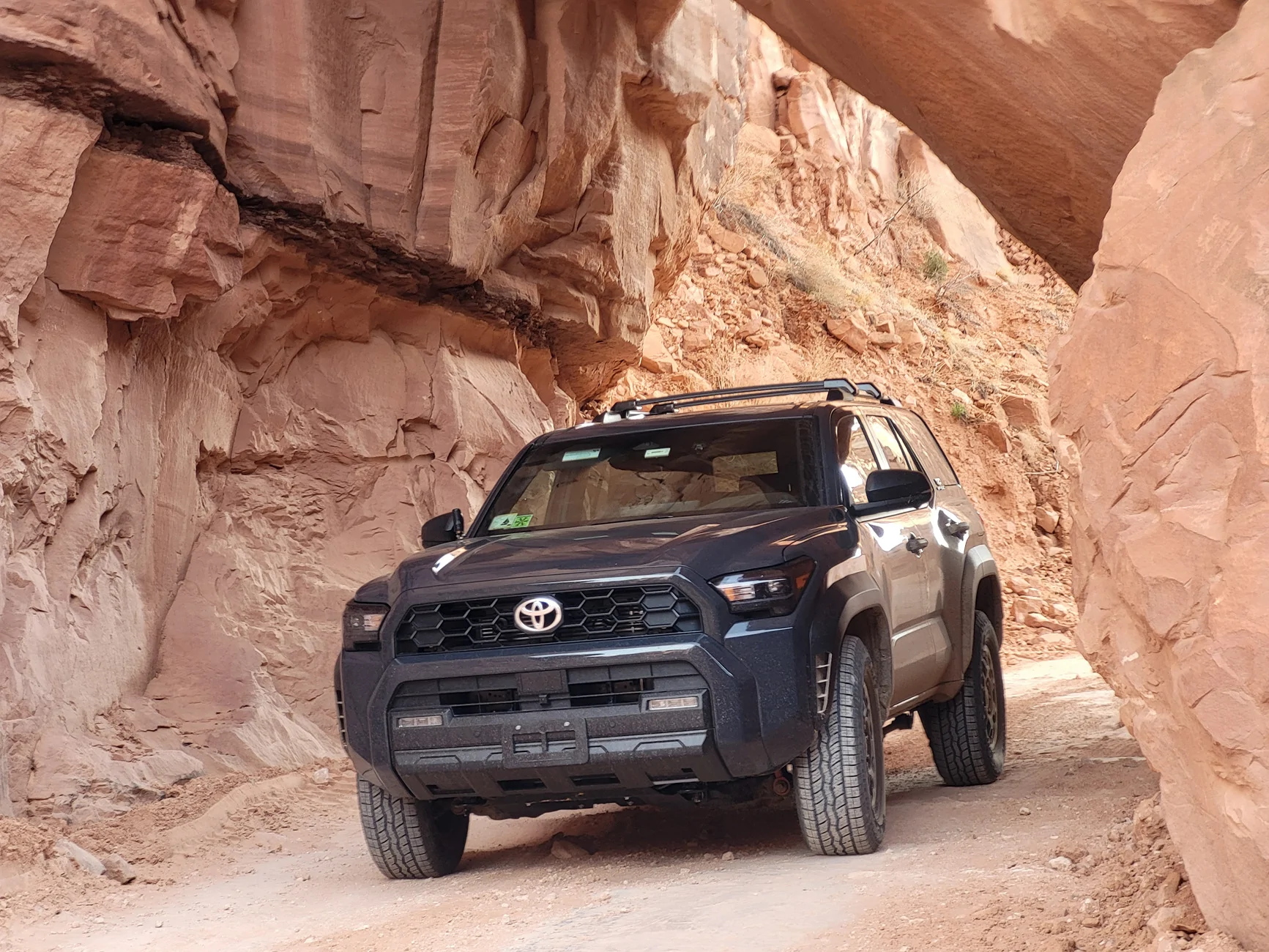
My 2025 4Runner Off-Road Premium (ORP), non-hybrid, in Underground (dark gray), was built in Japan in January 2025 and purchased in Fort Collins in February. It includes the Tow Tech package, a power tilt/slide moonroof with sunshade, cross bars, and all-weather floor liners. The Tow Tech package adds a digital rearview mirror, an Integrated Trailer Brake Controller (ITBC), and Trailer Backup Guide with Straight Path Assist (SPA).

The 4Runner is mostly stock. I removed the air dam and running boards for added clearance and to avoid damaging the factory boards, which I’ve done on past vehicles. I replaced the composite front skids with the Trailhunter front skid and added the matching transfer-case skid. A rear differential skid is planned. I also installed a GMRS radio and antenna, plus a rear cargo floor liner, if those count as modifications.

On maintenance, I did an early oil change at 2,000 miles to inspect the oil during break-in. Toyota does not require this, but it offers peace of mind, and early changes used to be common. The dealer handled the next two services, at 4,800 and 9,850 miles, under their complimentary program. The last visit took about two and a half hours, so I am weighing the value of “free” against doing it myself to save time.
On fuel, I have used only premium, top-tier gasoline and tracked every fill-up. I know there is debate about whether premium is necessary. I’m choosing to err on the side of long-term engine care; if it costs a bit more, the peace of mind is worth it to me. Others may disagree, which is fine.
Across 10,000 miles, my average fuel economy is 19.9 mpg. The best single tank was 23.6 mpg on an ideal freeway run; the worst was 15.5 mpg during an off-road day. I prefer Shell when available, but I’ll use other reputable brands on trips.
Plans to modify the 4Runner took a back seat because we added a second new vehicle this year, a 2025 Jeep Wrangler, alongside our 1997 Wrangler. After thinking through roles, it made sense to build a Wrangler as the more dedicated off-road platform and keep the 4Runner closer to stock for daily duty. That balance has worked well. The 4Runner is our primary family and road-trip vehicle; we usually take one of the Wranglers for tougher trails, though the 4Runner still sees trail time when we want the comfort or need more passenger or cargo space.
Next up for the 4Runner is a ReadyLIFT-style leveling kit that raises the front more than the rear, Method 703 wheels with +35 mm offset, and ~34-inch KO3 tires. The goal is modest gains in ground clearance and traction with minimal impact to on-road manners. The wheel offset should help with clearance on the slightly wider tires. I expect a small but noticeable hit to overall performance, offset by improved capability where it matters for us. Additional skid plates, possible rock rails, and a higher-capacity roof rack are also on the list. Bullhide 4x4 in Fort Collins will install the lift, wheels, and tires.
Before buying parts, I spent time reading forum accounts, talking with 4Runner and Tacoma owners, and comparing notes with techs at 4x4 shops about what they see firsthand and hear from customers. That research helped temper my plans and sequence the work.
Our first off-road outing in the 4Runner was Baby Lion’s Back in Moab in March 2025, followed by Onion Creek and Hideout Canyon the next day, then Fins ‘n Things and Long Canyon. Back in Colorado, we ran Phantom Canyon, Pierson Park Road, Deadman Road, Sand Creek Pass, and Old Flowers Road. We would have logged more trail miles in the 4Runner if not for the Wranglers, which we gravitate toward for harder routes.
Most of the 10,000 miles came from road trips through Colorado, Utah, Wyoming, Nebraska, Oklahoma, New Mexico, Arizona, Texas, and Arkansas, with brief passes into other states. On the highway and around town, the 4Runner has exceeded expectations. The only real learning curve was getting comfortable with the various controls and options. I won’t criticize every feature, but a few standouts are worth mentioning. Overall comfort and drivability are excellent, which is why I’m cautious about any modification that could compromise them. Dynamic cruise control and active driving assist reduce fatigue on long days. The heated seats and steering wheel are great in cold weather, and the ventilated seats perform well in summer. Power seats with memory make it easy to restore seating and steering-wheel position after someone else has adjusted them. The audio system, Android Auto, and SiriusXM have worked as expected. Cabin noise is a subjective topic, but to my ear the 4Runner is quiet; impressions vary based on what you’re used to.
We typically have three people onboard. I am 5'11", my wife is 5'9", and our son, who rides in back, is 6'1". All of us are comfortable with adequate space. It is not as roomy as the oversized cab on our previous Ram 1500, so I understand why some consider the 4Runner’s rear seat tight. For context, our Wranglers are two-door models with limited legroom and rear access, and we also have a Mazda CX-5. Even with those comparisons, the 4Runner is our 6'1" son’s preferred back seat.
After about eight months and 10,000 miles, the 4Runner is close to an ideal family vehicle for our needs. I initially considered building it into the primary off-road rig, but we decided to keep the rock-crawling focus with the Wranglers and preserve the 4Runner’s everyday comfort, while still allowing for light to moderate trail use. Even stock, the 4Runner is capable and often outperforms modified vehicles in certain trail conditions. As winter returns to the Colorado high country, I expect to choose the 4Runner over the Wranglers for snow-wheeling in some conditions, especially when icy conditions are likely rather than deep powder. We will also favor the 4Runner for trips that include camping or more than two people.
I share these notes to help anyone weighing a sixth-generation 4Runner. The goal is not to convince anyone to buy one, because everyone’s priorities and trade-offs differ. The platform has been excellent for us so far, but this is a snapshot at eight months and 10,000 miles. Long-term reliability remains to be seen, although Toyota’s reputation for quality and vehicles that run for hundreds of thousands of miles is encouraging. If the sixth generation matches prior 4Runners, owners should be in good shape, but time will tell.
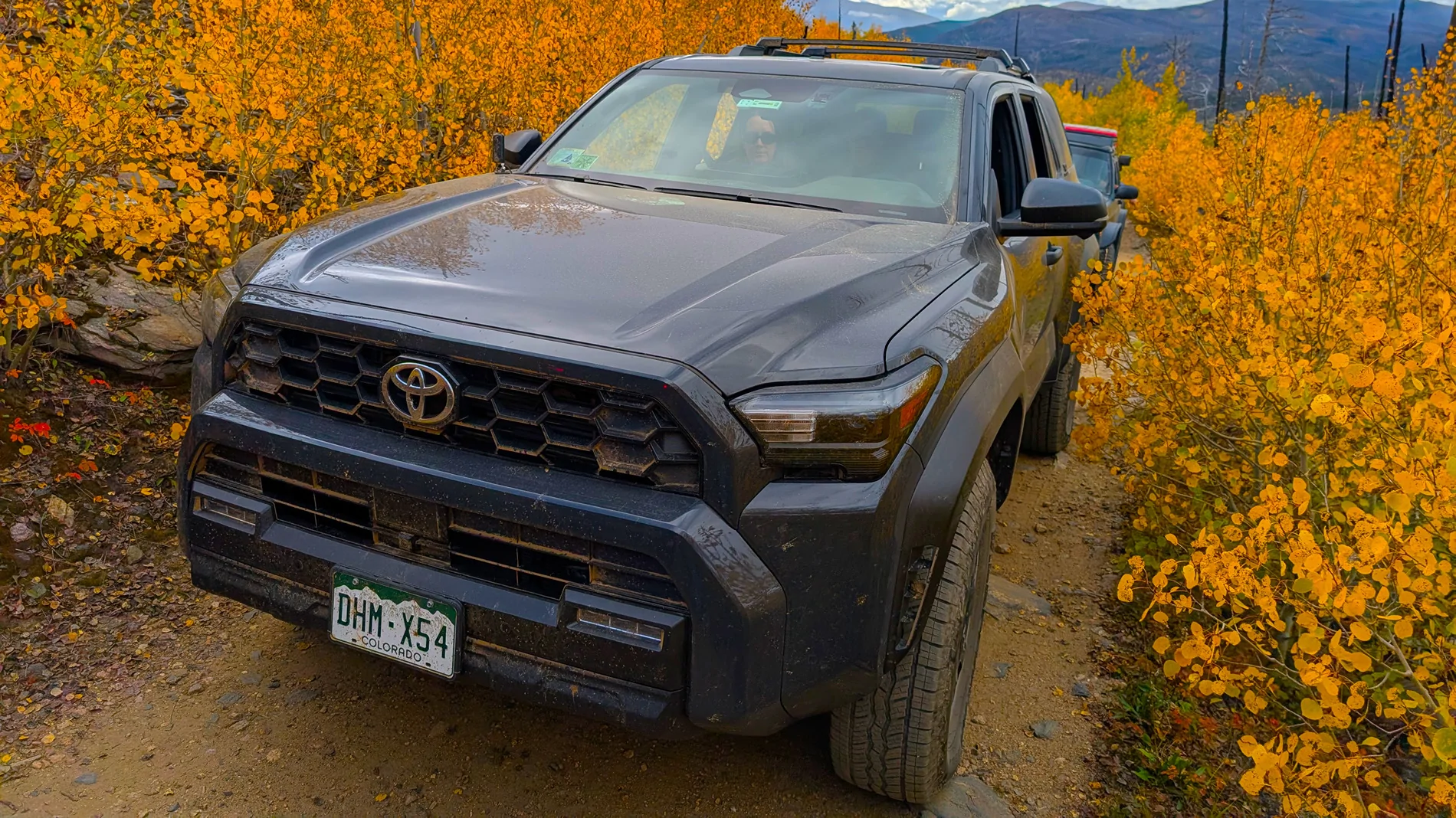
This follow-up builds on my earlier posts at 200, 500, 1,000, and 2,000 miles:
- https://www.4runner6g.com/forum/threads/observations-after-2-000-miles.2913/
- https://www.4runner6g.com/forum/threads/observations-after-1-000-miles.2840/
- https://www.4runner6g.com/forum/threads/observations-after-200-miles.2607/
- https://www.4runner6g.com/forum/threads/observations-after-500-miles.2705/
My 2025 4Runner Off-Road Premium (ORP), non-hybrid, in Underground (dark gray), was built in Japan in January 2025 and purchased in Fort Collins in February. It includes the Tow Tech package, a power tilt/slide moonroof with sunshade, cross bars, and all-weather floor liners. The Tow Tech package adds a digital rearview mirror, an Integrated Trailer Brake Controller (ITBC), and Trailer Backup Guide with Straight Path Assist (SPA).
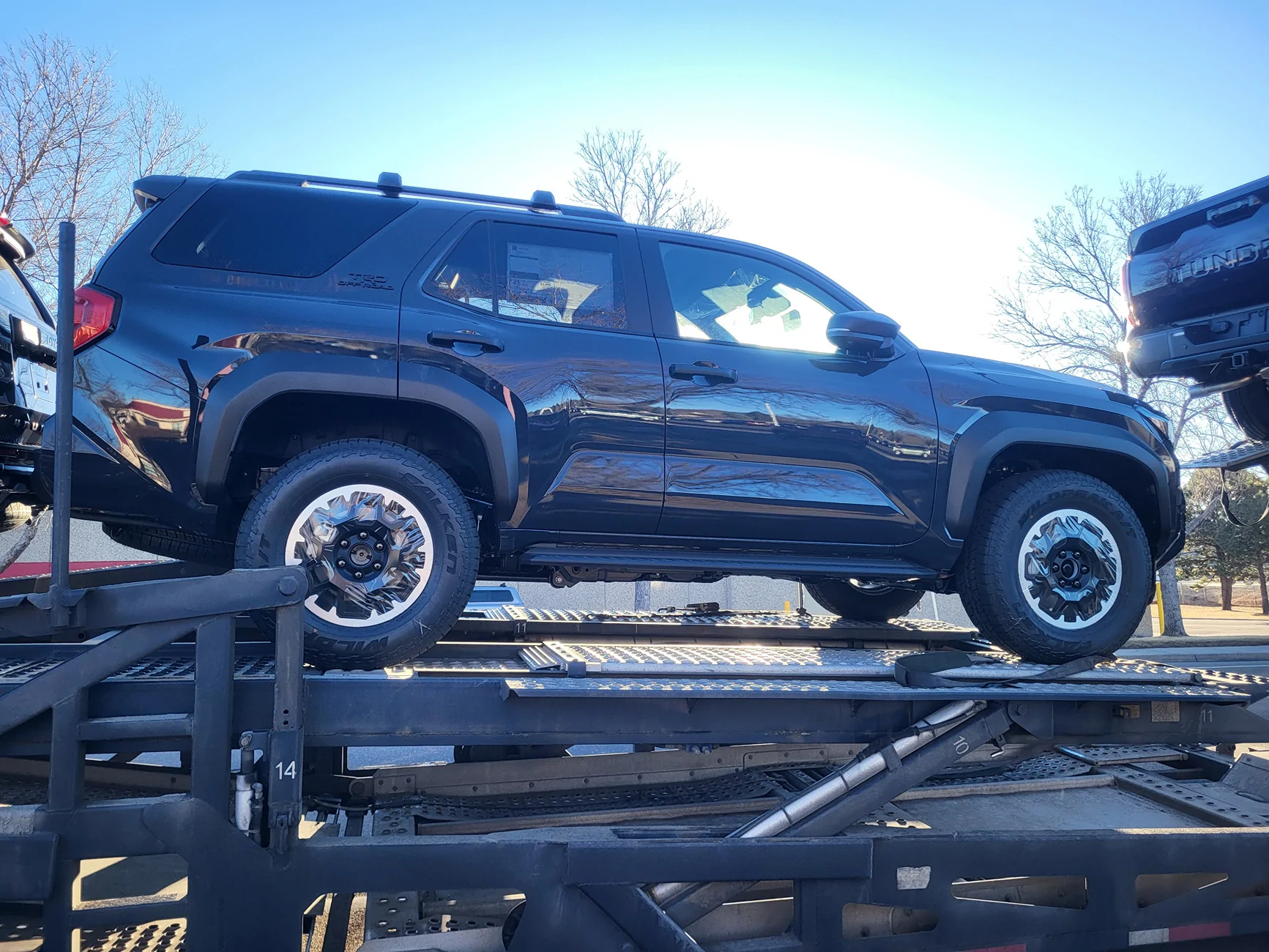
The 4Runner is mostly stock. I removed the air dam and running boards for added clearance and to avoid damaging the factory boards, which I’ve done on past vehicles. I replaced the composite front skids with the Trailhunter front skid and added the matching transfer-case skid. A rear differential skid is planned. I also installed a GMRS radio and antenna, plus a rear cargo floor liner, if those count as modifications.

On maintenance, I did an early oil change at 2,000 miles to inspect the oil during break-in. Toyota does not require this, but it offers peace of mind, and early changes used to be common. The dealer handled the next two services, at 4,800 and 9,850 miles, under their complimentary program. The last visit took about two and a half hours, so I am weighing the value of “free” against doing it myself to save time.
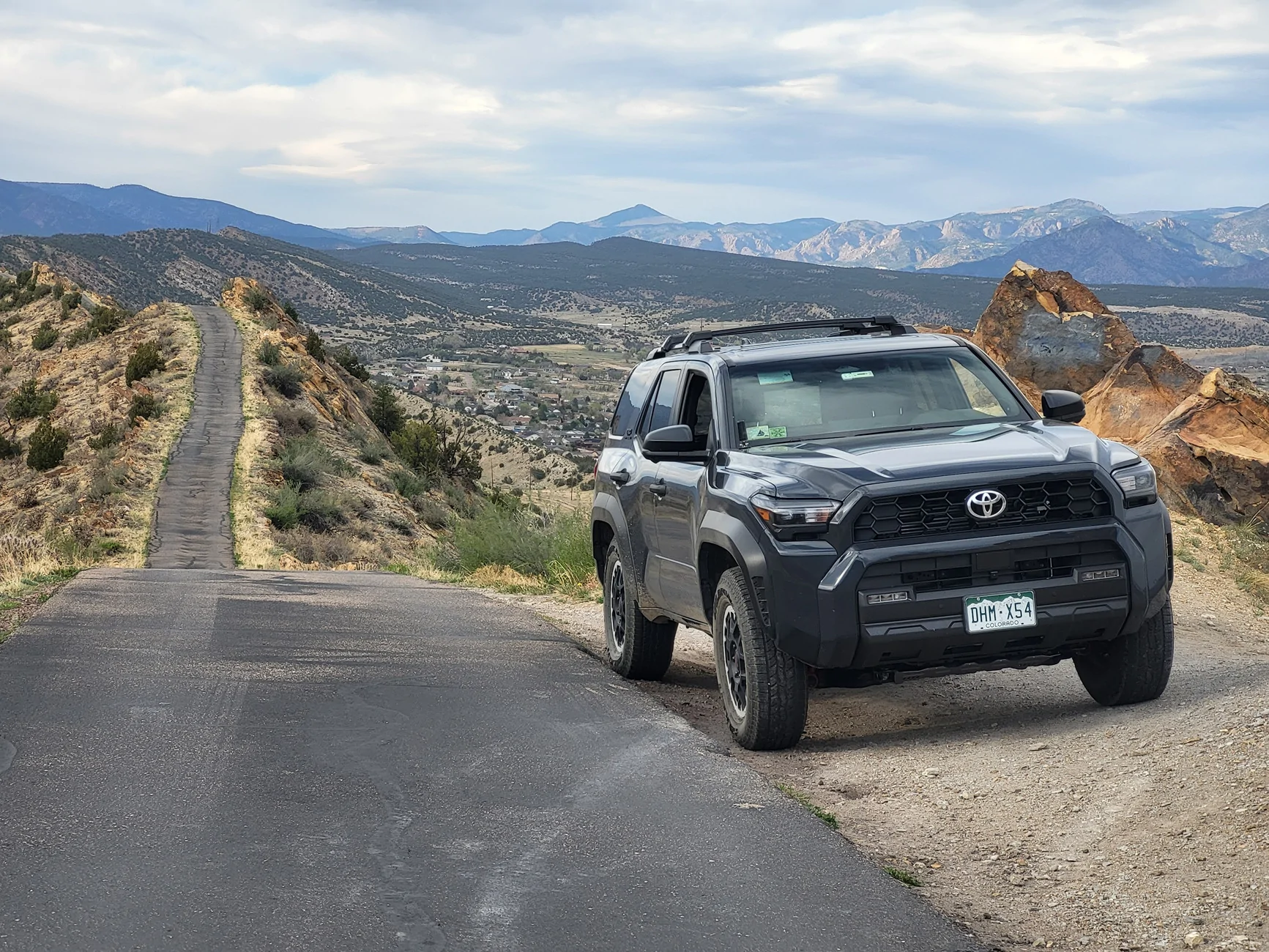
On fuel, I have used only premium, top-tier gasoline and tracked every fill-up. I know there is debate about whether premium is necessary. I’m choosing to err on the side of long-term engine care; if it costs a bit more, the peace of mind is worth it to me. Others may disagree, which is fine.

Across 10,000 miles, my average fuel economy is 19.9 mpg. The best single tank was 23.6 mpg on an ideal freeway run; the worst was 15.5 mpg during an off-road day. I prefer Shell when available, but I’ll use other reputable brands on trips.
Plans to modify the 4Runner took a back seat because we added a second new vehicle this year, a 2025 Jeep Wrangler, alongside our 1997 Wrangler. After thinking through roles, it made sense to build a Wrangler as the more dedicated off-road platform and keep the 4Runner closer to stock for daily duty. That balance has worked well. The 4Runner is our primary family and road-trip vehicle; we usually take one of the Wranglers for tougher trails, though the 4Runner still sees trail time when we want the comfort or need more passenger or cargo space.
Next up for the 4Runner is a ReadyLIFT-style leveling kit that raises the front more than the rear, Method 703 wheels with +35 mm offset, and ~34-inch KO3 tires. The goal is modest gains in ground clearance and traction with minimal impact to on-road manners. The wheel offset should help with clearance on the slightly wider tires. I expect a small but noticeable hit to overall performance, offset by improved capability where it matters for us. Additional skid plates, possible rock rails, and a higher-capacity roof rack are also on the list. Bullhide 4x4 in Fort Collins will install the lift, wheels, and tires.
Before buying parts, I spent time reading forum accounts, talking with 4Runner and Tacoma owners, and comparing notes with techs at 4x4 shops about what they see firsthand and hear from customers. That research helped temper my plans and sequence the work.
Our first off-road outing in the 4Runner was Baby Lion’s Back in Moab in March 2025, followed by Onion Creek and Hideout Canyon the next day, then Fins ‘n Things and Long Canyon. Back in Colorado, we ran Phantom Canyon, Pierson Park Road, Deadman Road, Sand Creek Pass, and Old Flowers Road. We would have logged more trail miles in the 4Runner if not for the Wranglers, which we gravitate toward for harder routes.

Most of the 10,000 miles came from road trips through Colorado, Utah, Wyoming, Nebraska, Oklahoma, New Mexico, Arizona, Texas, and Arkansas, with brief passes into other states. On the highway and around town, the 4Runner has exceeded expectations. The only real learning curve was getting comfortable with the various controls and options. I won’t criticize every feature, but a few standouts are worth mentioning. Overall comfort and drivability are excellent, which is why I’m cautious about any modification that could compromise them. Dynamic cruise control and active driving assist reduce fatigue on long days. The heated seats and steering wheel are great in cold weather, and the ventilated seats perform well in summer. Power seats with memory make it easy to restore seating and steering-wheel position after someone else has adjusted them. The audio system, Android Auto, and SiriusXM have worked as expected. Cabin noise is a subjective topic, but to my ear the 4Runner is quiet; impressions vary based on what you’re used to.
We typically have three people onboard. I am 5'11", my wife is 5'9", and our son, who rides in back, is 6'1". All of us are comfortable with adequate space. It is not as roomy as the oversized cab on our previous Ram 1500, so I understand why some consider the 4Runner’s rear seat tight. For context, our Wranglers are two-door models with limited legroom and rear access, and we also have a Mazda CX-5. Even with those comparisons, the 4Runner is our 6'1" son’s preferred back seat.
After about eight months and 10,000 miles, the 4Runner is close to an ideal family vehicle for our needs. I initially considered building it into the primary off-road rig, but we decided to keep the rock-crawling focus with the Wranglers and preserve the 4Runner’s everyday comfort, while still allowing for light to moderate trail use. Even stock, the 4Runner is capable and often outperforms modified vehicles in certain trail conditions. As winter returns to the Colorado high country, I expect to choose the 4Runner over the Wranglers for snow-wheeling in some conditions, especially when icy conditions are likely rather than deep powder. We will also favor the 4Runner for trips that include camping or more than two people.

I share these notes to help anyone weighing a sixth-generation 4Runner. The goal is not to convince anyone to buy one, because everyone’s priorities and trade-offs differ. The platform has been excellent for us so far, but this is a snapshot at eight months and 10,000 miles. Long-term reliability remains to be seen, although Toyota’s reputation for quality and vehicles that run for hundreds of thousands of miles is encouraging. If the sixth generation matches prior 4Runners, owners should be in good shape, but time will tell.
Sponsored