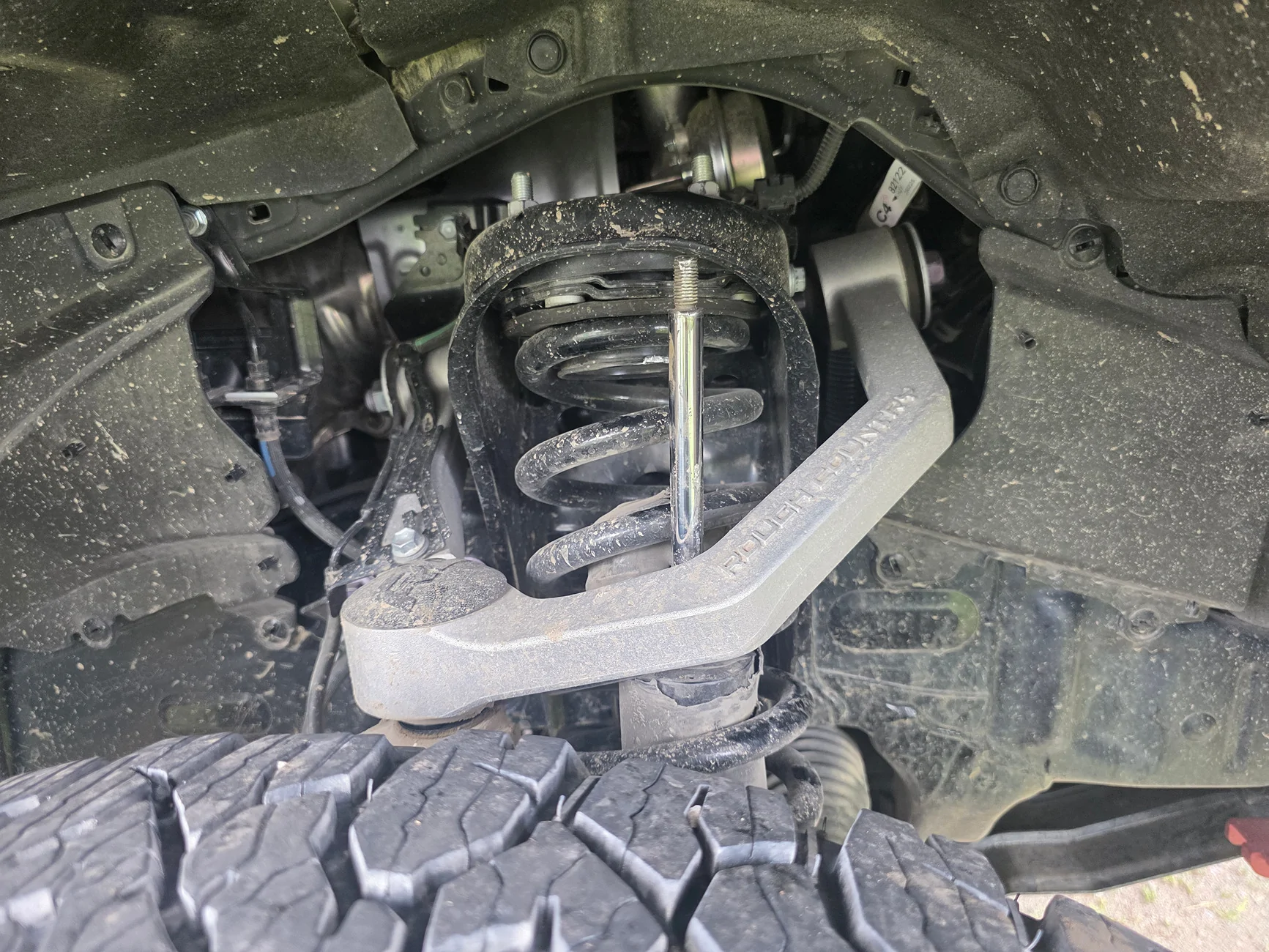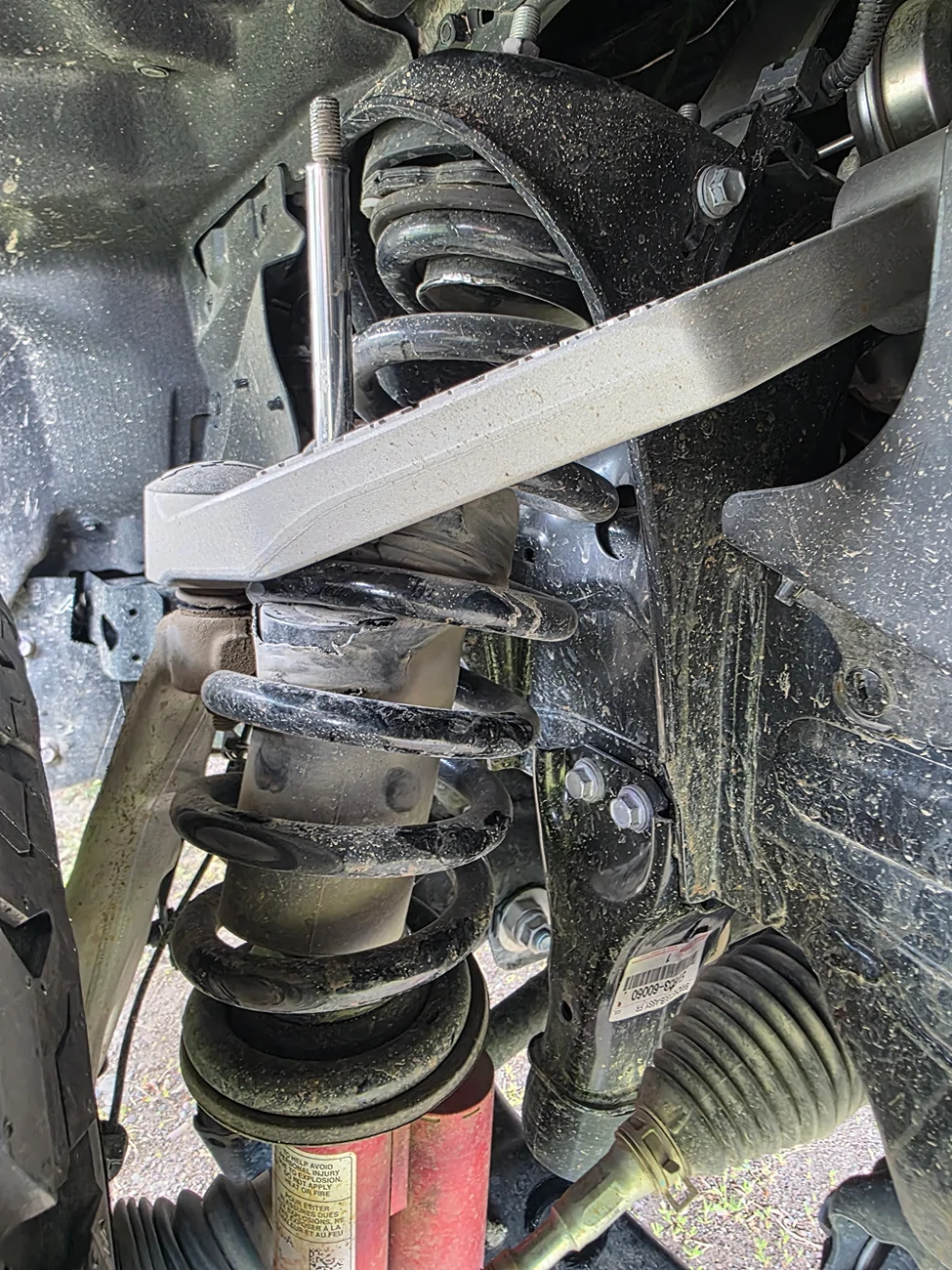


I think people are too concerned about longevity of the CVs when the actual thing that breaks/bends first on most of these type of lifts is the shocks themselves. By the bottom shock mount.Im not familiar with the suspension in the OP but some general theory on lifts and CVs…
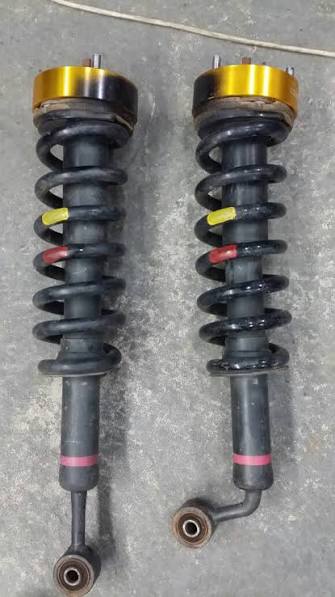
Of course, if you lift, you’re pushing the front differential up relative to the hub on the wheel, so the CV angle increases. Max droop is controlled by shock length (plus any spacer) so if you have not extended the shocks or added spacers the CV will not bind at full droop and should run fine at the new angle. However, if you extend the length of the strut via a spacer or a longer shock, at full droop the CV angle can exceed design specs and bind or break. That’s probably why the TRD lift includes axels… they can handle the added articulation without binding.
This is why spacer lifts shouldn’t be off-roaded. They make it possible when the shock is fully extended that the CV could be past the design limits and bind. If you ever get one wheel in the air you can snap an axle. But this is not a real problem for a street vehicle.
Preload lifts are really just compressing the spring - trading down travel for up travel. So if the factory setup is 3” of articulation up and down, and you install a 2” preload lift, you’re now getting 5” of up travel and 1” of down travel. In other words pot holes will easily cause the shock to bottom but there’s no risk to the CV joints.
Sponsored