
- Thread starter
- #1
I've been seeing an increasing number of intake and charge-system leaks on the 4th Gen Tacoma and 6th Gen 4Runner, particularly after the installation of aftermarket intakes, intercoolers, and charge pipes.
This isn't specific to any one manufacturer. I've encountered leaks with just about every available setup. Sometimes it's as simple as a loose clamp or a coupler that wasn't seated correctly. Other times, everything looks perfectly fine until the system is pressurized.
I put together a short video demonstrating how to perform a smoke test on the 2.4L turbo engine and identify leaks throughout the intake tract.

Video: Boost and other air leaks on your 2.4 turbo Tacoma or 4Runner and how to find them
Why this matters
An intake or charge-system leak can cause several issues, depending on its location and severity:
When should you smoke test?
I recommend checking the system after installing or changing any intake or charge-air components, especially if you're preparing to have the truck tuned.
It's also worth doing if you notice unexpected fuel trims, inconsistent boost, or a sudden change in how the truck performs.
A connection can appear perfectly sealed visually and still leak once pressure is introduced. That's why I prefer testing rather than assuming everything is tight.
A note on tuning
I review fuel trims, boost behavior, and other operating parameters on every calibration I complete. These logs frequently help identify problems that aren't immediately obvious from the driver's seat.
However, a calibration cannot correct a mechanical air leak. The intake tract needs to be sealed properly before the ECU can accurately control fueling and airflow.
This is one of the reasons I place so much importance on datalog review, even for my flash-only calibrations.
Hopefully the video helps some of you identify an issue before it turns into a much more expensive problem.
This is the smoke tester I use, and have had a few of my customers order. I am not affiliated with them in any way, but it's a great tool for the price.
This isn't specific to any one manufacturer. I've encountered leaks with just about every available setup. Sometimes it's as simple as a loose clamp or a coupler that wasn't seated correctly. Other times, everything looks perfectly fine until the system is pressurized.
I put together a short video demonstrating how to perform a smoke test on the 2.4L turbo engine and identify leaks throughout the intake tract.
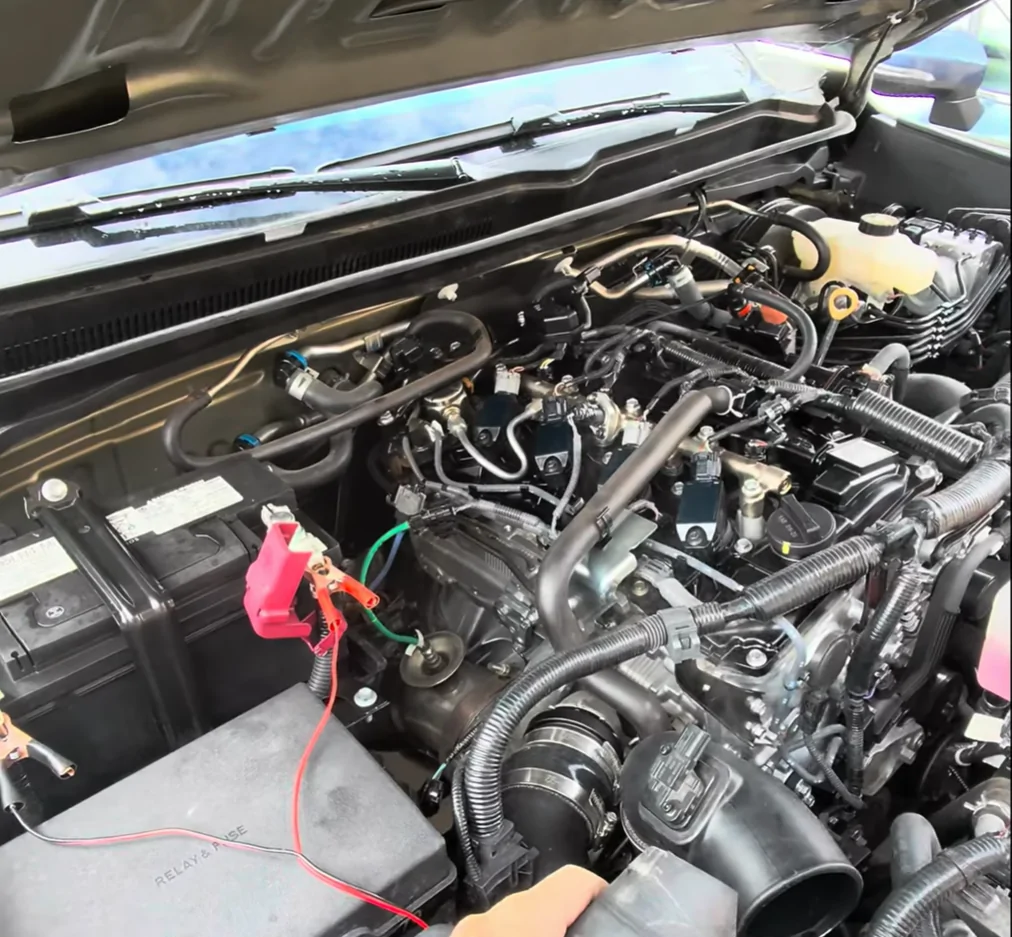
Video: Boost and other air leaks on your 2.4 turbo Tacoma or 4Runner and how to find them
Why this matters
An intake or charge-system leak can cause several issues, depending on its location and severity:
- Incorrect fuel trims and air/fuel ratio
- Poor performance or inconsistent power delivery
- Boost-control issues
- Check engine lights
- Increased fuel consumption
When should you smoke test?
I recommend checking the system after installing or changing any intake or charge-air components, especially if you're preparing to have the truck tuned.
It's also worth doing if you notice unexpected fuel trims, inconsistent boost, or a sudden change in how the truck performs.
A connection can appear perfectly sealed visually and still leak once pressure is introduced. That's why I prefer testing rather than assuming everything is tight.
A note on tuning
I review fuel trims, boost behavior, and other operating parameters on every calibration I complete. These logs frequently help identify problems that aren't immediately obvious from the driver's seat.
However, a calibration cannot correct a mechanical air leak. The intake tract needs to be sealed properly before the ECU can accurately control fueling and airflow.
This is one of the reasons I place so much importance on datalog review, even for my flash-only calibrations.
Hopefully the video helps some of you identify an issue before it turns into a much more expensive problem.
This is the smoke tester I use, and have had a few of my customers order. I am not affiliated with them in any way, but it's a great tool for the price.
Sponsored